

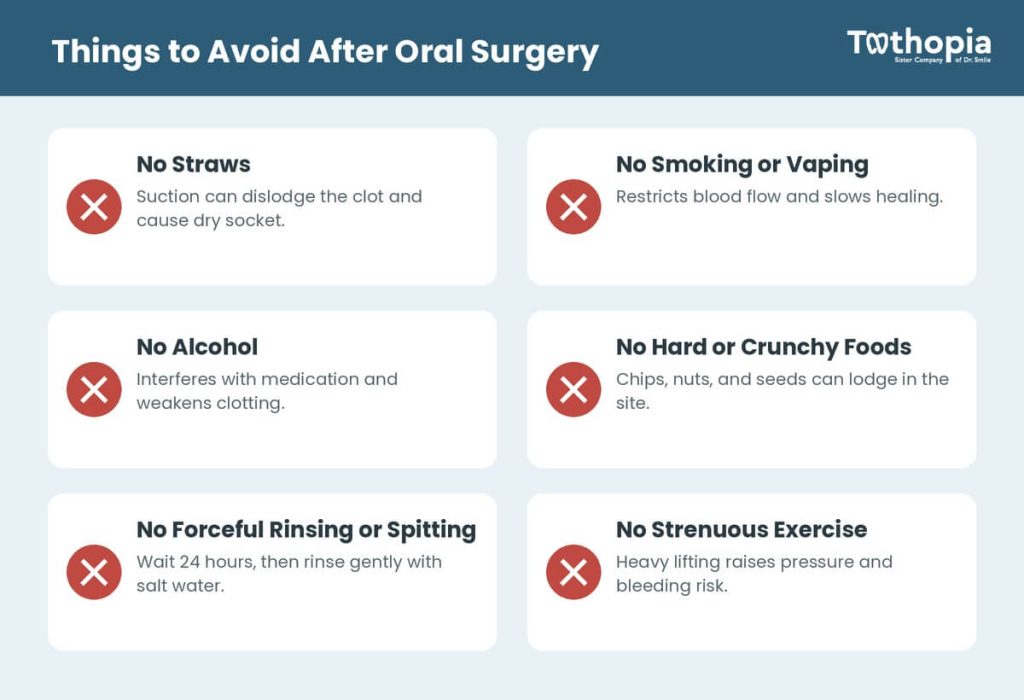
The fastest way to slow your own healing is to disturb the surgical site before it is ready. What not to do after oral surgery comes down to a short list: no straws, no smoking or alcohol, no hard or crunchy foods, and no heavy exercise for the first few days. Each of those can pull the blood clot loose, open the door to dry socket, or invite infection. Get the first 72 hours right, and most people heal without drama. Below is exactly what to avoid, and why it matters more than it seems.
Key Takeaways
- Protect the blood clot. For the first 24 hours, no straws, no spitting, and no forceful rinsing. Suction and pressure can pull the clot loose.
- Dry socket is the main risk. It usually shows up as sharp pain 3 to 4 days after surgery, once the clot is gone.
- Skip smoking and alcohol for at least 3 to 5 days. Both slow healing and raise your infection risk.
- Eat soft, lukewarm foods and chew on the opposite side. Avoid chips, nuts, seeds, and spicy dishes until the area heals.
- Rest for 24 to 72 hours and avoid heavy exercise, which raises blood pressure and can restart bleeding.
- Call your dentist for heavy bleeding, spreading swelling, fever, or pain that gets worse instead of better.
Habits That Slow Healing After Oral Surgery
The first mistake most people make is treating the surgical area like it has already healed. It hasn't. A soft blood clot forms in the socket within hours, and that clot shields the bone and nerves underneath while new tissue grows. Almost everything on the do-not list exists to protect it. That includes recovery from a tooth extraction, oral surgery such as an implant placement, gum surgery, or a bone graft.
Don’t disturb the blood clot with straws, spitting, or poking
Leave the clot alone. Sucking through a straw, spitting hard, or prodding the site with your tongue or a finger can all pull it loose.
The suction from a straw is the classic culprit, but forceful spitting and hard swishing do the same thing. Once that clot is gone, you are left with an open socket, exposed bone, and a real chance of dry socket.
If a dull ache suddenly turns sharp around day three, that is a red flag. Learn how to tell if you have dry socket and call the office rather than waiting it out.
Don’t rinse forcefully in the first 24 hours
Skip mouthwash and vigorous rinsing on day one. Fast-moving liquid and pressure across the socket can wash the clot right out.
After the first 24 hours, switch to gentle warm saltwater rinses, about half a teaspoon of salt in a cup of warm water, a few times a day and after meals. Let the water fall out of your mouth instead of spitting.
Already rinsed too soon by accident? Here is what to watch for if you rinsed your mouth after an extraction, and when it is worth a quick call.
Don’t smoke or vape
Smoking is one of the worst things you can do after oral surgery. Nicotine narrows blood vessels and starves the healing gums of oxygen.
The suction of a cigarette works like a straw, and the heat and chemicals irritate the wound on top of that. Smokers get dry socket far more often than non-smokers. Hold off for at least 72 hours, longer if you can, and treat vaping and cannabis the same way. Here is more on why smoking slows healing after an extraction.
Don’t drink alcohol
Hold off on alcohol until you are done with pain medication and the site is closing up, usually several days.
Alcohol thins the blood, clashes with prescriptions like painkillers and antibiotics, and dries out the mouth. All three work against a stable clot and slow you down.
Don’t eat hard, crunchy, chewy, or spicy foods
For the first few days, anything hard, crunchy, chewy, or spicy is off the table.
Chips, nuts, popcorn, and seeds can jam into the socket. Chewy steak and sticky candy tug at stitches. Spicy and acidic foods sting raw tissue and can restart bleeding. The next section shows what to reach for instead.
Don’t overexert yourself with exercise
Put the gym on hold. Heavy lifting, running, and other strenuous exercise spike your blood pressure, which can pop the clot loose or restart bleeding.
Give it about 3 to 5 days after a simple extraction, and up to a week or more for implants, bone grafts, or wisdom teeth. Light walking around the house is fine.
Yes, but Yes, you feel fine by day two. That does not mean the socket is ready for a deadlift. The outside heals faster than the inside.
Don’t skip medication or ignore warning signs
Take prescribed medication on schedule, and don't wait to report symptoms that are getting worse.
Stay ahead of pain instead of chasing it, and finish any antibiotics you were given. If something feels off, the warning signs later in this guide will tell you when to call.
Foods to Avoid After Oral Surgery and What to Eat Instead
Avoid anything that can lodge in the socket, pull at stitches, or irritate the wound. Reach for soft, lukewarm, easy-to-swallow foods instead.
The rule is simple: if it needs real chewing or has sharp edges, wait. Most people can move back toward a normal diet over the first week as the area settles.
| Foods or Habits to Avoid | Better Alternatives |
|---|---|
| Chips, nuts, popcorn, seeds | Mashed potatoes, smooth yogurt, pudding |
| Tough or chewy meats | Scrambled eggs, flaked soft fish |
| Sticky or hard candy | Applesauce, ripe banana |
| Hot soup, coffee, or tea | Lukewarm broth or soup |
| Spicy or acidic dishes | Oatmeal, blended soups |
| Anything through a straw | Sips from a cup or a spoon |
Let hot food and drinks cool to lukewarm before eating or drinking. Heat can soften the blood clot and increase bleeding, so it’s best to save hot coffee and other hot beverages until later in the healing process.
How to Prevent Dry Socket After Oral Surgery
Dry socket happens when the blood clot is lost too early, leaving bone and nerve endings exposed. You prevent it by guarding that clot for the first several days.
Do these things in order and your risk drops sharply:
- No straws, no smoking, and no spitting for at least 72 hours.
- Skip forceful rinsing for the first 24 hours, then rinse gently with warm salt water.
- Keep food and drinks soft and lukewarm, and chew on the other side.
- Take medication as directed and keep gauze in place as instructed.
- Rest and hold off on strenuous activity for a few days.
Dry socket usually turns up 3 to 4 days after surgery as a throbbing ache that can travel to the ear, often with a bad taste or odor. It is treatable in the office, so call rather than tough it out. People who smoke or use straws are at the highest risk, which is exactly why those two land at the top of the list.
Signs of Complications After Oral Surgery
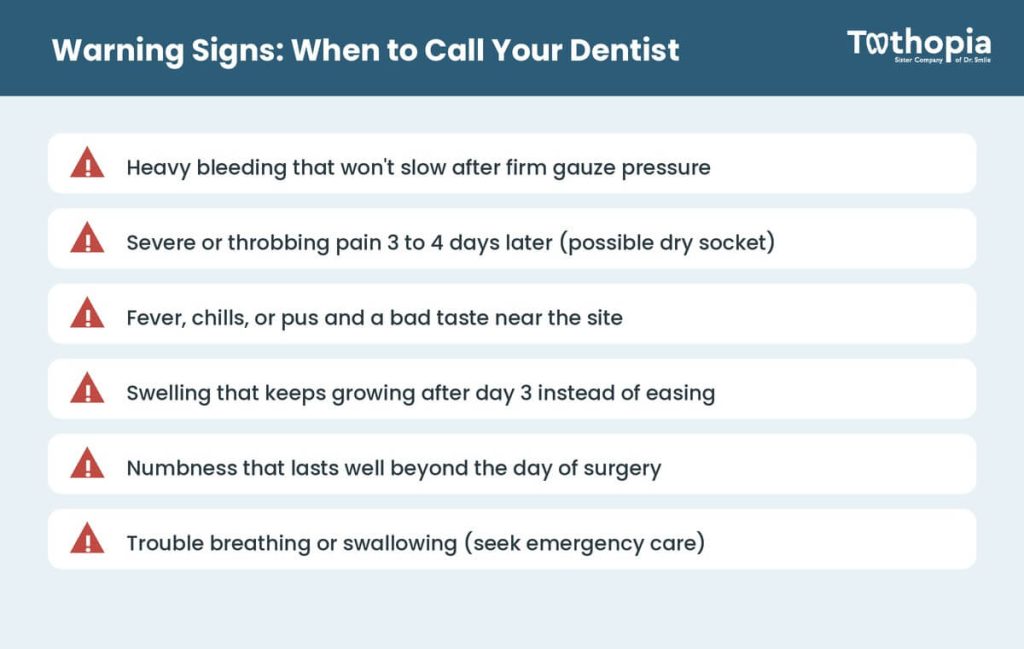
Some soreness, minor oozing, and swelling are normal for a few days. A handful of symptoms are not, and they mean it is time to call.
- Bleeding that won't slow after 30 to 45 minutes of firm gauze pressure.
- Pain that gets worse after day three instead of easing, which can point to dry socket or infection.
- Fever, chills, pus, or a foul taste that won't clear.
- Swelling that keeps growing after 72 hours rather than settling down.
- Numbness or tingling that lingers well beyond the day of surgery.
- Trouble breathing or swallowing, which needs emergency care right away.
A mild sore throat after an extraction can be part of normal healing, but throat pain that worsens alongside fever is not. When symptoms escalate, emergency dental care can catch a problem early before it spreads.
One implant patient brushed off swelling that grew on day four and turned out to have an early infection. A short course of antibiotics cleared it, but waiting a few extra days made the whole thing harder to treat.
Need help getting started? Our California-based offices in Culver City and Inglewood are ready to assist. Reach out by filling out the consultation form or calling 310-643-6221.
What to Do for a Faster Recovery
Recovery speeds up when you rest, control swelling, and keep the area clean without disturbing it.
- Rest for the first 24 to 72 hours. Anesthesia can leave you drowsy, so avoid driving and let your body heal.
- Prop your head up with an extra pillow to ease throbbing and swelling.
- Use an ice pack 15 to 20 minutes on, then off, for the first day or two.
- Eat soft, nutritious foods. Vitamins A and C help tissue repair itself.
- Keep your mouth clean. After 24 hours, brush gently and rinse with warm salt water, staying clear of the surgical site.
- Sip water from a cup, never a straw.
Curious about the bigger picture? Here is roughly how long recovery usually takes for different oral surgery procedures, from a simple extraction to implants and grafts.
You can brush your teeth the same night after oral surgery, but avoid the surgical site itself. Keeping the rest of your mouth clean helps lower infection risk without disturbing the blood clot.
Final Thought on Oral Surgery Recovery
Nearly every rule here protects one thing: the blood clot sitting in your socket. Guard it through the first 72 hours by skipping straws, smoking, alcohol, hard foods, and hard workouts, and the rest of recovery tends to take care of itself.
When you cannot tell whether a symptom is normal, it is always safer to ask than to wait. A two-minute phone call beats a week of avoidable pain.
Frequently Asked Questions About Oral Surgery Recovery
Can I eat normally after oral surgery?
No, it’s recommended to stick to soft foods and avoid hot or spicy items to protect the surgery site and promote healing.
Is it okay to rinse my mouth after oral surgery?
Avoid rinsing your mouth for the first 24 hours, as it can disrupt blood clot formation. Afterward, gently rinse with warm salt water as advised.
When can I resume physical activities after oral surgery?
Wait at least 48 hours before engaging in strenuous activities to avoid increased bleeding or swelling at the surgical site.
Can I brush my teeth after oral surgery?
Yes, but carefully. Skip brushing directly over the surgical site for the first day. After 24 hours, you can gently brush the rest of your teeth and rinse with warm salt water, keeping the brush away from the healing area until your dentist says it is fine.
What happens if I used a straw or rinsed too soon?
Watch for sharp, throbbing pain over the next couple of days. A straw or hard rinse can dislodge the clot and lead to dry socket. If you notice worsening pain or a bad taste, contact a dentist near you, since dry socket is quick and simple to treat in the office.



0 Comments