

When it comes to restoring your smile and improving dental function, both dentures and crowns can be excellent choices. However, the right one depends on your specific dental needs, budget, and lifestyle. Understanding the advantages and limitations of both treatments can help you make an informed decision.
Crowns or Dentures: Which Option Suits Your Dental Needs Best?
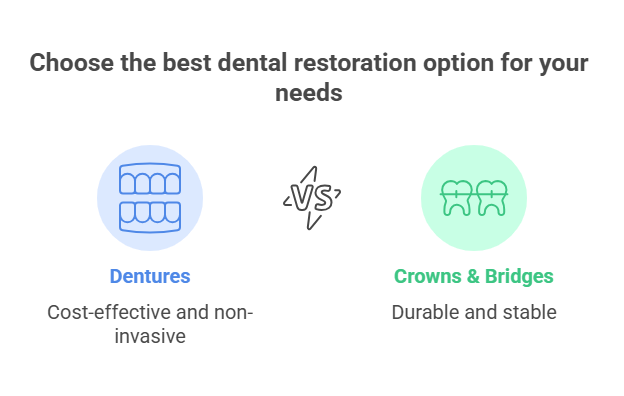
If you're trying to decide between crowns or dentures, the right choice depends on how many teeth you're replacing, your oral health condition, and your long-term goals. Crowns are ideal for restoring single damaged teeth, offering durability, strength, and a natural look. Dentures, on the other hand, are better suited for replacing several or all missing teeth, especially when you're looking for a non-invasive and cost-effective solution. While crowns and bridges provide more stability for small gaps, dentures offer greater flexibility without affecting neighboring teeth. Understanding the pros and cons of each option and how they fit into your lifestyle will help you make the most informed decision for your smile.
Advantages of Dentures
Dentures are removable prosthetic devices that replace missing teeth. They can be complete (replacing all teeth) or partial (replacing some missing teeth). Here are some of the key advantages:
- Cost-effective: Dentures tend to be more affordable compared to crowns or implants.
- Non-invasive: No surgery is needed to fit dentures, unlike dental implants.
- Customizable: Dentures are tailored to fit the specific structure of your mouth and gums, providing a natural look.
- Full Smile Restoration: Dentures can restore a complete smile, improving speech and chewing capabilities for those with multiple missing teeth.
If you're missing teeth and want a natural-looking replacement, our dentures Inglewood experts are here to help book an appointment now!
Benefits of Dental Crowns
Full Crowns or Partial Crowns are tooth-shaped caps that cover damaged teeth to restore their function and appearance. They are typically made from materials like porcelain, ceramic, or metal. Here are some advantages:
- Durability: Crowns are designed to last for many years, making them a long-term solution.
- Strengthens Teeth: A crown reinforces a weakened tooth, preventing further damage.
- Natural Appearance: Modern crowns mimic the appearance of natural teeth, blending seamlessly into your smile.
- Protection: Crowns can protect a tooth that has undergone a root canal or has severe decay.
Explore more on our Dental Crowns page.
Crowns vs Bridges: Clearing Up the Confusion
A common misunderstanding is the belief that crowns and bridges are the same. While both use dental crowns, they serve different purposes.
- Dental Crown: A crown covers a single damaged or decayed tooth, restoring its shape, function, and strength. It is a standalone solution for a tooth that needs reinforcement.
- Dental Bridge: A bridge, on the other hand, is used to replace one or more missing teeth. It consists of multiple crowns joined together. The adjacent healthy teeth on either side of the gap are used as anchors (abutment teeth), which means these teeth need to be ground down to support the bridge. This process can be invasive, especially if the neighboring teeth are otherwise healthy.
Limitations of Bridges:
- Number of Missing Teeth: Bridges are effective when a small number of teeth need to be replaced, usually one to three. However, for larger gaps, they are less practical.
- Impact on Healthy Teeth: Using adjacent teeth as anchors can compromise their health over time, especially if they are not strong enough to bear the extra load.
In comparison, dentures provide a more flexible solution. Partial Dentures can replace several or even all missing teeth without affecting any remaining healthy teeth. There is no limit to the number of teeth that dentures can replace, making them a practical option for those with significant tooth loss. Sometimes, some people might notice a sudden blood blister in their mouth without any pain. While this is usually harmless, it’s a good idea to keep an eye on it and consult a dentist if it persists or changes.

Cost Comparison
The cost of dental treatment is a significant factor for most patients. In general:
- Dentures: Lower initial cost, but they may require replacement every few years as the fit changes.
- Crowns and Bridges: Higher upfront cost, but they provide more stability and functionality for individual teeth or small gaps. However, bridges may lead to future costs associated with treating the anchor teeth.
Durability and Maintenance
- Dentures: Require regular cleaning, may need adjustment as your mouth changes over time, and they can break if mishandled.
- Crowns: Typically last 10-15 years or longer with proper care, including regular brushing, flossing, and dental visits.
- Bridges: Similar to crowns in terms of durability but require extra care to keep the area beneath the bridge clean.
For a more permanent solution, you may consider Dental Implants. Implants provide a stable, long-term replacement for missing teeth without relying on adjacent teeth for support. They also offer the advantage of stimulating bone growth, preventing bone loss that often occurs with missing teeth.
Conclusion
Choosing between dentures, crowns, and bridges depends on your specific needs, preferences, and budget. Dentures offer a flexible, cost-effective way to replace multiple missing teeth, while crowns and dental bridges provide more stability for restoring individual teeth or smaller gaps. It’s important to consider the long-term effects, including the impact on adjacent healthy teeth and the maintenance required.
For those looking for a more permanent solution, dental implants are also worth considering, as they provide excellent functionality and durability without affecting surrounding teeth.If you're unsure which option is best for you, contact Toothopia Dental for a consultation. We can guide you through the options and help you make the best decision for your oral health.
Need help getting started? Our California-based offices in Culver City and Inglewood are ready to assist. Reach out by filling out the consultation form or calling 310-643-6221.



0 Comments