
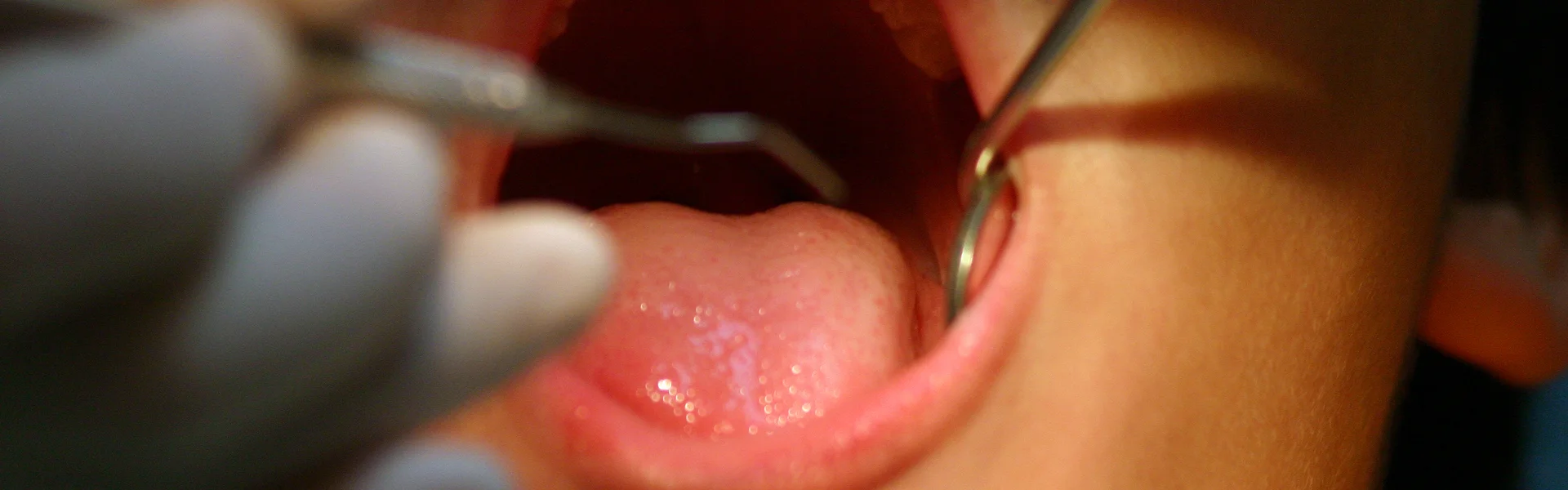
A blood blister in the mouth is a small pocket of blood trapped under the lining of your cheek, lip, tongue, gums, or palate. Most come from a bite, hot food, or rubbing from an appliance. They usually burst within a day or two and heal in 7 to 14 days without a scar, and the ones that appear for no clear reason are usually harmless too.
Below you'll find what each location means, how to help it heal, why some people keep getting them, and the few signs that need a dentist. Start with the date you first noticed it. That date tells you more than how dark it looks.
Key Takeaways
- A blood blister is blood trapped under the lining of the mouth, usually after a bite, a burn from hot food, friction from an appliance, or recent dental work.
- It bursts on its own within 1 to 3 days. The shallow sore left behind heals in about 7 to 10 days without scarring.
- Don't pop it. The intact roof protects the raw tissue underneath.
- The soft palate is the most common site, followed by the side of the tongue and the inside of the cheek.
- Day 14 is the line. A sore still there at that point needs an exam.
- Repeat blisters usually point to a fixable cause, such as a sharp filling edge, a rough crown, or an appliance that no longer fits.
- Get same-day care for a palate blister that affects swallowing or breathing, or for pus, spreading swelling, or fever after it bursts.
What Is a Blood Blister in the Mouth?
A blood blister in the mouth is a raised pocket of blood that forms when tiny vessels under the lining break and the blood collects under the surface. People also call it a blood bubble, a blood pocket, or a blood spot. Dentists call it an oral hemorrhagic bulla.
When a blood blister appears suddenly and no bleeding disorder or medication explains it, the diagnosis is usually angina bullosa hemorrhagica (ABH). The name sounds alarming, but ABH is benign and has nothing to do with heart angina. In a 14-year Brazilian study of 23 confirmed cases, 52% of patients remembered a trigger, usually chewing, and the rest noticed none (Silva-Cunha et al., 2022). ABH is most common in middle-aged and older adults (the average age in that study was 57), and some cases are linked to long-term steroid inhaler use, high blood pressure, or diabetes.
Heat, pressure, or friction separates the surface layer from the tissue beneath it, and blood fills the gap. The thin roof eventually tears, leaving a shallow sore that heals without a scar.
What Does a Blood Blister in the Mouth Look Like?
Most blood blisters are smooth, tense domes that range from bright red to purple or nearly black. They run from a few millimeters to about 1 cm, and some reach 2 to 3 cm, mostly on the soft palate. Many form within minutes, sometimes after a quick sting or a feeling of fullness while eating.
The soft palate (the soft back part of the roof of the mouth) is the most common site. The side of the tongue and the inside of the cheek come next, then the lips and gums. A canker sore is flat or sunken; a blood blister sits up like a bubble.

A black or very dark color only means more blood or older blood. It doesn't make the blister more dangerous. A flat dark spot that never rose up, never burst, and looks the same weeks later is something else, and a dentist should look at it. Taking a phone photo on day one gives you something to compare against later.
Blood Blister or Something Else? A Side-by-Side Comparison
The fastest way to tell these apart is to watch what the spot does over a few days. A blood blister rises quickly, fills with dark blood, and breaks open on its own, usually within one to three days. Nothing else in the table follows that pattern. A canker sore never fills up, a varix or a dark pigmented spot never bursts, and a mucocele holds clear saliva rather than blood.
Three questions settle most cases. Did it start as a raised bubble? Did it break open by itself? Is it gone by day 14? If the answer to all three is yes, you were very likely looking at a blood blister. A no to any of them, especially the last one, is a good reason to have a dentist take a look.
| Lesion | What it looks like | Usual course |
|---|---|---|
| Blood blister (ABH) | Raised red to dark purple dome filled with blood | Bursts in 1 to 3 days; heals in 7 to 14 days |
| Canker sore | Flat or sunken white or yellow ulcer with a red rim; no fluid | Heals in 7 to 14 days; not contagious |
| Cold sore | Cluster of small clear blisters, usually on the outer lip border | Heals in 7 to 12 days; contagious |
| Mucocele | Soft, bluish, saliva-filled dome, usually on the lower lip | Often comes back; may need removal |
| Varix (enlarged vein) | Soft blue or purple bump, often under the tongue or on the lower lip; doesn't hurt | Never bursts; stays for months or years; harmless |
| Hematoma (bruise) | Flat purple to black area, not a tense dome | Fades over several weeks |
| Dark pigmented spot | Flat brown, blue, or black patch that never fills up | Doesn't burst or heal; needs an exam |
| Oral cancer | Sore with a hard base and raised edges, or a red or white patch | Doesn't heal; needs prompt evaluation |
Canker sores are sometimes tied to low B12, iron, or folate levels, which is a canker sore issue rather than a blood blister one.
What Causes Blood Blisters in the Mouth?
Most blood blisters start with a small injury to the lining of the mouth. In the Brazilian ABH study, 52% followed trauma, mostly from chewing. The rest involve a medicine or health condition, or have no cause anyone can find.
Trauma and Dental Causes
- Biting your cheek, lip, or tongue, especially while still numb after a dental visit
- Rubbing from dentures, braces, brackets, or retainers
- Hot or hard food, such as pizza, chips, or crusty bread
- Dental work, including fillings, crowns, and injections
- A hit to the face during sports or a fall
Health Conditions and Medications
- Long-term corticosteroids, especially inhaled steroids for asthma or COPD
- Blood thinners and antiplatelet medicines, which let minor bumps bleed more
- Type 2 diabetes and high blood sugar
- High blood pressure
- Low platelet counts or clotting disorders
Sudden Blood Blister in the Mouth With No Pain
A sudden blood blister with no pain is common and usually reassuring. ABH blisters often cause a brief sting or nothing at all, so many people find them with their tongue or in the mirror. The cause is usually friction or pressure too light to notice, like a crunchy bite or a hot sip.
No pain doesn't change the plan. Leave it alone and check that it's gone by day 14. The exception is several painless blisters at once with no trigger, or blisters along with bleeding gums or easy bruising. That combination deserves a blood count rather than waiting.
Sudden Large Blood Blister in the Mouth
A blood blister wider than about 1 cm looks alarming, but size alone doesn't make it more dangerous. Large ones tend to form fast on the soft palate, often during a meal, and a few reach 2 to 3 cm.
Size only changes the plan if the blister crowds your throat. A large palate blister that makes swallowing or breathing feel blocked needs a same-day dental visit. Otherwise, treat it exactly like a small one.
Blood Blister on the Roof of Your Mouth
Blood blisters on the roof of the mouth almost always form on the soft palate, not the hard, bony front part. That thin, movable tissue takes the hit from hot or sharp food on its way down. A blister far back, near the uvula, is what many people describe as a blood blister in the back of the throat.
Most palate blisters come from a burn from hot cheese, coffee, or soup, or from a sharp chip edge scraping during swallowing. A simple burn without a blister usually settles in 3 to 7 days. Once a blister forms, expect the blister timeline instead. Palate blisters burst on the same 1 to 3 day schedule as others, and the raw spot stings with salty or acidic food for a few days.
A large soft palate blister can cause a choking feeling. If it interferes with breathing or swallowing, a dentist can drain it under sterile conditions in a few minutes. If the roof of your mouth hurts when you eat and there's no blister, other causes of a sore palate are more likely.
Blood Blister Inside the Cheek
A blood blister inside the cheek is almost always a bite. The inner cheek sits right between the upper and lower back teeth, so it gets caught during chewing or talking. Expect a dark, tender dome under 1 cm, often along the white line where your teeth meet. Painless ones mean the same thing, and both heal in about 7 to 10 days.

If they keep forming in the same spot, look for a sharp edge: a chipped tooth, a rough crown margin, or a tooth that has drifted. Smoothing it usually takes one short visit, and repairing a broken filling with restorative treatment ends the cycle.
Blood Blister on the Lip
A blood blister on the lip usually sits on the inner surface as a small dark red or purple spot under 1 cm. Lip biting, braces, hot drinks, and a hard bite of food are the usual causes. Most clear up within 7 to 10 days.
To help it along, hold a cold compress against the outside of the lip, use a plain unflavored balm if the outer lip is dry, and skip citrus for a few days. A dark spot inside the lip isn't a cold sore. A soft blue bump on the lower lip that has been there for months is more likely a mucocele or a small vein, and a dentist can usually tell at a glance.
Blood Blister on the Gums
A blood blister on the gums is a raised dark red or purple spot, usually after brushing too hard, a sharp piece of food, or a denture or appliance that rubs. Expect mild tenderness and healing within 7 to 10 days. Brush near it gently with a soft-bristle brush and stick to softer food for a few days.
If you wear dentures and the blister sits on the ridge, treat it as a fit problem until a dentist says otherwise. Keeping the appliance clean and correctly fitted prevents most repeat episodes. Not every gum bump is a blister, though. A firm, painful swelling that leaks pus is an abscess, and the lumps and bumps that form on gum tissue have their own causes.
Blood Blister on the Tongue and Under the Tongue
Tongue blood blisters usually come from a bite, a sharp tooth edge, or an appliance rubbing the side of the tongue. They feel bigger than they are because the tongue keeps moving when you talk and eat.
Under the tongue, the tissue is thin and full of blood vessels, so a blister there can look very dark. Before you call it a blister, rule out a varix. Many older adults have enlarged veins under the tongue called sublingual varices. They look like blue or purple beads, they don't hurt, and they don't burst. If the spot has looked the same for months, it's probably a vein. A true blister bursts and heals within two weeks. Because the area is hard to see, write down the date you first noticed it.
How to Get Rid of a Blood Blister in Your Mouth
You can't make a blood blister disappear overnight. You can stop the two things that slow healing: hitting the same spot again, and getting bacteria into the open sore once it bursts.
- Leave it intact. The roof works like a natural bandage and will open on its own.
- Cool it early. Hold a cold pack or wrapped ice against the outside of your cheek or lip for about 10 minutes at a time in the first few hours.
- Rinse with salt water. Mix half a teaspoon of salt into a cup of warm water and swish gently 3 to 4 times a day, including after meals.
- Eat soft, cool food (see the table below).
- Brush around it with a soft-bristle brush and use an alcohol-free rinse.
- Use an over-the-counter pain reliever if it hurts. Ibuprofen or acetaminophen at label doses is usually enough. If you're pregnant, ask your obstetrician first.
Skip home remedies that sting: undiluted hydrogen peroxide, straight clove oil, and crushed garlic all irritate raw tissue. The most common reason healing drags past two weeks is simple. People keep checking the spot with a tongue, a fingernail, or a toothpick.
Until the spot closes (usually under two weeks), these foods slow healing:
| Type | Examples | Why to skip it |
|---|---|---|
| Acidic | Citrus, tomato, vinegar dressings, soda, wine | Stings and irritates the raw surface |
| Spicy | Hot sauce, chili, curry, horseradish | Inflames the area and raises pain |
| Hard or crunchy | Chips, pretzels, popcorn, toast, crusty bread | Scrapes the sore and can reopen it |
| Very hot | Fresh coffee, hot soup, food straight from the oven | Burns the healing tissue again |
| Alcohol and tobacco | Beer, wine, spirits, cigarettes, vapes | Dry out and irritate the tissue |
Better choices: yogurt, scrambled eggs, mashed potatoes, oatmeal, cooked apples, and non-citrus smoothies at room temperature or cooler.
Should You Pop a Blood Blister in Your Mouth?
No. Popping a blood blister in your mouth opens a wound in a place full of bacteria and usually makes healing slower. The intact roof shields the raw tissue from the hundreds of bacterial species that live in a normal mouth, and it stays in place until the tissue below starts to close.
The one exception is a large soft palate blister that blocks swallowing or breathing. A dentist can open it under sterile conditions. That's a clinical procedure, not something to try at home with a pin.
What to Do If It Pops on Its Own
Once it bursts, you're caring for a shallow open sore. Keep up the salt water rinses, soft food, and gentle brushing from the steps above.
Watch for infection: pain that gets worse after day two, warmth, pus, spreading redness, a bad taste, or fever. Any of these calls for same-day urgent dental care instead of more home care.
How Long Do Blood Blisters in the Mouth Last?
A blood blister in the mouth usually lasts 7 to 14 days from the moment it appears to full healing. The blister stage is short. Most of that time is the raw spot underneath healing over.
| When | What happens |
|---|---|
| Minutes to hours | The dome forms |
| Days 1 to 3 | It bursts on its own |
| Days 2 to 4 | Soreness peaks |
| Days 5 to 10 | The surface closes and soreness fades |
| By day 14 | Fully healed, with no scar |
Healing without a scar confirms the injury stayed in the surface layer. A sore still there at day 14 no longer behaves like a simple blood blister and needs an exam.
Are Blood Blisters in the Mouth Dangerous?
Blood blisters in the mouth are almost never dangerous. They're benign, they heal on their own, they aren't contagious, and they leave no lasting damage. The dark color is a poor guide to risk.
The real risks are narrow: a large palate blister that crowds the throat, an infection after it bursts (uncommon), and mistaking a sore that won't heal for a blister. That last one matters most, because it can delay an exam you need. Repeat blisters aren't dangerous either, but they usually point to a cause worth fixing.
Can a Blood Blister in the Mouth Be Cancer?
A true blood blister is not cancer. Oral squamous cell carcinoma, the most common mouth cancer, doesn't look like a tense blood-filled dome that bursts and heals within two weeks.
Cancer tends to show up as a sore with a hard base and raised edges, or a red or white patch, that doesn't heal on schedule. Rarely, a mouth cancer called mucosal melanoma shows up as a flat dark patch, which is one more reason a dark area that never forms a bubble needs an exam. A sore that lasts past two weeks isn't proof of cancer, but it's more than a blood blister explains.
If you're over 40, use tobacco, or drink heavily, ask for a routine screening for oral tissue changes at your regular checkups, whether or not you have a blister right now.
Why Do I Keep Getting Blood Blisters in My Mouth?
If you keep getting blood blisters in your mouth, something is still triggering them. In the Brazilian study, about 30% of ABH patients had at least one repeat. Treating each episode without finding the cause usually means another one.
Mechanical causes are the most common and the easiest to fix: a sharp filling edge, a broken cusp, a crown that sits slightly high, a denture flange rubbing the gum, or a bracket that turned. When blisters keep landing in the same spot, a dentist can usually find the edge and smooth it in one visit. Retainers that rub soft tissue can usually be adjusted the same way.
Medicines come next. Daily inhaled steroids are the classic one, and rinsing and spitting after each dose prevents many cases. Blood thinners and antiplatelet drugs make minor bumps bleed more easily. Don't stop them on your own; tell the doctor who prescribed them.
Health conditions are the smallest group: uncontrolled diabetes, low platelets, or a clotting disorder. Blisters in several places at once with no injury, or along with easy bruising or bleeding gums, call for a blood test. Slowing down with hot and crunchy food helps, and regular exams and cleanings catch rough restorations before they cause the next blister.
Blood Blisters in the Mouth During Pregnancy
A blood blister during pregnancy usually behaves exactly like one at any other time and heals on the same schedule. Pregnancy hormones make the gums swell and bleed more easily, which is why pregnancy gingivitis is so common. There's no good evidence that pregnancy itself causes blood blisters.
Mild low platelets (gestational thrombocytopenia) are the most common blood count change in pregnancy and rarely cause bleeding problems. Still, if you get blisters in several places, keep getting them, or notice easy bruising or nosebleeds, tell your obstetrician so they can check your blood count.
Ask your obstetrician before taking any pain reliever. The FDA advises against ibuprofen and other NSAIDs from 20 weeks of pregnancy onward unless your doctor recommends them (FDA, 2020). Dental visits stay safe during pregnancy, and the second trimester is the easiest time for routine care.
When to See a Dentist for a Blood Blister
Most blood blisters never need an appointment. These are the exceptions.
Get same-day care for:
- A soft palate blister that causes choking, trouble swallowing, or trouble breathing
- Pus, warmth, spreading swelling, or fever after a blister bursts
- Pain that over-the-counter medicine doesn't control and that stops you eating or talking
Book a regular visit for:
- Any sore still there at 14 days
- Blisters that keep coming back, or several at once
- Numbness, one-sided ear pain, an ongoing sore throat, or a firm lump in the neck
- A denture, retainer, or bracket you think is rubbing
- Easy bruising or gum bleeding with no clear reason, which points to a blood test
A visit for repeat blisters is simple: a soft tissue check, a search for the rough edge or loose appliance, a review of your medicines, and blood work only if your history suggests it.
Final Thought on Blood Blisters in the Mouth
A blood blister looks worse than it is. Note the date, leave it alone, and expect it to be gone within two weeks. Watch for patterns instead: a spot still there at day 14, a blister that keeps returning to the same place, or several at once with no injury. Any of those is worth a short exam, and the fix is usually a smoothed edge or an adjusted appliance.
Common Questions About Blood Blisters in the Mouth
Can hot food cause a blood blister in the mouth?
Yes. Burns from hot drinks, soup, or melted cheese damage the thin lining and break the small vessels under it. Palate blisters are often burns, and they heal on the usual timeline with cool food and gentle care.
Is a blood clot in my mouth the same as a blood blister?
Not quite. A blood blister is blood trapped under intact tissue, so it looks like a raised bubble. A clot forms where blood has already escaped, such as a cut or an extraction socket, and looks like a dark, jelly-like lump on the surface. After an extraction, leave the clot alone; it protects the socket while it heals.
Are blood blisters in the mouth contagious?
No. They come from a broken blood vessel, not a virus or bacteria, so you can't pass one on through kissing or sharing a drink. Clear blisters on the outer lip that follow a tingling feeling are different. Those are usually cold sores, and they are contagious.

0 Comments