

To stop grinding teeth in sleep naturally, calm your nervous system before bed, address the underlying trigger (usually stress, disrupted sleep, or an airway problem), and protect your teeth while those new habits take hold. Sleep bruxism affects roughly one in five adults, and most mild to moderate cases improve with consistent relaxation, better sleep hygiene, magnesium-supporting nutrition, and a few targeted jaw exercises. Below you will find what causes nighttime grinding, the symptoms to watch for, the natural methods that actually work, the best sleeping position, and the point at which a dentist should step in. The first fix costs nothing, and you can start it tonight.
Key Takeaways
- Sleep bruxism affects about 1 in 5 adults worldwide, and the rate climbs to roughly 31% in North America.
- Stress is the leading trigger. During the COVID-19 period, reported sleep grinding jumped from about 18% to 47% as anxiety rose.
- Natural relief works best in layers: stress control, sleep hygiene, jaw relaxation, hydration, and magnesium-rich foods.
- Nearly half of people with obstructive sleep apnea also grind, so loud snoring plus grinding deserves a professional airway check.
- No single vitamin cures bruxism, but low magnesium, calcium, and B vitamins are linked to higher muscle tension.
- Back sleeping with good neck support usually eases jaw strain, while stomach sleeping tends to make it worse.
- A custom night guard protects your enamel while you fix the root cause. It is a shield, not a cure.
What Causes Teeth Grinding at Night?
Nighttime teeth grinding is rarely caused by one thing. It usually develops from a mix of psychological, physical, and neurological factors that keep the jaw muscles active while you sleep. Pinning down your specific triggers is the first step toward stopping the grinding for good.
Stress sits at the top of the list, but it is not the whole story. The most common contributors are:
- Stress and anxiety: Emotional tension is the leading trigger. When the brain stays overactive at night, the body discharges that tension through involuntary clenching. People under chronic stress often wake with jaw soreness, headaches, or facial tightness.
- Sleep apnea and snoring: Interrupted breathing repeatedly rouses the brain, and that arousal sparks jaw activity. Research on adults with obstructive sleep apnea found nearly half also grind their teeth, which is why grinding plus loud snoring is worth a closer look.
- Bite misalignment: When teeth do not meet evenly, the jaw subconsciously shifts to find a comfortable position, and that repeated motion shows up as grinding. A simple bite adjustment sometimes resolves a long-standing problem.
- TMJ disorders: Pain, stiffness, or clicking in the jaw joint can drive unconscious grinding as the body tries to relieve discomfort. A TMJ disorder and bruxism often feed each other in a loop.
- Caffeine, alcohol, and nicotine: These stimulants overstimulate the nervous system, fragment deep sleep, and leave the jaw muscles primed to fire at night.
- Medications and neurological factors: Some antidepressants and central nervous system drugs list bruxism as a side effect, and certain neurological conditions alter muscle control during sleep.
What most people miss: Grinding is often a symptom, not the disease. If your airway narrows during sleep, your brain may clench the jaw to help reopen it. Treating the grinding without checking the airway is like mopping the floor while the tap is still running.
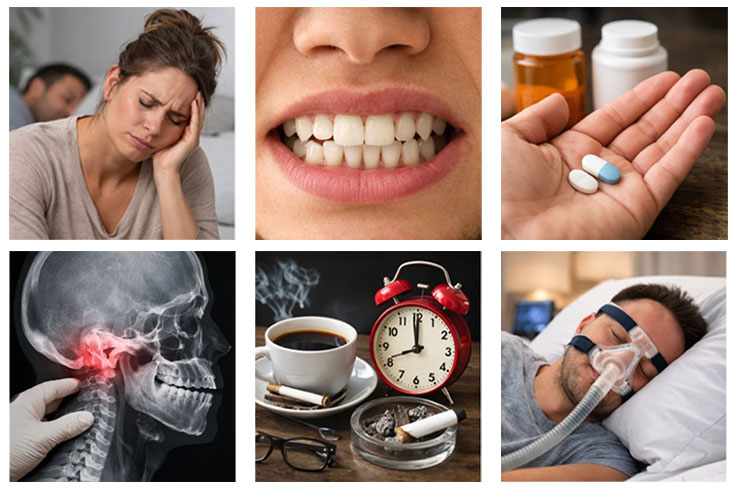
Once you know which of these applies to you, choosing the right natural fix becomes far easier, starting with the warning signs your body is already sending.
Symptoms of Teeth Grinding and Jaw Clenching
Because grinding happens while you sleep, most people notice the damage before they notice the habit. Catching these signs early can save you from cracked teeth and chronic jaw pain later.
Watch for the following symptoms, especially in the morning:
- Morning jaw soreness or tightness: Waking with a stiff, achy jaw that eases through the day is one of the earliest signals.
- Tooth sensitivity: Grinding wears away protective enamel and exposes the dentin underneath, leading to twinges with hot, cold, or sweet foods. Knowing how to strengthen weakened enamel becomes important once this starts.
- Morning headaches: Dull aches around the temples come from jaw muscles contracting for hours overnight.
- Worn, chipped, or flattened teeth: Constant grinding visibly reshapes the chewing surfaces and can cause small chips or cracks.
- Ear pressure or facial fatigue: Because jaw muscles sit close to the ears, grinding can mimic an earache and leave the face feeling tired.
- Signs a dentist spots first: Micro-fractures, enamel erosion, and gum recession often appear during routine exams, which is one more reason preventive dental care matters for catching bruxism early.
You might be thinking these symptoms could mean anything, and you are right that they overlap with other conditions. The pattern that points to bruxism is timing: symptoms that are worst on waking and improve as the day goes on almost always trace back to nighttime jaw activity.
If several of these sound familiar, the natural strategies below can start reducing the strain right away.
How Do I Stop Grinding My Teeth at Night Naturally?
Stopping grinding naturally comes down to calming the body before sleep and removing the triggers that keep your jaw working overnight. No single habit does all the work, so the people who get the best results stack several of these together.
Work through these steps and keep the ones that move the needle for you:
- Manage stress and anxiety. Since stress is the primary trigger, lowering it directly reduces grinding. Mindfulness, deep breathing, journaling, and progressive muscle relaxation all calm the nervous system. For many people, managing stress and dental anxiety is the single biggest lever.
- Improve your sleep hygiene. Go to bed at the same time nightly, keep the room cool and dark, and dim screens at least an hour before bed so melatonin can rise naturally.
- Do gentle jaw relaxation exercises. Slow, controlled opening and closing of the mouth, light stretching, and a brief jaw massage before bed train the muscles to release tension.
- Cut evening stimulants. Avoid caffeine, alcohol, and nicotine in the late afternoon and evening. Even one evening of coffee can keep jaw muscles active for hours.
- Stay hydrated. Mild dehydration can contribute to muscle cramping, so steady water intake throughout the day supports relaxed muscle function at night.
- Catch daytime clenching. Many people clench while focused at a screen. Training your jaw to rest with teeth slightly apart during the day carries straight into the night.
Natural Home Remedies for Teeth Grinding
Alongside the habits above, a few simple home remedies relax the jaw and improve sleep quality, and they cost very little to try:
- Warm compress: A heated towel or pad on the jaw before bed loosens tight muscles.
- Calming herbal teas: An evening cup of chamomile or similar tea supports relaxation and better sleep.
- Magnesium-rich foods: Spinach, almonds, pumpkin seeds, and bananas support muscle relaxation.
- Lavender aromatherapy: Diffusing lavender or applying a diluted version to the temples can ease pre-sleep tension.
- Less screen time before bed: Blue light suppresses melatonin and keeps the body alert, which raises the odds of overnight muscle activity.
Pro tip: Put a sticky note on your monitor and bathroom mirror with one word: “apart.” It is a constant reminder to rest your jaw with the teeth slightly separated, and the daytime habit follows you into sleep.
These methods handle the grinding itself. Clenching, though, has a slightly different fix worth its own attention.

How to Stop Clenching Your Jaw in Your Sleep
To stop clenching your jaw in sleep, you relax the masseter (the thick muscle at the back of the jaw) and remove whatever keeps it tense, whether that is stress, an uneven bite, or an irritated jaw joint. Clenching is the static cousin of grinding: instead of side-to-side movement, the muscles simply hold a hard squeeze for long stretches.
The same evening relaxation routine helps, with a few clenching-specific additions:
- Warm the masseter before bed with a compress to lower its resting tension.
- Practice tongue-resting posture: lips together, teeth apart, tongue gently on the roof of the mouth.
- Massage the cheeks and temples in small circles for two minutes to release the muscle.
- Address persistent jaw-joint pain with professional TMJ treatment options if home care is not enough.
Pro tip: Try the tongue-up trick at night. Rest the tip of your tongue on the ridge behind your upper front teeth. Your jaw muscles physically cannot clench hard while the tongue is in that position.
For stubborn, heavy clenching that resists home care, Botox for the jaw muscles is an option some patients explore. Small doses into the masseter relax the muscle for several weeks. In clinical studies, average pain scores dropped from about 6.8 to 3.4 within four weeks of treatment, which gives the muscle time to break the habit.
If you grind or clench during the day, too, the same posture work applies, and most people see daytime tension fade within a couple of weeks of practice.
What Vitamin Are You Lacking If You Grind Your Teeth?
No single vitamin deficiency causes bruxism, but low levels of magnesium, calcium, and certain B vitamins are linked to greater muscle tension and poorer sleep, both of which can worsen grinding. Correcting a genuine shortfall through diet is a sensible, low-risk place to start.
Magnesium is the standout. It helps muscles relax and steadies the nervous system, so low magnesium can leave the jaw more reactive at night. B vitamins, especially B5 and B6, support how the body handles stress, while calcium and vitamin D keep muscle signalling healthy.
Yes, magnesium helps many people relax, but it will not override an untreated airway problem or chronic anxiety on its own. Nutrition supports the fix; it rarely is the entire fix.
Foods That Help Stop Teeth Grinding
If you want to support relaxed jaw muscles through what you eat, focus on whole foods rich in these nutrients rather than reaching first for supplements:
| Nutrient | Best food sources | Why it helps |
|---|---|---|
| Magnesium | Spinach, almonds, pumpkin seeds, dark chocolate | Relaxes muscles, calms the nervous system |
| Calcium | Yoghurt, cheese, leafy greens | Supports healthy muscle signaling |
| Vitamin B5 and B6 | Whole grains, eggs, salmon | Helps the body regulate stress |
| Vitamin D | Fatty fish, fortified milk, sunlight | Works with calcium for muscle function |
Always check with a professional before starting any supplement, since more is not better with minerals like magnesium. With nutrition handled, the next question most people ask is whether they still need a night guard.
Do Dentists Recommend Night Guards?
Yes, dentists frequently recommend night guards, but as protection rather than a cure. A guard sits between the upper and lower teeth so that grinding wears down the appliance instead of your enamel. A custom mouth guard moulded to your bite is more comfortable and far more durable than a drugstore version, and it stays in place through the night.
A guard buys you time while the natural strategies address the root cause. It does not stop the grinding signal from the brain, so pairing it with stress and sleep work gives the best long-term result.
Mouth Guard Alternatives for Teeth Grinding
If a bulky guard is not for you, several alternatives reduce damage in different ways. Here is how the main options compare:
| Option | Fit and comfort | Durability | Best for |
|---|---|---|---|
| Custom dental night guard | Tailored to your bite, low bulk | 2 to 5 years | Moderate to severe grinding |
| Boil-and-bite guard | Semi-custom, often bulky | 6 to 12 months | Trying protection short-term |
| Stock over-the-counter guard | One size, least comfortable | A few months | Occasionally, very mild cases |
| Daytime habit + relaxation | Nothing in the mouth | Ongoing | Mild, stress-driven clenching |
You might be thinking a cheap drugstore guard will do the same job. It will protect your teeth in the short term, but a poor fit can shift your bite, fall out, or even encourage more clenching, which is why a professionally fitted guard is usually the better value over time.
That raises a practical question: how long should a quality guard actually last?
How Long Do Dentist Night Guards Last?
A professionally made night guard typically lasts 2 to 5 years, depending on the material, how heavily you grind, and how well you care for it. Heavy grinders often replace theirs sooner because the surface wears down faster.
Simple care extends its life. Rinse the guard with lukewarm water after each use and brush it gently with a soft toothbrush, then let it air dry fully and store it in a ventilated case. Keep it away from heat, which can warp the shape, and bring it to checkups so your dentist can confirm it still fits and protects correctly.
Pro tip: Avoid cleaning your guard with regular toothpaste. The mild abrasives create micro-scratches where bacteria settle. A non-abrasive cleaning tablet or mild soap keeps it smooth and hygienic.
Where you sleep on it matters too, because your sleeping position can either help or undo all this protection.
Best Sleeping Position to Stop Teeth Grinding
The best sleeping position to reduce teeth grinding is on your back with proper neck support, which keeps the spine aligned and takes pressure off the jaw. If you have breathing issues or snore, side sleeping is often better because it helps keep the airway open.
Stomach sleeping is the position to avoid. Turning your head to one side for hours strains the jaw and neck muscles and can make grinding worse by morning. A supportive pillow that keeps your head neutral does more for your jaw than most people expect.
Pro tip: If you are training yourself to sleep on your back, tuck a pillow under your knees. It makes back sleeping more comfortable and stops you from rolling onto your stomach overnight.
Position, habits, and nutrition handle most cases. When grinding has already done damage or simply will not let up, it is time to involve a dentist.
Sleep Bruxism Treatment: When to See a Dentist
See a dentist for sleep bruxism when you notice cracked or worn teeth, ongoing jaw pain, frequent morning headaches, or grinding that continues despite weeks of natural effort. At that point, professional treatment for ongoing bruxism protects your teeth and targets the cause directly.
Treatment is matched to the source and severity of the problem. A dentist may combine several of these:
- A custom night guard to shield your teeth while underlying habits change.
- An airway evaluation if snoring or apnea may be driving the grinding.
- Bite correction when misalignment is a factor.
- Restoration of damaged teeth through restorative dentistry, such as crowns, bonding, or veneers, once the grinding is under control.
- Comfort-focused care for anxious patients, where sedation dentistry can make longer repair visits easier.
A night guard is a seatbelt, not a cure. It limits the damage in a crash, but the goal is to keep the crash from happening in the first place by treating what drives the grinding.
The encouraging part is that most people who combine natural habits with the right professional support see real, lasting relief and protect the teeth they already have.
Need help getting started? Our California-based offices in Culver City and Inglewood are ready to assist. Reach out by filling out the consultation form or calling 310-643-6221.
Final Thoughts on Teeth Grinding at Night
Stopping nighttime teeth grinding naturally is less about one perfect remedy and more about consistency. When you lower stress, sleep well, support your muscles with good nutrition, and stay aware of daytime clenching, you remove the conditions that let the jaw work overtime at night.
Treat natural methods as your foundation and a dentist as your partner, not a last resort. If symptoms continue after a few weeks of honest effort, a quick professional evaluation can rule out an airway or bite problem and protect your teeth before any lasting damage sets in. The combination of steady habits and timely care is the most reliable path to quiet, comfortable sleep.
Key Questions About Teeth Grinding at Night
What vitamin deficiency causes teeth grinding in sleep?
Deficiencies in certain nutrients, especially magnesium, calcium, and B vitamins, can contribute to muscle tension and nervous system imbalance. Magnesium deficiency, in particular, is often linked to increased muscle activity and poor sleep quality, both of which may trigger nighttime teeth grinding.
Does magnesium stop jaw clenching?
Magnesium can reduce jaw clenching for many people by relaxing muscles and calming the nervous system, but it rarely stops clenching on its own. It works best alongside stress management and good sleep habits, and only helps meaningfully if you were actually low in magnesium to begin with.
Can teeth grinding go away on its own?
In some mild cases, especially those related to temporary stress, teeth grinding may resolve on its own. However, if the underlying causes persist, such as chronic anxiety or sleep disorders, the condition is unlikely to disappear without intervention.
Is teeth grinding linked to snoring or sleep apnea?
Yes. Grinding and disordered breathing are closely connected, and nearly half of adults with obstructive sleep apnea also grind their teeth. If you snore loudly, gasp during sleep, or wake unrefreshed, along with grinding, an airway evaluation is worthwhile because treating the breathing problem often calms the grinding.
How can I stop clenching my jaw at night without a mouth guard?
Focus on relaxing the jaw before sleep and removing triggers. A warm compress on the jaw, lavender aromatherapy, tongue-resting posture, cutting evening caffeine and alcohol, and a consistent wind-down routine all reduce overnight clenching. A guard still protects your teeth, but these habits address why the clenching happens in the first place.



0 Comments