

To eat with Invisalign, take your aligners out before every meal and snack, then brush or rinse before you snap them back in. The clear trays are removable for exactly this reason, so there is no food you have to give up the way you would with metal braces. What matters is the habit, not the menu: eating with the trays in is what cracks, stains, and warps them, and it is the fastest way to slow your treatment down. This guide breaks down the simple rules, the few drinks and foods that still need caution, and how to handle eating out, all without throwing your timeline off track.
Key Takeaways
- Always remove your aligners before eating anything other than plain water; chewing with them in damages the trays.
- There are no banned foods with Invisalign itself, but the foods you remove the trays for still affect your teeth, so steer clear of sticky, hard, and heavily staining items when possible.
- Only plain, cool water is safe to drink with aligners in. Coffee, tea, soda, juice, wine, and hot drinks all call for removal.
- Eating with Invisalign can crack or warp the plastic, trap food and bacteria against your teeth, and add weeks to your timeline.
- Brush or at least rinse your mouth and aligners before reinserting to avoid trapping sugar and acid against your enamel.
- You still need about 20 to 22 hours of daily wear, so meals and snacks need to be efficient, not all-day grazing.
Can You Eat While Wearing Invisalign?
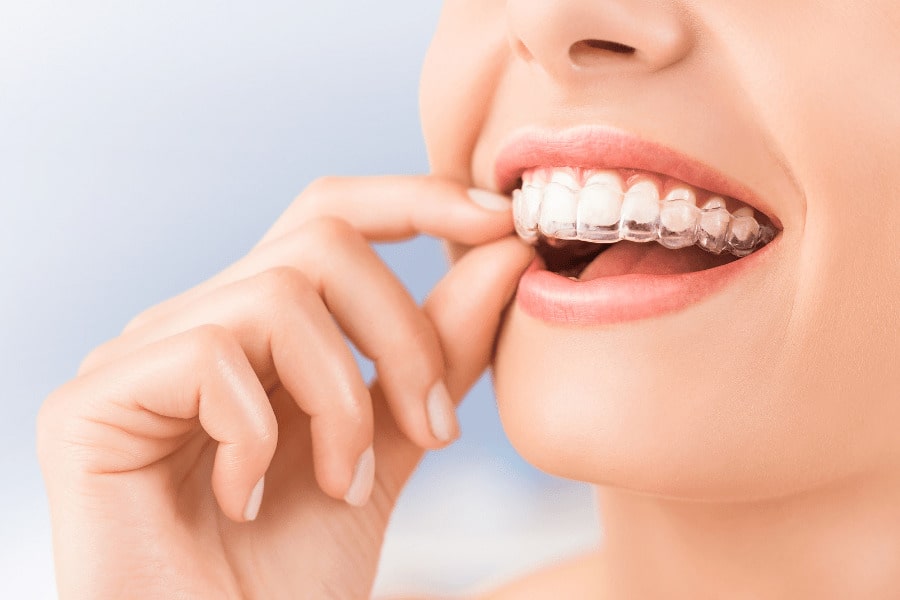
No. You should not eat any food while wearing Invisalign aligners. The trays are designed to be removed for eating, so almost anything you chew with them in puts the plastic, your teeth, or both at risk.
The reason is mechanical. Aligners are precision-molded from thin medical-grade plastic engineered to apply gentle, steady pressure to your teeth, not to absorb the force of chewing. Your molars can generate well over 100 pounds of biting force, and that load was never meant to pass through a 0.3 millimeter shell of plastic. Bite down on a meal with the trays in, and you risk cracking them, distorting their shape, or pushing trapped food hard against your gum line.
There is also a hygiene problem. The trays sit flush against your teeth, so any food or sugar that gets under them stays sealed in place for hours with nowhere to go. That turns your aligner into a tiny incubator for the bacteria that cause cavities and gum irritation, right when your teeth are already under pressure and more vulnerable.
A new patient once asked us why her two-week-old aligners looked cloudy and smelled off. She had been sipping iced coffee with them in all morning. The trays were fine structurally, but they were stained and harboring sugar against her front teeth for hours a day.
Pro Tip: Treat the rule simply: trays in means water only. The moment anything else touches your mouth, the aligners should already be in their case.
How to Eat With Invisalign: The Routine in 4 Steps
Eating with Invisalign comes down to a four-step routine you repeat at every meal: remove, store, eat, then clean and reinsert. Once it becomes automatic, it adds only a minute or two to each meal.
- Remove the aligners. Take both trays out before the first bite. Start from the back molars and work forward to avoid bending the plastic.
- Store them in the case, not a napkin. Aligners wrapped in a napkin get thrown away constantly. A hard case also keeps them clean and protected.
- Eat normally. With the trays out, your natural teeth do the work, so you can eat what you like, within the food-choice cautions below.
- Clean your mouth and trays, then reinsert. Brush and floss if you can, or rinse your mouth and the aligners with water if you cannot, before snapping the trays back in.
That last step is the one people skip, and it matters more than it sounds. Reinserting over an unbrushed mouth seals food particles, sugar, and acid against your enamel for hours. Over a months-long treatment, that is how patients end up with white spots or new cavities even though their teeth are getting straighter.
If brushing right after every meal is not realistic, knowing the proper way to clean your aligners at the start and end of each day becomes your safety net against buildup and odor. Pairing that with a routine professional dental cleaning keeps the plaque you cannot reach at home from building up while your teeth are sealed under the trays each day.
What Foods Should You Avoid With Invisalign?
Because you remove the trays to eat, no food is strictly off-limits with Invisalign, the way it is with braces. The real question is which foods work against your teeth and treatment, and those fall into three groups: sticky, hard, and staining foods.
Sticky and chewy foods are the biggest practical problem. Caramel, taffy, gummy candy, and chewing gum cling to teeth and to any attachments, and they are tough to fully clear before the trays go back in. Leftover residue then sits trapped under the aligner.
Hard and crunchy foods like nuts, hard pretzels, ice, and raw carrots are not a risk to the aligners themselves when the trays are out, but they can be uncomfortable on teeth that are already tender from active movement. Staining foods and drinks are a third category: tomato sauce, curry, red wine, coffee, and dark berries can discolor both your teeth and any aligner you put back in before rinsing.
| Food type | Examples | Why it matters | Smart approach |
|---|---|---|---|
| Sticky / chewy | Caramel, taffy, gummy candy, gum | Hard to clean off before reinserting; clings to attachments | Skip or brush thoroughly afterward |
| Hard / crunchy | Ice, nuts, hard pretzels, raw carrots | Uncomfortable on tender teeth; chips natural teeth | Eat with care; never chew with trays in |
| Staining | Coffee, red wine, curry, berries | Discolors teeth and aligners reinserted too soon | Rinse or brush before putting trays back |
| Sugary / acidic | Soda, candy, citrus, sweetened drinks | Feeds bacteria sealed under the trays | Limit; always clean before reinserting |
Notice the pattern: none of these are banned because of the aligner. They matter because of what happens to your teeth in the window between eating and reinserting. That reframes the whole food question from "what can I eat" to "how clean is my mouth before the trays go back in." If staining foods have already dulled your smile, a course of professional teeth whitening is best done after treatment wraps up, once your teeth are in their final position.
If you have Invisalign attachments, those small tooth-colored bumps bonded to certain teeth, be extra careful with sticky and very hard foods even after the trays are out. Attachments give the aligners extra grip for tricky movements, but sticky foods can tug at them, and hard foods can chip them.
A lost or damaged attachment can stall the movement it was placed to control, sometimes meaning a return visit to rebond it. You do not need to avoid these foods entirely; you need to chew on the opposite side, cut hard items into smaller pieces, and brush carefully around each attachment so nothing hardens around the bonded edge.
Pro Tip: Run your tongue over your attachments after brushing. If one feels sharp, rough, or different from before, call us before your next aligner change so a chipped attachment does not quietly delay your progress.
Can You Eat Ice Cream With Invisalign?
Yes, you can eat ice cream with Invisalign, but take your aligners out first. Ice cream is soft and easy to eat, so it poses no physical threat to your teeth, but it is loaded with sugar that you do not want sealed under your trays.
After eating, rinse your mouth and ideally brush before reinserting, so sugar is not trapped against your enamel for hours. If your teeth feel sensitive to cold, which is common in the first day or two after switching to a new aligner, the cold of ice cream may sting briefly; that passes as your teeth settle.
Can You Chew Ice With Invisalign?
You should avoid chewing ice with Invisalign, and never chew it with the trays in. With the aligners out, crunching ice can chip natural teeth and aggravate teeth that are already sore from movement. With the trays in, ice can crack the plastic outright.
Plain ice water is fine and even encouraged, since cold water can ease the mild ache of a fresh aligner. The problem is the chewing, not the cold. If you are a habitual ice-cruncher, treatment is a good moment to break the habit, because the same force that cracks an aligner can fracture a tooth.
Chewing ice is one of the few habits we ask every aligner patient to drop. We have repaired more chipped front teeth from ice than from any food on the avoid list.
Can You Eat Popcorn With Invisalign?
You can eat popcorn with Invisalign as long as the trays are out, but it takes extra cleanup. Remove your aligners first, then be ready to floss and brush carefully afterward, because popcorn hulls wedge between teeth and along the gum line with ease.
Any hull left behind gets pressed against your gums when you reinsert the trays, which can cause irritation or a small sore. If you are at a movie or somewhere, brushing is not an option; popcorn is one snack worth postponing until you can clean up properly.
Drinking With Invisalign: What Is Safe and What Is Not
Plain, cool water is the only drink that is safe to consume with your Invisalign trays in. Everything else, including coffee, tea, soda, juice, sports drinks, and alcohol, calls for removing the aligners first.
There are two reasons. Sugary and acidic drinks pool under the trays and bathe your teeth in cavity-causing conditions with no saliva to wash them away. Hot drinks add a second hazard: heat softens and warps the plastic, which can ruin the precise fit your aligners depend on. Even a hot coffee sipped through aligners can subtly distort them.
Colored drinks like coffee, tea, and red wine will also stain the trays, so an aligner you meant to wear invisibly starts looking yellow or dull.
| Drink | With trays in? | Notes |
|---|---|---|
| Plain cool water | Safe | Encouraged; keeps you hydrated and rinses the mouth |
| Coffee & tea (hot) | Remove first | Heat warps plastic; also stains trays |
| Soda & juice | Remove first | Sugar and acid sealed against teeth cause decay |
| Red wine | Remove first | Strong staining of teeth and aligners |
| Sparkling / flavored water | Remove first | Acidity can affect enamel and trays over time |
What Happens if You Eat With Invisalign In?
Eating with your Invisalign can crack or warp the trays, trap food and bacteria against your teeth, and ultimately slow or derail your treatment. A single slip is rarely a disaster, but making it a habit creates real problems.
Here is what is actually at stake when you chew with the trays in:
- Cracked or distorted aligners. Chewing force can split the plastic or bend it out of shape, so it no longer fits and no longer moves your teeth correctly.
- Trapped food and bacteria. Food sealed under the trays raises your risk of cavities, gum inflammation, and bad breath.
- Staining. Pigments from food and drink discolor the trays, making them visible instead of clear.
- Delayed treatment. A damaged tray often means waiting for a replacement, and any time spent in an ill-fitting aligner can set your progress back.
If you do crack or lose an aligner, do not improvise. Put in your previous set if you still have it to maintain pressure, and contact us so we can decide whether to move you forward, reorder the tray, or adjust the plan. The worst move is forcing a damaged tray and hoping it works out.
Some of the discomfort people blame on food is really just teeth adjusting to a new set of trays. Understanding why aligners can feel sore and how long it lasts helps you tell normal movement from a real problem that needs a call.
How to Eat Out and Stay on Track With Invisalign
Eating out with Invisalign is completely manageable with a little planning: remove your trays discreetly before the meal, keep your case and a small dental kit on hand, and rinse or brush before you leave. The social side is usually the part people worry about, and it is easier than it seems.
Slip the trays out before you sit down rather than at the table, store them in your case, and head to the restroom afterward to rinse your mouth and aligners. If brushing is not possible, swishing with water and reinserting clean trays still beats leaving sugar and acid in place.
The bigger watch-point at restaurants is grazing. A long dinner with drinks can quietly stretch your time-out time well past what your schedule allows. Aim to eat within a defined window, then get the aligners back in rather than nursing a drink for two more hours.
Final Thought on Eating With Invisalign
Eating with Invisalign is straightforward once you internalize a single principle: the trays come out for everything except plain water, and your mouth gets clean before they go back in. That one habit protects the aligners, your enamel, and your timeline all at once, which is why food choice matters far less than routine.
The patients who finish on schedule are not the ones who ate a perfect diet; they are the ones who made removal and cleanup automatic. Build that rhythm early, stay consistent at restaurants and on busy days, and your treatment quietly does its job in the background while you keep enjoying the foods you love.
Frequently Asked Questions on Eating With Invisalign
Can I drink coffee with Invisalign?
You should remove your aligners before drinking coffee to prevent staining and damaging the aligners.
How often should I clean my aligners?
Clean your aligners at least twice a day, ideally whenever you brush your teeth, to maintain oral hygiene and prevent odors.
Do I have to brush every time I eat?
Brushing after every meal is ideal, but when you cannot, rinse your mouth and your aligners thoroughly with water before reinserting. The goal is to avoid sealing food, sugar, and acid against your teeth for hours, so a solid rinse is your minimum standard.
Can I eat with my Invisalign trays just for a quick snack?
No. Even a quick snack means removing the trays first. There is no portion small enough to make chewing with aligners safe, because a single hard bite can crack the plastic. For anything beyond water, take them out.
Can I eat yogurt with Invisalign?
Take your aligners out before eating yogurt. It is soft and harmless to your teeth, but its sugar will sit trapped under the trays if you eat it with them in. Rinse your mouth and, ideally, brush before reinserting so nothing is sealed against your enamel.



0 Comments