

Lidocaine numbness usually lasts 1 to 3 hours after a dental visit. The exact time depends on the type used: a plain injection keeps the tooth numb for 30 to 60 minutes, while an injection with epinephrine can leave your lips and cheek numb for 3 to 5 hours. Knowing how long lidocaine lasts helps you plan when you can eat, speak clearly, and get back to your day. Below you will find duration timelines for every form of lidocaine, what speeds it up or slows it down, and the one question most patients never think to ask their dentist.
Key Takeaways
- Dental numbness from lidocaine typically fades within 1 to 3 hours, though soft tissue like lips and cheeks can stay numb up to 5 hours with epinephrine.
- A plain lidocaine injection numbs the tooth for 30 to 60 minutes; adding epinephrine extends tooth numbness to 60 to 90 minutes.
- Lidocaine has a half-life of about 90 to 120 minutes and is essentially cleared from your system within 8 to 10 hours, well after the numbness ends.
- Gentle massage, light activity, and a warm compress on the cheek can help numbness wear off faster; a reversal injection can cut the time roughly in half.
- Mild swelling or tenderness at the injection site usually settles within 1 to 2 days.
- Numbness lasting more than 5 to 6 hours after a routine visit is worth a call to your dentist.
How Long Does the Numbness From Lidocaine Last?
Most patients regain normal feeling within 1 to 3 hours, but the type of lidocaine your dentist used sets the real timeline. The tooth itself loses numbness first. Your lips, tongue, and cheek take noticeably longer because soft tissue holds the anesthetic longer than the nerve supplying the tooth.
Here is what to expect from each form:
| Type of lidocaine | Tooth numbness | Lips, cheek, tongue |
|---|---|---|
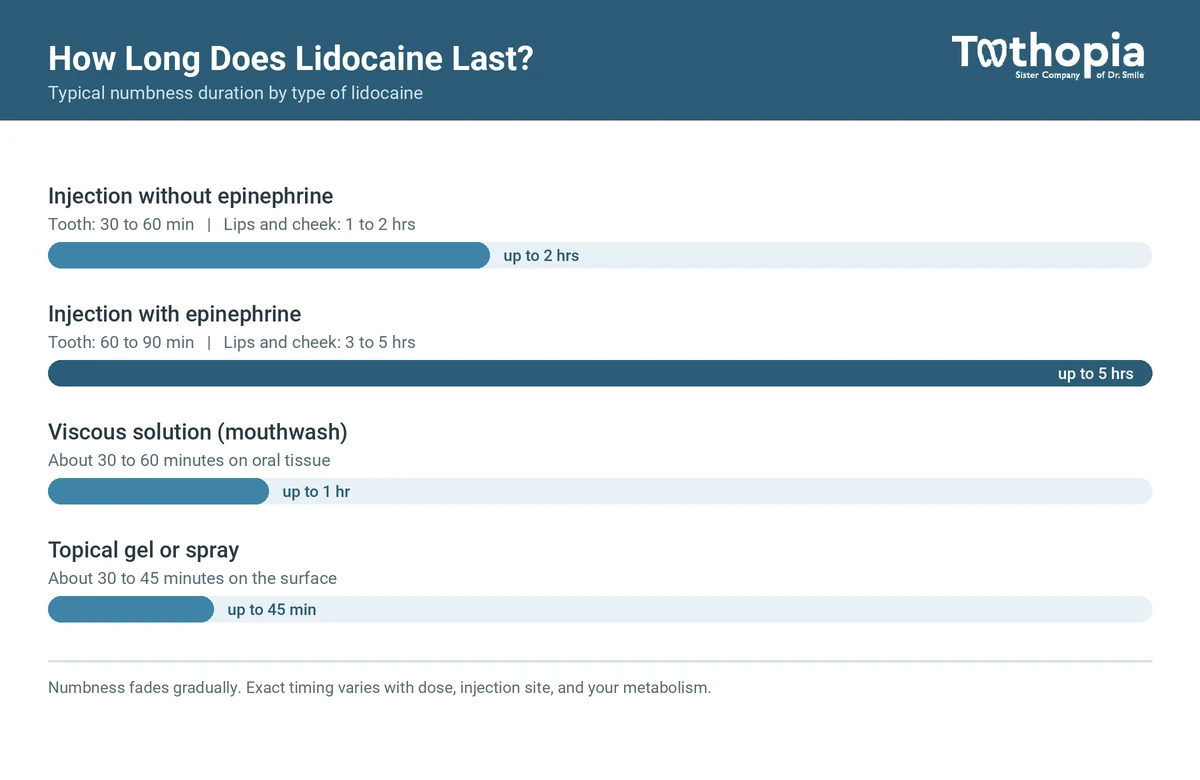
| Injection without epinephrine | 30 to 60 minutes | 1 to 2 hours |
| Injection with epinephrine | 60 to 90 minutes | 3 to 5 hours |
| Viscous solution (mouthwash) | Surface only | 30 to 60 minutes |
| Topical gel or spray | Surface only | 30 to 45 minutes |
If your appointment involved deeper work such as a root canal or surgical extraction, your dentist likely chose the longer-acting option on purpose. That extra window is not a problem sign; it is planned pain control.
How Long Does a Lidocaine Injection Last at the Dentist?
A dental lidocaine injection starts working within 90 seconds to 2 minutes and keeps the tooth numb for 30 to 90 minutes depending on whether epinephrine was added. Most dental cartridges in the United States contain 2 percent lidocaine with epinephrine, which is why lip and cheek numbness commonly stretches to 3 to 5 hours after you leave the chair.
The injection technique matters as much as the drug. A single infiltration near one upper tooth wears off sooner than a nerve block. Lower molars usually need a block of the nerve that runs through the jaw, which numbs half the lower lip, the chin, and part of the tongue for the full 3 to 5 hour window. That is why numbness in the gums and lower face after molar work routinely outlasts numbness after a small upper filling.
The injection is usually the part patients fear most, yet with topical gel applied first, most people feel only a brief pinch and pressure. If needles are the reason you delay care, managing dental anxiety is easier than most patients expect, and sedation dentistry is an option for longer procedures.
What Is Lidocaine and How Does It Work?
Lidocaine is a local anesthetic that blocks sodium channels in nerve fibers, which stops pain signals from reaching your brain. It replaced novocaine in dentistry decades ago because it works faster, lasts more predictably, and causes far fewer allergic reactions. If your dentist mentioned novocaine, they almost certainly meant lidocaine; the older name simply stuck in everyday speech.
Dentists rely on it for fillings, root canals, crowns, gum treatment, and tooth extractions. Numbness, not sleepiness, is the goal: you stay fully awake and aware while only the treated area loses sensation.
What Makes Lidocaine Last Longer or Wear Off Faster?
Five factors control your personal timeline:
- Epinephrine: This additive narrows blood vessels at the injection site, holding the anesthetic in place. It is the single biggest reason numbness stretches from 1 hour to as long as 5.
- Dose and concentration: A second cartridge, or a 4 percent solution instead of 2 percent, extends the effect.
- Injection site: Nerve blocks in the lower jaw last longer than single-tooth infiltrations in the upper jaw, where bone is more porous and blood flow clears the drug sooner.
- Your metabolism: Lidocaine is broken down by the liver, so age, liver health, and certain medications slow clearance.
- Infection: Inflamed, acidic tissue resists the anesthetic, which is why an infected tooth is harder to numb and may need more anesthetic, which then takes longer to fade.

How Long Does Lidocaine Stay in Your System?
Lidocaine has a half-life of roughly 90 to 120 minutes in healthy adults, and a drug is considered essentially cleared after about five half-lives. That means lidocaine is out of your system within 8 to 10 hours, even though the numbness itself ends much earlier. The feeling returns once the drug diffuses away from the nerve, long before the liver finishes breaking down the rest.
Trace metabolites can linger slightly longer in older adults, people with liver or heart conditions, and young children, which is also why numbness in those groups can run past the usual window. Standard dental doses do not cause a positive result on routine drug screenings, a question patients ask more often than you would think.
How to Make Dental Numbness Go Away Faster
You can safely shorten numbness by increasing blood flow to the area. More circulation carries the anesthetic away from the nerve sooner. Try these in order:
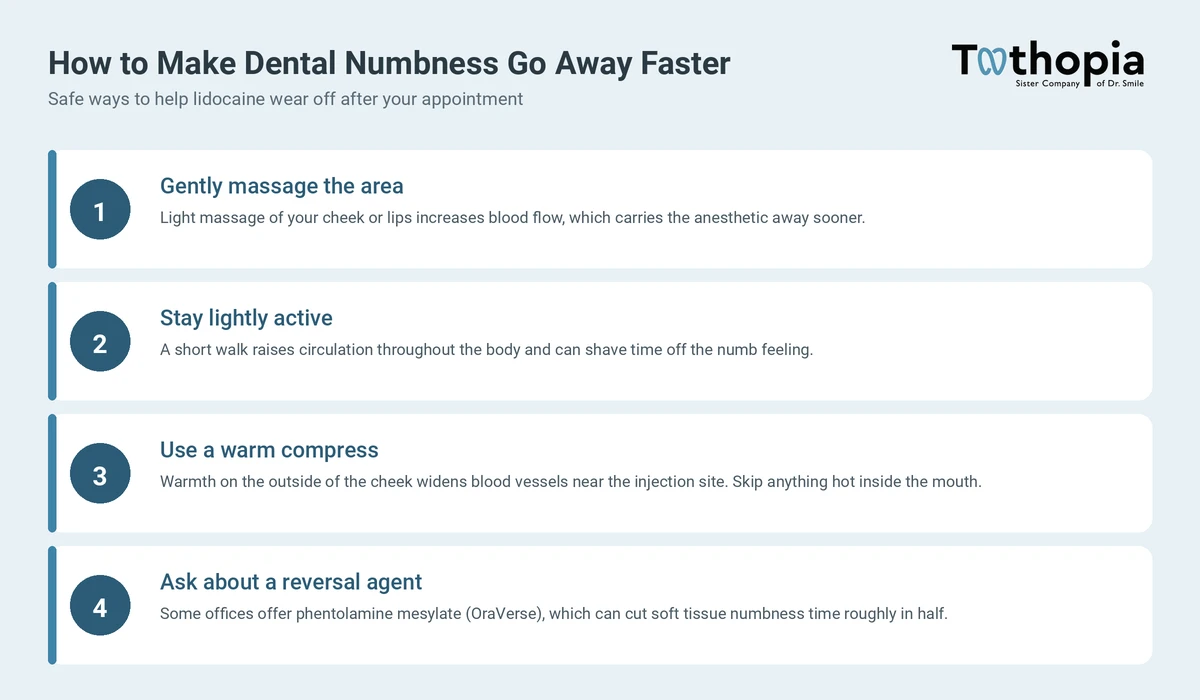
- Gently massage your cheek or lips over the numb area for a few minutes at a time, using clean hands.
- Take a short walk. Light activity raises overall circulation and can trim the timeline.
- Hold a warm compress against the outside of your cheek. Skip hot food and drinks, since you cannot feel a burn while numb.
- Ask about a reversal injection. Phentolamine mesylate, sold as OraVerse, reverses the vessel-narrowing effect of epinephrine and can cut remaining soft tissue numbness roughly in half. It is given at the end of treatment, so request it before your appointment wraps up.
You might be thinking a nap would pass the time just as well. It does, but circulation drops while you sleep, so if speed matters, stay lightly active first and rest afterward.
What to Do While Your Mouth Is Still Numb
The main risk while numb is injury you cannot feel. Protect yourself with a few simple rules:
- Do not eat solid food until feeling returns; it is easy to bite your cheek or tongue without noticing.
- Avoid hot drinks. A burn can happen silently while your mouth has no temperature sensation.
- If you must eat, choose soft, cool foods and chew on the opposite side.
- Watch children closely. Kids often chew or suck on a numb lip, which can cause real tissue damage.
- After an extraction, follow your post-op sheet exactly while numb, since the anesthetic can mask early discomfort. Curious whether fillings hurt once feeling returns? Normal sensation should come back gradually, without sharp pain.
Lidocaine Side Effects and How Long They Last
Most lidocaine side effects are mild and gone within a day or two. The most common are soreness, mild swelling, or a small bruise at the injection site, which typically settle within 24 to 48 hours. A brief racing heartbeat right after the injection is usually the epinephrine, not an allergy, and passes within minutes.
Less common effects include temporary dizziness, drowsiness, or a tingling feeling as sensation returns. True allergic reactions to lidocaine are rare. Signs that need same-day attention include spreading facial swelling, hives, trouble breathing, or numbness that persists into the next day, which can signal nerve irritation rather than leftover anesthetic.
Why Lidocaine Feels Different for Each Patient
No two people process lidocaine identically. Age, body weight, liver function, stress level, and even natural anatomy change both how strong the numbness feels and how long it lingers. Some patients notice pins and needles as feeling returns; others go from numb to normal almost at once. A small number of people have anatomical nerve variations that make standard injection spots less effective, which is why your dentist may adjust the technique or add a second injection. None of this is cause for concern; it is the reason dosing is tailored at every visit.
When to Contact Your Dentist About Numbness That Will Not Go Away
Call your dentist if numbness lasts more than 5 to 6 hours after a routine filling, or past the next morning after surgical work. Persistent numbness can mean the anesthetic reached a nerve branch that needs time to recover, and your dentist will want to document it and monitor healing. Most cases resolve on their own over days to weeks.
Reach out sooner if numbness comes with swelling, fever, or severe pain as the anesthetic fades. Our emergency dentistry team keeps same-day slots open for urgent concerns.
Need help getting started? Our California-based offices in Culver City and Inglewood are ready to assist. Reach out by filling out the consultation form or calling 310-643-6221.
Final Thoughts on How Long Lidocaine Lasts
Lidocaine numbness is short, predictable, and safe: 30 to 90 minutes for the tooth, 1 to 5 hours for soft tissue depending on epinephrine, and full clearance from your body within about 8 to 10 hours. The practical move is simply to plan around it. Ask which anesthetic you received, schedule meals for after the expected window, and use gentle massage or a warm compress if you want feeling back sooner.
If anything about your numbness feels off, a quick phone call resolves it faster than searching symptoms. Your care team would rather hear from you at hour four than have you wait until tomorrow.
Common Questions About How Long Lidocaine Lasts
How long does lidocaine with epinephrine last?
Lidocaine with epinephrine keeps a tooth numb for about 60 to 90 minutes and soft tissue numb for 3 to 5 hours. The epinephrine narrows nearby blood vessels, holding the anesthetic at the site longer than plain lidocaine.
Does lidocaine hurt when it wears off?
Wearing off itself does not hurt, though many patients feel tingling or pins and needles as sensation returns. If pain appears as the numbness fades, it is usually from the procedure, not the anesthetic, and an over-the-counter pain reliever taken before the numbness ends keeps you ahead of it.
How long does lidocaine mouthwash last?
Viscous lidocaine, the swish-and-spit solution used for mouth soreness, numbs oral tissue for about 30 to 60 minutes per dose. It works only on the surface, so it will not numb a tooth the way an injection does.
Can lidocaine make you sleepy or dizzy?
Mild drowsiness or dizziness can occur, especially with larger doses, and passes within a few hours. Standard dental doses are low enough that most patients drive home normally, but rest at the office for a few minutes if you feel lightheaded.
How do you get lidocaine out of your system quickly?
Your liver clears lidocaine on its own within 8 to 10 hours, and nothing you swallow speeds that up. What you can influence is the numbness: gentle massage, light activity, and a warm compress bring feeling back sooner, and a phenylephrine reversal injection at the office can cut soft tissue numbness roughly in half.



0 Comments