

Canker sores after tooth extraction are common and usually harmless. These small, painful ulcers tend to appear near the extraction site within a few days of surgery, when trauma, stress, and a changing mouth environment irritate the soft tissue. Most clear up on their own in one to two weeks. This guide walks you through why they form, how to ease the pain quickly, how to tell a canker sore apart from a dry socket or infection, and the warning signs that mean it is time to call your dentist. The good news comes first: a few simple habits can make the rest of your recovery far more comfortable.
Key Takeaways
- Canker sores after tooth extraction usually come from minor trauma, stress, and irritation as the mouth heals, not from the surgery going wrong.
- Most canker sores heal on their own in 7 to 14 days without prescription treatment.
- Gentle saltwater rinses, a soft-food diet, and avoiding acidic or spicy foods speed up healing and reduce pain.
- A canker sore is shallow and tender; a dry socket brings deep, throbbing pain, and an abscess brings swelling or pus. Those last two need a dentist.
- Call your dentist if a sore lasts longer than two weeks, grows unusually large, or comes with fever, spreading swelling, or severe pain.
Why do canker sores appear after a tooth extraction, and how can you prevent them?
Canker sores often develop after tooth extraction due to oral trauma, stress, and changes in the mouth's environment during healing. These small, painful ulcers can form as your body responds to irritation or inflammation around the extraction site. Fortunately, you can reduce the risk by following proper aftercare, avoiding acidic or spicy foods, and managing stress levels during recovery.
What Are Canker Sores and Why Do They Occur?
Canker sores are small, painful lesions that typically appear inside the mouth, on the tongue, or along the inner cheeks. They are not contagious but can cause significant discomfort. Canker sores can occur for various reasons, often linked to irritation, immune system issues, or stress. After tooth extraction, they may develop due to trauma or changes in the oral environment.
Common Triggers of Canker Sores
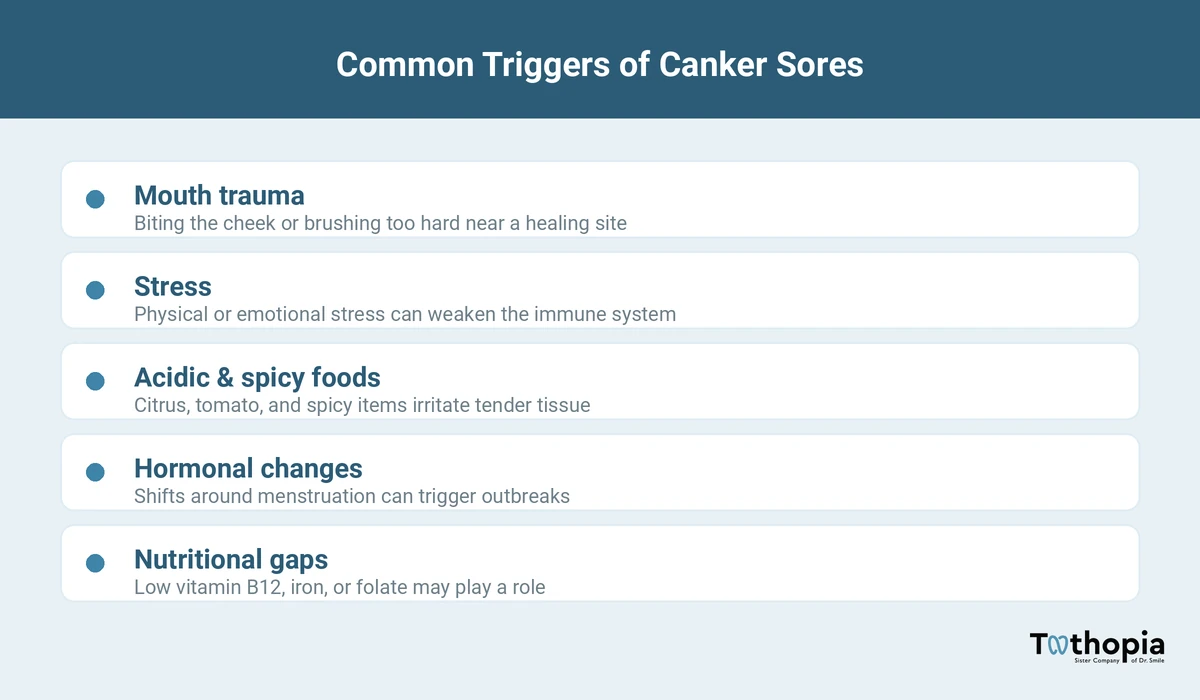
Several factors can trigger canker sores, including:
- Injury to the mouth: Accidentally biting the inside of your cheek or brushing too hard. This kind of irritation can also happen when the mouth is still sensitive after dental procedures, especially if care instructions aren't followed properly, such as using mouthwash after tooth extraction too early, which may irritate healing tissues.
- Stress: Emotional or physical stress can weaken the immune system and contribute to outbreaks.
- Certain foods: Acidic, spicy, or citrus foods can irritate the mouth and trigger sores.
- Hormonal changes: Fluctuations in hormones, particularly during menstruation, can lead to outbreaks.
- Nutritional deficiencies: Lack of vitamins like B12, iron, or folate may contribute to the development of canker sores.
Symptoms of Canker Sores After Oral Surgery
After a tooth extraction, canker sores may appear as a result of the procedure or healing process. Symptoms to watch for include:
- Painful ulcers: Small, round sores with a white or yellow center surrounded by a red border.
- Sensitivity: The sores may be sensitive to certain foods, especially acidic or spicy items.
- Mouth irritation: Discomfort while eating, drinking, or speaking, especially when the area is touched or rubbed.
Mouth Ulcer After Tooth Extraction
A mouth ulcer after tooth extraction is usually a temporary healing issue caused by irritation to the soft tissues. It is not always the same as a canker sore and often develops from friction, swelling, stitches, or minor trauma during recovery.
Common causes:
- Irritation from dental instruments or stitches
- Friction from chewing or speaking
- Accidental biting while the mouth is still numb
Unlike an infection, a typical mouth ulcer is usually shallow, tender, and heals on its own within 7 to 14 days. Gentle oral hygiene, avoiding spicy or acidic foods, and not touching the sore can help it recover.
A white or yellow layer in the center of the ulcer is often part of normal healing. However, contact your dentist if the sore becomes larger, lasts longer than two weeks, or appears with severe pain, swelling, pus, fever, or a bad taste.
Where Canker Sores and Ulcers Show Up After an Extraction
Canker sores and oral sores after tooth removal don't always sit right on the socket. They can turn up anywhere the mouth was stretched, rubbed, or irritated during the procedure. Knowing the usual spots helps you tell an ordinary healing sore apart from something that needs attention.
On the gums: A sore on the gum after tooth extraction often forms right at the edge of the healing socket, where the tissue is thinnest and most exposed.
On the tongue: A tongue ulcer or sore tongue after tooth extraction usually comes from the tongue rubbing against a rough edge, a stitch, or a nearby tooth while your mouth is numb and less protective.
On the inner cheek: A canker sore on the cheek after tooth extraction, or a sore inside the cheek near the molars, is common because the cheek is pulled and retracted during surgery and can be nicked while you cannot fully feel it. If the spot is dark red or purple and raised rather than pale and shallow, it is more likely to be a blood blister inside the cheek.
On the roof of the mouth: A tender spot on the palate can appear from instruments, suction, or a hard food edge pressing against it, and it typically settles as the swelling from the extraction goes down.
A sore that appears away from the socket, such as on the tongue or cheek, is usually a friction ulcer rather than a problem with the extraction itself. Keeping your tongue and cheek away from the area while it is numb prevents most of them.
How Long Do Canker Sores Last After Tooth Extraction?
Most canker sores after tooth extraction heal within 7 to 14 days, and they tend to follow a predictable pattern. Knowing the stages helps you judge whether a sore is on track or worth a closer look.
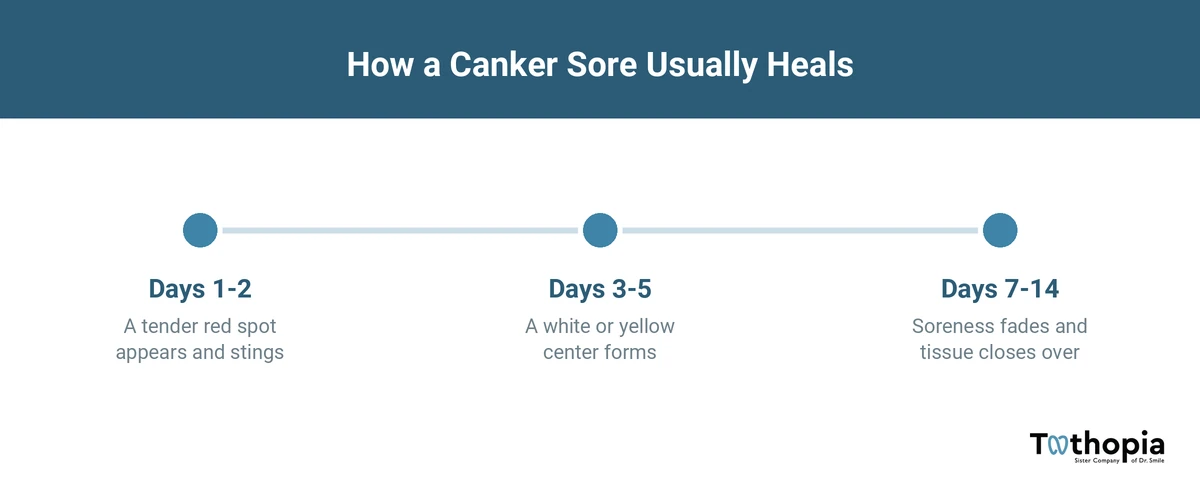
In the first day or two, you notice a tender red spot that stings, especially against acidic or salty food. By roughly days three to five, a white or yellow center forms as the surface tissue breaks down and the body starts to repair it. From about days seven to fourteen, the soreness fades, and the tissue closes over. Painful sores in the mouth after extraction that keep to this timeline are healing normally. A sore that is still growing, or one that has not improved at all after two full weeks, is the exception worth flagging to your dentist.
Canker Sores After Wisdom Teeth Removal
After wisdom teeth removal, some patients may notice the appearance of canker sores in the mouth. These small, painful ulcers can develop due to irritation of the soft tissues, changes in the oral environment, or minor trauma during the extraction process. To reduce discomfort and support healing, stick to a soft-food diet. You can find a helpful guide on the Top 25 Foods to Eat After Wisdom Teeth Removal. Avoid acidic or spicy foods, maintain gentle oral hygiene, and rinse with warm saltwater. Over-the-counter topical treatments can help soothe pain, while stress management and proper rest support faster recovery. If sores persist beyond two weeks, become unusually large, or are accompanied by severe pain or swelling, consult your dentist promptly to ensure there are no complications.
Because the back of the mouth is harder to reach and harder to keep still, sores near a wisdom tooth are especially common. A canker sore near or behind a wisdom tooth often sits where the cheek or tongue keeps brushing the extraction site, and an ulcer from a wisdom tooth can form when a partially erupted tooth or a rough socket edge rubs the surrounding gum. These usually respond to the same gentle care as any other extraction sore.
One thing to rule out is infection rather than a simple sore. If the gum around a wisdom tooth becomes swollen, sore, and tender to bite on, that can point to an infection around a wisdom tooth called pericoronitis, which needs a dentist's attention rather than home care. A shallow, single ulcer that slowly shrinks is far more reassuring than a spreading, swollen, or pus-filled area.
Canker Sore, Dry Socket, or Abscess? Telling Them Apart
Not every sore after an extraction is a canker sore, and telling them apart matters because a couple of these need prompt care. A dark purple dome rather than a pale ulcer is usually a blood blister from the procedure, which follows its own timeline. A canker sore is shallow and tender, a dry socket brings deep throbbing pain, and an abscess brings swelling and sometimes pus.
A canker sore or traumatic ulcer stays shallow, has a white or yellow center with a red border, and slowly shrinks over one to two weeks. A dry socket is different: it happens when the blood clot over the socket is lost, exposing bone, and it usually brings a deep, throbbing ache a few days after surgery, sometimes with a bad taste. If that sounds familiar, it is worth learning how to tell whether you have a dry socket, because it needs a dentist rather than home care. An abscess shows up as a swollen bump that may leak pus and often comes with worsening pain, and it also needs professional treatment.
| Condition | Key Signs | What It Usually Needs |
|---|---|---|
| Canker sore | Small white/yellow ulcer, red border, surface pain | Usually heals in 7–14 days |
| Dry socket | Deep throbbing pain, bad taste, exposed socket | Dental treatment needed |
| Abscess | Swelling, pus, worsening pain, fever | Prompt dental care |
How to Prevent Canker Sores After Tooth Extraction
Preventing canker sores after a tooth extraction is essential for a smooth recovery. By following proper aftercare and avoiding common triggers, you can significantly reduce the risk of developing these painful sores.
Key Post-Extraction Care Tips
To minimize the risk of canker sores, ensure that you follow all post-extraction instructions provided by your dentist. This includes gentle cleaning of the extraction site, using a saltwater rinse, and avoiding any vigorous activities that could irritate the wound. Staying hydrated and maintaining good oral hygiene are also essential for proper healing.
Avoiding Irritating Foods and Habits
Certain foods can irritate the sensitive tissues in your mouth after extraction. Avoid spicy, acidic, and crunchy foods, as they can cause discomfort or exacerbate the development of canker sores. Additionally, avoid habits like chewing on hard objects or smoking, as these can delay healing and increase the risk of sores.
Managing Stress During Recovery
Stress can weaken your immune system, making you more susceptible to canker sores. To manage stress during recovery, practice relaxation techniques such as deep breathing, meditation, or gentle exercise. Ensuring a calm and relaxed recovery environment can help speed up the healing process and prevent complications like canker sores.
Effective Treatments for Canker Sores
Canker sores after tooth extraction can be painful, but the good news is that there are several effective treatments to help manage and alleviate discomfort. Whether you're using over-the-counter remedies or natural solutions, taking the right steps can lead to a quicker recovery.
Over-the-Counter Remedies
Many over-the-counter treatments are available to relieve the pain and inflammation associated with canker sores. These can include topical gels, ointments, or mouth rinses that help reduce irritation and promote healing. Look for products containing benzocaine or hydrogen peroxide, which can provide numbing and disinfecting effects.
Natural Remedies and Care
For those who prefer natural options, several remedies can help ease the discomfort. Applying a mixture of saltwater, aloe vera gel, or honey to the affected area can reduce inflammation and speed up healing. Avoiding spicy, acidic foods and maintaining good oral hygiene also play a key role in preventing and managing canker sores.
When to Seek Professional Help
If your canker sores persist for more than two weeks, are unusually large, or cause extreme discomfort, it's time to consult a dentist. In some cases, prescription medications or professional treatments may be necessary to manage more severe outbreaks. A dental professional can help identify the underlying cause and ensure appropriate care.
When it comes to tooth extractions or any dental procedure, consulting with an experienced dental team is essential for a smooth recovery. Learn more about our tooth extraction services and how our specialists provide careful, personalized care to support your oral health.
Need help getting started? Our California-based offices in Culver City and Inglewood are ready to assist. Reach out by filling out the consultation form or calling 310-643-6221.
How to Treat Mouth Ulcers After Tooth Extraction
Treating mouth ulcers after a tooth extraction requires extra care to protect the healing socket while easing tissue irritation. The priority is keeping the area clean without disturbing the extraction site. Gentle saltwater rinses, used sparingly and without force, can help reduce bacterial buildup and soothe inflamed tissue around the ulcer.
Physical irritation should be minimized as much as possible. Avoid stretching the mouth widely, chewing on the extraction side, or allowing sharp food edges to rub against the ulcer. Using a soft-bristled toothbrush and brushing slowly around nearby teeth can prevent further trauma to already sensitive tissues.
It's also important to support the body's natural healing response. Staying well hydrated, getting adequate rest, and avoiding smoking or alcohol allows the oral tissues to repair more efficiently. Most mouth ulcers that appear after tooth extraction improve as swelling subsides and the surrounding tissues stabilize, typically resolving within one to two weeks without interfering with the extraction site.
Final Thought on Canker Sores After Tooth Extraction
Canker sores after tooth extraction are a normal, temporary part of healing for most people, not a sign that treatment went wrong. The single most useful thing to remember is the difference between shallow, slowly shrinking soreness and deep, spreading, or pus-filled pain. The first heals with gentle care; the second is your cue to call.
Keep the area clean with light saltwater rinses, stick to soft and non-irritating foods, and give the tissue time to recover. If a sore outlasts two weeks, grows, or brings fever or swelling, have it checked. Our team in Culver City and Inglewood is here to help you heal comfortably and confidently.
Common Questions about Canker Sores After Tooth Extraction
Can I prevent canker sores with proper care?
Yes, proper care, such as following post-extraction instructions, avoiding irritating foods, and managing stress, can help reduce the risk of canker sores.
Can charcoal toothpaste cause canker sores?
Charcoal toothpaste can sometimes irritate sensitive oral tissues, especially after a tooth extraction, which may contribute to the development of canker sores in some people. To reduce the risk, consider using a gentle, non-abrasive toothpaste and avoiding harsh scrubbing. Maintaining good oral hygiene and sticking to soft foods after surgery can also help prevent irritation.
Can I smoke with a canker sore?
It’s best to avoid smoking while you have a canker sore, especially after a tooth extraction. Smoking can irritate the sensitive tissues, slow healing, and increase the risk of infection or further sores. Focus on gentle oral care and allow your mouth to heal fully before resuming smoking.
Can retainers cause canker sores?
Yes, retainers can sometimes irritate the soft tissues of the mouth, leading to canker sores, especially if they don’t fit properly or are worn for long periods. To reduce irritation, ensure your retainer is clean, fits well, and consider taking breaks if advised by your dentist or orthodontist.
Why does my canker sore hurt more at night?
Canker sores often feel more painful at night because there are fewer distractions, and the body’s natural healing processes can increase sensitivity. To ease discomfort, rinse gently with warm saltwater, avoid acidic or spicy foods before bed, and consider using a topical numbing gel if needed.
Why is my canker sore getting bigger?
A canker sore may appear to get bigger due to irritation from food, brushing, or teeth contact, especially after a tooth extraction. Most sores heal on their own within one to two weeks. If it grows unusually large, lasts longer than two weeks, or causes severe pain, consult your dentist to rule out infection or other complications.



0 Comments