

Dental crowns and veneers are two popular options for restoring the appearance and function of teeth, but they serve different purposes and suit different needs. Understanding their differences can help you choose the best treatment for your smile.
Advantages of Dental Crowns
A dental crown is a cap that completely covers a damaged or decayed tooth. It is typically made of porcelain, ceramic, or metal, and is used to restore both the functionality and appearance of the tooth. Here are the main advantages:
- Restoration and Protection: Crowns are ideal for restoring a tooth that is significantly damaged, cracked, or has undergone a root canal. They add strength and protect the remaining structure.
- Durability: Crowns are highly durable and can withstand the pressures of biting and chewing. With proper care, they can last for 10-15 years or more.
- Natural Appearance: Porcelain or ceramic crowns are color-matched to your existing teeth, providing a natural look that blends seamlessly with your smile.
Explore more about crowns on our Dental Crowns , Partial Crowns page.
Pros and Cons of Veneers
A dental veneer is a thin shell of porcelain or composite resin that covers only the front surface of the tooth. Veneers are primarily cosmetic and are often used to improve the appearance of teeth. Here are the pros and cons:
- Aesthetic Enhancement: Veneers are great for improving the appearance of discolored, chipped, or slightly misaligned teeth. They provide an instant transformation for a beautiful, uniform smile.
- Minimal Tooth Alteration: Veneers require less of the natural tooth structure to be removed compared to crowns, making them a more conservative option.
- Not for Severe Damage: Unlike crowns, veneers are not suitable for teeth that are heavily damaged or weakened. They are primarily intended for cosmetic improvements and cannot add strength to a tooth.
Learn more on our dental veneers in culver city page.
Sure! Here’s an updated version of your content with sections about front teeth crowns vs veneers, porcelain crowns vs veneers, and are crowns better than veneers, plus 3 FAQs with short answers:
Dental Crowns vs Dental Veneers
Advantages of Dental Crowns
Dental crowns are designed to fully cover a damaged or weakened tooth, offering protection and strength. They're ideal for teeth with significant decay, cracks, or fractures. Crowns can restore both function and appearance, especially for teeth that bear a lot of pressure, like molars.
Pros and Cons of Veneers
Veneers are thin shells of porcelain or composite material that cover the front surface of the teeth. They are most often used for cosmetic improvements, like fixing discolored, chipped, or uneven teeth. While they offer a natural appearance, they do not provide as much protection as crowns and are more prone to damage from biting or grinding.
Aesthetic Comparison
Both crowns and veneers offer highly aesthetic results, but veneers are more suitable for teeth that are not heavily damaged. Crowns are thicker and cover the entire tooth, making them more durable but slightly less natural-looking than veneers. Veneers are preferred for front teeth because they preserve more of the natural tooth structure and provide a more translucent, lifelike finish.
Long-Term Care and Longevity
Crowns generally have a longer lifespan (10-15 years) compared to veneers (7-15 years). While both options require good oral hygiene, crowns may require more maintenance because they cover the entire tooth and can accumulate plaque or decay under the edges if not properly cared for. Veneers, on the other hand, may need to be replaced more frequently, especially if they chip or discolor.
When to Choose Crowns vs Veneers?
- Crowns are recommended when there is significant tooth damage or decay, or when a tooth needs structural reinforcement.
- Veneers are ideal for improving the appearance of healthy, minimally damaged teeth, particularly in the front of the mouth where aesthetics are most important.
Other Options: Dental Implants
Dental implants are another option when teeth are missing or severely damaged. Implants replace the root structure of a tooth and are topped with a crown. They offer a long-term solution and can look and function like natural teeth, though they require a surgical procedure for placement.
Front Teeth Crowns vs Veneers
For front teeth, both crowns and veneers are popular options, but they serve different purposes:
- Crowns are typically used for severely damaged or decayed front teeth. They fully encase the tooth, providing strength and protection. This is ideal if the tooth is weak or has significant structural issues.
- Veneers are better suited for front teeth that are mostly healthy but need cosmetic improvement. Veneers are a more conservative treatment, requiring minimal tooth reduction, and provide a natural, aesthetic finish. They’re great for fixing issues like discoloration, chips, or slight misalignment.
Porcelain Crowns vs Veneers
Both porcelain crowns and porcelain veneers provide a beautiful, natural look, but they have different applications:
- Porcelain Crowns are ideal when the tooth has significant damage. They cover the entire tooth and offer strength and durability. Porcelain crowns are strong and highly resistant to staining, making them an excellent choice for functional teeth.
- Porcelain Veneers are thin layers of porcelain bonded to the front of the teeth. They are most commonly used for aesthetic purposes and are less durable than crowns when it comes to functionality. Veneers are more likely to crack or chip under heavy pressure, but they offer a more natural appearance and require less tooth reduction.
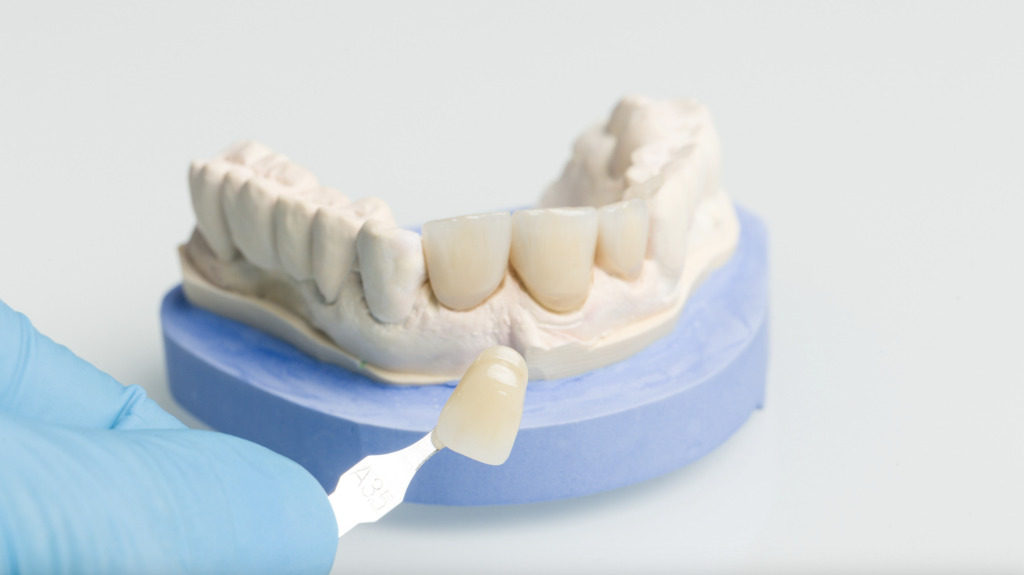
Aesthetic Comparison
- Crowns: While crowns can be color-matched to your natural teeth, they are designed to restore both the appearance and strength of a damaged tooth. They cover the entire tooth and may be necessary if a tooth is badly decayed or structurally compromised.
- Veneers: Veneers are often the preferred choice for purely cosmetic issues, such as closing gaps between teeth whitening stained teeth, or correcting minor misalignment. They provide a high-quality, natural finish that is visually appealing.
Long-Term Care and Longevity
Both crowns and veneers require good oral hygiene and regular dental visits to ensure their longevity, which is roughly similar for both. However, veneers are generally more delicate and require extra care.
- Dental Crowns: Crowns require the same care as natural teeth, including brushing twice a day and flossing daily. With proper care, they can last over a decade. Avoid habits like teeth grinding or biting on hard objects, as these can lead to damage.
- Dental Veneers: Veneers are also long-lasting, typically between 10-15 years. However, they are more vulnerable to chipping and cracking if you’re not careful. Patients should be cautious about biting directly into hard foods like nuts or ice, as this can cause fractures. To protect veneers, it is highly recommended to wear a night guard, especially if you grind your teeth.
A night guard can also help prolong the life of crowns, particularly if there is a history of teeth grinding or clenching.
When to Choose Crowns vs Veneers?
- Choose Crowns: If your tooth is significantly damaged or has undergone a procedure like a root canal, a crown is the better choice. It will provide the necessary protection and restore function.
- Choose Veneers: If your teeth are healthy but need cosmetic improvement, such as enhancing their color, shape, or slight alignment issues, veneers are ideal.
For instance, if you have a severely cracked tooth that needs reinforcement, a crown is the appropriate choice. On the other hand, if your front teeth are discolored and you want a more uniform, bright smile, veneers will offer a less invasive solution.
Other Options – Dental Implants
For those looking for an alternative to veneers and crowns, particularly in the case of missing teeth, dental implants might be the ideal solution. Implants involve placing a titanium post in the jawbone, which acts as an anchor for a crown, giving you a stable, long-term replacement for missing teeth. They not only restore function but also help maintain bone structure, which is crucial for overall oral health.
Read More: dentures vs crowns
Are Crowns Better than Veneers?
Whether crowns are "better" than veneers depends on the individual case. Crowns are better for damaged, weakened, or decayed teeth as they offer greater protection and durability. Veneers are better for those seeking aesthetic improvements for healthy teeth that don't require structural support. Crowns are typically stronger and longer-lasting, but veneers offer a more natural look for minor cosmetic issues.
Conclusion
Both crowns and veneers are effective treatments for improving your smile, but they serve different purposes. Crowns are the go-to solution for restoring damaged or weakened teeth, offering strength and longevity. Veneers are the ideal choice for purely cosmetic improvements, transforming the look of otherwise healthy teeth.
While the longevity of both treatments is similar, veneers are more delicate and require careful handling to avoid fractures. To ensure the longevity of both crowns and veneers, wearing a night guard is highly recommended, particularly for those who grind their teeth.
It’s important to choose the treatment that suits your specific needs and goals. If you're unsure, consult Toothopia Dental, and we’ll guide you to the best solution for a healthy, confident smile.
FAQs
Can I choose veneers for my front teeth if they are not damaged?
Yes, veneers are ideal for healthy, minimally damaged front teeth, as they enhance appearance by correcting imperfections like discoloration, chips, or minor misalignments.
Do porcelain crowns look natural on front teeth?
Yes, porcelain crowns can be made to match the color and translucency of natural teeth, making them a good option for front teeth with significant damage or decay.
How long do crowns and veneers last?
Crowns can last 10-15 years, while veneers typically last 7-15 years, depending on care and wear. Proper oral hygiene is essential for maximizing their lifespan.
Need help getting started? Our California-based offices in Culver City and Inglewood are ready to assist. Reach out by filling out the consultation form or calling 310-643-6221.



0 Comments