
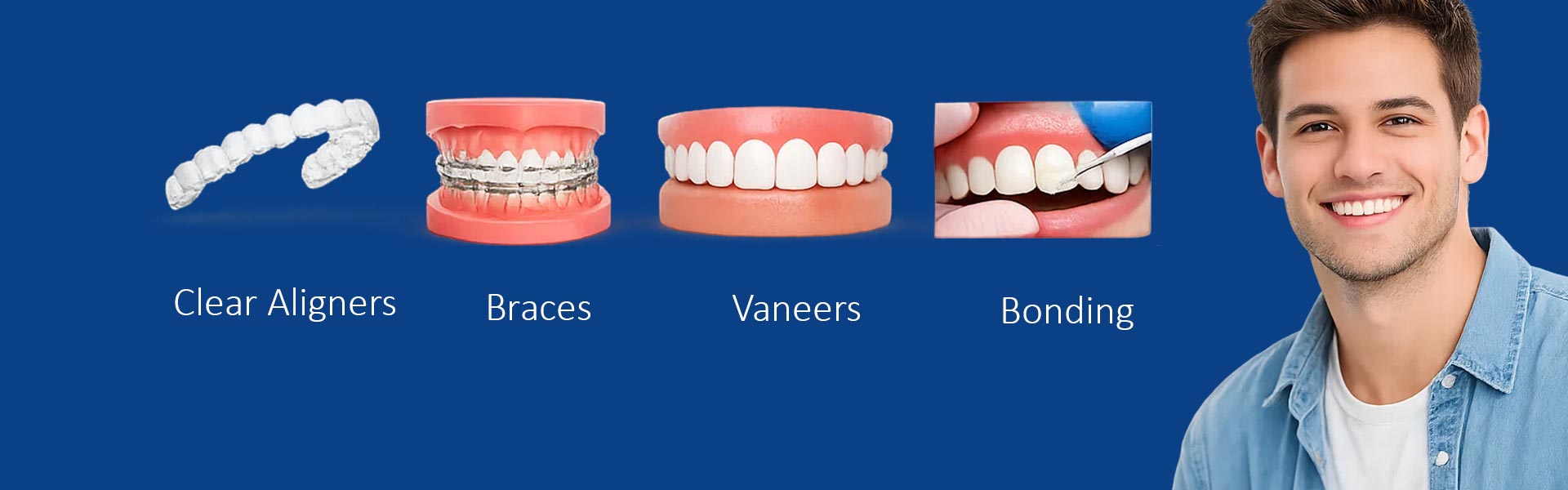
Many people assume that traditional braces are the only way to straighten teeth, but several effective alternatives to braces can help achieve a healthy and aligned smile. Depending on your dental needs, age, lifestyle, and cosmetic goals, options such as clear aligners, orthodontic treatments, and cosmetic procedures can provide results that are faster, more comfortable, or less visible than conventional braces. In this article, we will explore the main alternatives in detail, explain how they work, and help you determine which option may be best suited for you.
Why People Look for Braces Alternatives
Today, many patients look for alternatives to traditional metal braces, but their reasons are not the same across all age groups. Factors such as lifestyle, daily responsibilities, aesthetic expectations, and treatment flexibility play different roles for adults, teenagers, and children. In the following sections, we explore the most common motivations behind choosing braces alternatives for each age group and how these priorities influence the best treatment options.
Adults
- Professional image: Adults often worry about the visibility of braces in work and social settings, making discreet options like clear aligners highly appealing.
- Flexibility and hygiene: Removable appliances allow adults to maintain oral hygiene more easily and eat without restrictions.
- Comfort: Adults may prefer treatments that reduce irritation, such as Invisalign or ceramic braces.
Teens
- Self-esteem and social life: Teenagers often feel self-conscious about their appearance, so nearly invisible alternatives help maintain confidence.
- Activity levels: Some sports or extracurricular activities require fewer obstacles and lower risk of mouth injuries, which makes removable or less bulky appliances preferable.
- Treatment adherence: Options like clear aligners encourage responsibility and compliance for teens ready to follow instructions.
Kids
- Guiding growth: Early interventions can take advantage of natural jaw growth to guide proper alignment.
- Ease of use: Younger children may require simpler, fixed solutions such as palatal expanders or partial braces that need minimal compliance but still offer effective results.
- Preventive benefits: Early orthodontic guidance can prevent more serious alignment issues later in life, reducing the need for invasive procedures.
Understanding these motivations helps patients and parents choose the most suitable treatment that balances comfort, aesthetics, and effectiveness.
Understanding Alternatives to Braces
Traditional braces are highly effective for correcting misaligned teeth, but they are not always the preferred option for everyone. Alternatives to braces can address different alignment needs and provide solutions for both functional and aesthetic concerns. Some options focus on orthodontic correction similar to braces, while others are designed to improve the appearance of teeth without moving them. Knowing the strengths and limitations of each alternative will help you make an informed decision that suits your goals and lifestyle.
Clear Aligners Invisalign
Clear aligners are a modern orthodontic solution that gradually move teeth into proper alignment without the need for brackets or wires. Invisalign is one of the most recognized systems and is highly popular among adults and teens who prefer a discreet approach.
Clear aligners are custom-made trays that fit snugly over the teeth and apply gentle pressure to guide them into the desired position. They are removable, which makes eating, drinking, brushing, and flossing much easier than with traditional braces. Digital scans and treatment planning allow for precise adjustments throughout the process.
Clear aligners are ideal for mild to moderate misalignment and offer several benefits:
- Nearly invisible, reducing self-consciousness during treatment
- Comfortable and avoid irritation from metal brackets
- Removable for easy oral hygiene and eating
- Custom-made for precise tooth movement
- Treatment duration is typically 12 to 18 months
Compliance is essential as the aligners must be worn consistently to achieve the desired outcome.

Braces Options
Traditional braces remain a reliable solution for patients with more complex dental alignment issues. While highly effective, they are more visible and may cause temporary discomfort. For patients seeking alternatives, several options provide discreet or faster solutions depending on alignment needs and cosmetic goals.
Different types of braces include:
- Metal braces: Classic choice, effective for a wide range of alignment and bite issues
- Ceramic braces: Tooth-colored for a less noticeable appearance
- Lingual braces: Placed behind the teeth for a hidden treatment
- Self-ligating braces: Use clips instead of elastic ties, which can reduce friction and potentially shorten treatment time
Braces are particularly effective for:
- Correcting severe misalignment
- Treating bite problems and jaw irregularities
- Achieving predictable and long-lasting results
Regular dental care and check-ups are essential during treatment. Retainers may be used after braces to maintain alignment and ensure long-term results.
Cosmetic Options: Dental Veneers and Cosmetic Bonding
For patients looking for quick aesthetic improvements without moving teeth, cosmetic options like veneers and bonding are excellent choices.
Dental Veneers are thin shells made of porcelain or composite materials bonded to the front of the teeth. They provide a solution for teeth that are slightly misaligned, chipped, uneven, or spaced irregularly. Benefits include:
- Instant improvement in appearance
- Creation of a uniform and bright smile
- Long-term solution with proper maintenance
Cosmetic Bonding involves applying a tooth-colored resin to repair minor chips, close small gaps, or correct slightly uneven teeth. This minimally invasive procedure:
- Requires minimal enamel removal
- Can often be completed in a single visit
- Enhances appearance quickly and effectively
- Is reversible and easy to maintain
Both options are ideal for minor cosmetic improvements and provide a faster alternative to orthodontic treatments.
Comparing Alternatives to Braces
To help decide which option is best for your needs, here is a detailed comparison:
| Feature | Clear Aligners | Braces | Veneers | Bonding |
|---|---|---|---|---|
| Visibility | Very low, nearly invisible | Varies by type; metal visible, ceramic less noticeable | Cosmetic only; appearance-focused | Cosmetic only; appearance-focused |
| Removable | Yes; easy hygiene and flexibility | No; fixed appliance | No | No |
| Best for | Mild to moderate alignment | Complex cases including severe crowding and bite issues | Minor cosmetic issues | Minor cosmetic improvements |
| Duration | 12–18 months depending on case and compliance | 1–3 years depending on complexity | Few visits | Typically 1 visit |
| Oral hygiene | Easy to maintain due to removability | Requires careful cleaning around brackets and wires | Standard hygiene | Standard hygiene |
| Structural correction | Yes; moves teeth gradually | Yes; suitable for complex alignment | No; cosmetic only | No; cosmetic only |
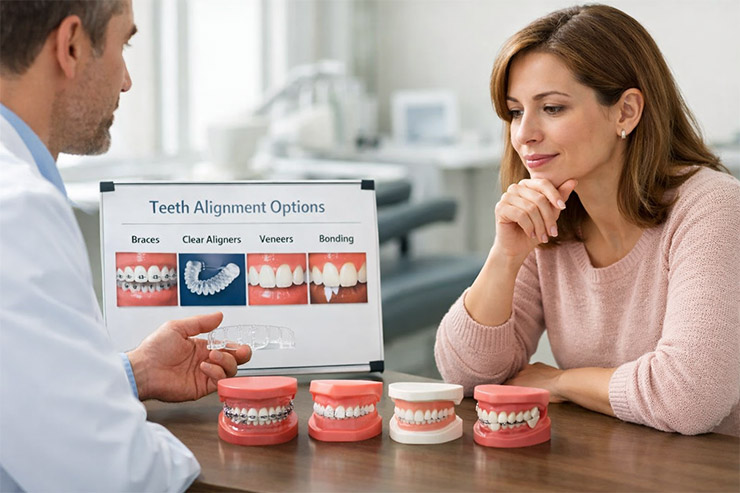
Choosing the Right Alternative
Selecting the best alternative depends on several factors:
- Severity of misalignment: Complex cases may still require traditional braces, while mild cosmetic adjustments can be addressed with veneers or bonding.
- Age and growth: Children and teens may benefit from appliances or braces, whereas adults often prefer clear aligners or cosmetic options.
- Aesthetic preferences: For a discreet appearance, clear aligners or lingual braces are preferred.
- Treatment duration: Invisalign and cosmetic procedures may offer shorter or more predictable timelines.
- Oral health: Strong, healthy teeth and gums are essential for veneers and bonding.
Consulting with a dental professional ensures that you choose the safest and most effective option for your individual situation.
Need help getting started? Our California-based offices in Culver City and Inglewood are ready to assist. Reach out by filling out the consultation form or calling 310-643-6221.
Conclusion
Several effective alternatives to braces exist that cater to different needs, lifestyles, and cosmetic goals. Clear aligners provide discreet and comfortable orthodontic treatment, while dental veneers and cosmetic bonding offer rapid cosmetic improvements without moving teeth. By understanding the benefits, limitations, and suitability of each option, you can make an informed decision and achieve a straighter, healthier, and more confident smile.
FAQs
Are dental veneers a good alternative to braces?
Dental veneers can improve the appearance of slightly crooked or uneven teeth, but they do not move teeth. Veneers are ideal for cosmetic fixes like chipped teeth, gaps, or discoloration, offering an instant improvement in your smile.
What is cosmetic bonding, and can it replace braces?
Cosmetic bonding uses a tooth-colored resin to correct minor alignment issues, small gaps, or chips. While it can enhance your smile quickly, it does not actually straighten teeth, so it’s only a solution for minor cosmetic concerns.
Can Invisalign fix crowded teeth without braces?
Yes, Invisalign is designed to treat mild to moderate crowding without traditional braces. It gradually shifts teeth using clear, removable aligners. Severe crowding may still require braces or additional procedures, so a consultation with an orthodontist is recommended.



0 Comments