
Swollen, tender gums usually calm down fastest when you treat the problem from two angles at once. The fastest way to heal swollen gums is to rinse with warm saltwater two to three times a day and hold a cold compress against your cheek, all while keeping the area clean with gentle brushing. That pairing cools the inflammation and clears the bacteria behind most gum swelling, often within a few days. Below, our dental team walks through the quickest at-home steps, the remedies worth skipping, how to handle swelling in the back of your mouth, and the warning signs that mean it is time to call a dentist.
Key Takeaways
- The fastest way to heal swollen gums combines a warm saltwater rinse, a cold compress, and gentle daily cleaning.
- A rinse of half a teaspoon of salt in 8 ounces of warm water, used 2 to 3 times a day, lowers bacteria and eases gum inflammation.
- Most mild gum swelling clearly improves within 3 to 5 days of consistent home care.
- Swelling in the back of the mouth is often tied to a wisdom tooth and needs extra rinsing and, sometimes, a dental exam.
- Skip harsh fixes like undiluted essential oils, daily hydrogen peroxide, and hard scrubbing, which can irritate gums further.
- See a dentist if swelling lasts more than a week or comes with pus, fever, a loose tooth, or severe pain.
- Professional cleaning and steady healthy gum care are the most reliable way to keep swelling from returning.
Why Your Gums Swell in the First Place
Gums swell when the tissue around your teeth becomes inflamed, and in most cases the trigger is bacteria in plaque collecting along the gumline. Your body sends extra blood flow to fight that bacteria, which is what leaves the gums red, puffy, and quick to bleed.
Knowing the cause matters, because it tells you whether a few days of home care will fix things or whether something deeper is going on. Gingivitis, the earliest stage of gum disease, is by far the most common reason. Once you understand the usual gum swelling causes, the right response gets a lot clearer.
- Plaque and gingivitis: bacteria that are not brushed and flossed away irritate the gumline and cause gum inflammation.
- Trapped food or debris: a popcorn hull or seed wedged between teeth can inflame one small area fast.
- Brushing too hard: a stiff brush and heavy pressure scrape the gums instead of cleaning them.
- Hormonal shifts: pregnancy, menstruation, and puberty can make gums more reactive and prone to bleeding gums.
- Dental appliances: a poorly fitting denture, retainer, or crown can rub and irritate the tissue.
- Other factors: smoking, certain medications, and low vitamin C can all leave gums swollen and slow to heal.
In our practice, we often see patients who assumed the swelling was random when it traced back to one habit, such as skipping floss on the back teeth. Spot the cause, and the fastest fix usually follows. So what should you actually do in the first two days?
The Fastest Way to Heal Swollen Gums in the First 48 Hours
The fastest way to heal swollen gums in the first two days is to lower bacteria and calm inflammation at the same time. Start these steps as soon as you notice the swelling, and keep them going even after the tenderness eases.
- Rinse with warm salt water. Dissolve half a teaspoon of salt in 8 ounces of warm water, swish for about 30 seconds, then spit. Repeat 2 to 3 times a day, especially after meals.
- Apply a cold compress. Wrap ice or a cold pack in a clean cloth and hold it to your cheek for 10 to 15 minutes to ease swollen gum pain and reduce puffiness.
- Clean gently but thoroughly. Use a soft-bristled brush in small circles and floss carefully to remove the plaque that is feeding the swelling.
- Rinse with an antibacterial mouthwash. An alcohol-free antibacterial mouthwash helps control bacteria without drying out already irritated tissue.
- Stay hydrated and eat soft foods. Water rinses away debris and supports saliva, while soft, cool foods keep you from aggravating the sore spot.
A randomized study found warm salt water rinses were about as effective as a prescription-strength chlorhexidine rinse at reducing gum inflammation after periodontal treatment. The humble saltwater rinse for gums is genuinely science-backed, not just an old wives' tale.
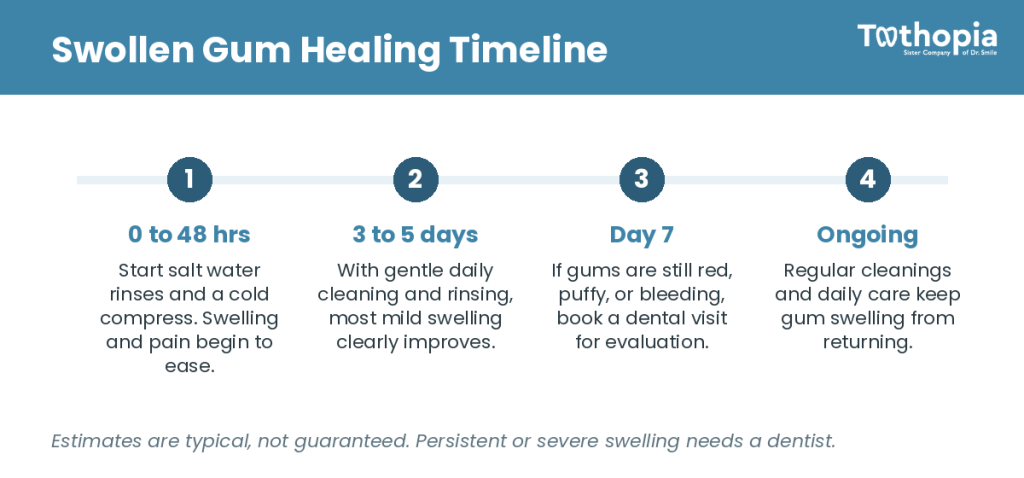
With this routine, many people feel a real difference within 24 to 48 hours and see clear improvement in 3 to 5 days. If you want to know exactly which remedies pull the most weight, here is how they compare.
Fastest Ways to Heal Swollen Gums at Home
The fastest ways to heal swollen gums at home all share one goal: remove bacteria and soothe the tissue so your body can repair itself. A few simple remedies do most of the work, and you likely have them in your kitchen already.
Warm Salt Water Rinse
A warm saltwater rinse for gums is the single most reliable home remedy. Salt creates an environment that draws fluid out of swollen tissue and reduces the bacterial load, which is why it works so quickly. Keep the water warm, not hot, and avoid making the mix overly salty, since too much salt can irritate the tissue.
Cold Compress
A cold compress is your go-to for swelling that appeared suddenly. The cold narrows blood vessels near the area, which limits swelling and numbs the nerve endings for fast, drug-free swollen gum pain relief. Never place ice directly on the skin, and give the area a rest between rounds.
Antibacterial Mouthwash
A daily antibacterial mouthwash helps kill the germs that keep gum tissue inflamed. Choose an alcohol-free option so you do not dry out or sting already tender gums. Used once or twice a day, it supports healing and keeps the gumline cleaner between brushings.
Gentle Brushing, Flossing, and Hydration
None of the above lasts if plaque keeps building up. Brush twice a day with a soft-bristled brush, floss once daily to clear what the brush misses, and drink water throughout the day. This is the everyday foundation of gingivitis treatment and healthy gum care.
| Remedy | How It Helps | How Often |
|---|---|---|
| Warm salt water rinse | Draws fluid from swollen tissue and lowers bacteria | 2 to 3 times a day |
| Cold compress | Numbs pain and calms sudden swelling | 10 to 15 minutes, as needed |
| Antibacterial mouthwash | Controls bacteria that keep gums inflamed | Once or twice a day |
| Gentle brushing, flossing | Clears the plaque triggering the swelling | Twice daily, floss once |
| Water and soft foods | Rinses debris and lets tissue settle | Throughout the day |
Natural add-ons like aloe vera gel or a cooled green tea rinse can soothe irritated gums, but treat them as a supplement to saltwater and cleaning, never a replacement. They will not resolve an infection on their own.
These steps handle swelling you can easily reach. But what about the puffy, sore tissue right at the very back of your mouth?
How to Treat Swollen Gums in the Back of Your Mouth
Swollen gums in the back of the mouth are most often caused by a wisdom tooth or by food trapped behind the last molar. When a wisdom tooth only partly breaks through, a small flap of gum can trap bacteria underneath and become inflamed, a condition called pericoronitis.
Treating it starts the same way, with extra attention to reaching that far-back area. The goal is to flush out trapped debris and keep the flap clean while the tissue calms down.
- Rinse aggressively with warm saltwater: tilt your head and swish so the water reaches behind the last molar.
- Clean carefully around the tooth: an angled soft brush or a water flosser can dislodge debris a normal brush cannot reach.
- Use a cold compress on that side: it eases the jaw tenderness that often comes with back-of-mouth swelling.
- Watch for warning signs: trouble opening your jaw, a fever, or spreading swelling means you should be seen quickly.
You might be thinking every remedy online must be safe to try. Not quite. A few popular fixes can actually set your gums back.
Home Remedies for Swollen Gums to Use with Caution
Some home remedies for swollen gums help, and some quietly make things worse. The difference usually comes down to strength and frequency. Here is where people go wrong.
- Undiluted essential oils: clove and tea tree oil have real numbing and antibacterial properties, but applied undiluted, they burn soft tissue. Always dilute in a carrier oil first.
- Daily hydrogen peroxide: a diluted peroxide rinse can lower bacteria, yet using it too often or too strong irritates the gums. Keep it occasional and always dilute it.
- Over-salting the rinse: more salt is not more healing. A heavy brine dries and stings tender tissue.
- Scrubbing hard: attacking swollen gums with a stiff brush feels productive but tears at the very tissue you want to protect.
- Skipping floss because it bleeds: a little bleeding is common at first. Stopping lets plaque build and keeps the gums inflamed.
- Turmeric paste overuse: it can soothe inflammation, but heavy use may stain teeth and gums, so use it sparingly.
Yes, natural remedies can genuinely help, but gentler and consistent beats strong and occasional every time. And if the swelling refuses to budge, no home remedy is the right answer.
When Painful, Swollen Gums Need a Dentist, not a Rinse
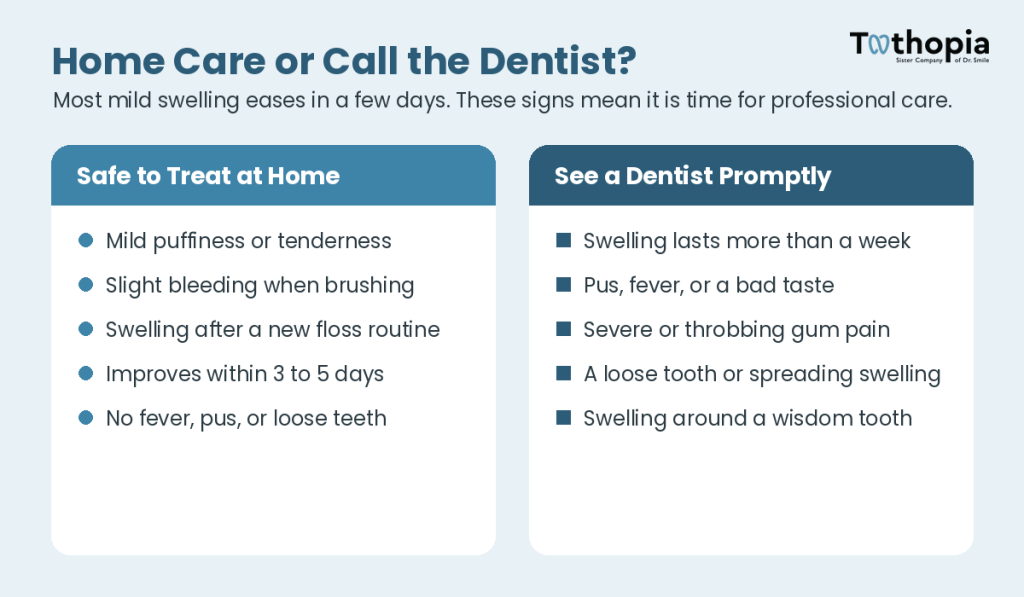
Painful, swollen gums that last more than a week, or that come with pus, fever, or a loose tooth, need a dentist rather than another rinse. These are signs the problem has moved past simple irritation into infection or gum disease that home care cannot reach.
At that point, the fastest gum swelling treatment is professional care. During a visit, our team removes the hardened plaque, called tartar, that a toothbrush cannot clear, then treats the underlying cause. A professional dental cleaning is often all it takes to let mild cases heal, since the body starts repairing as soon as the bacteria are gone.
For more advanced cases, treatment may include deep cleaning below the gumline (scaling and root planing), a prescription antibacterial rinse, or antibiotics when a gum infection is present. Left untreated, ongoing inflammation can progress toward periodontal disease, which can loosen teeth over time.
- Persistent swelling: puffiness that lasts beyond 7 to 10 days despite good home care.
- Signs of infection: pus, a foul taste, fever, or gum infection symptoms that keep spreading.
- Severe or throbbing pain: especially if it disrupts sleep or eating.
- A loose tooth or gum abscess: these point to deeper problems that need prompt evaluation.
For a painful abscess, rapidly spreading swelling, or a knocked-about tooth, do not wait for a routine slot. Same-day emergency dental care can relieve the pressure and stop an infection before it worsens.
For patients with diabetes, a weakened immune system, or a history of gum disease, swollen gums heal more slowly and deserve earlier professional attention. When in doubt, get it checked sooner rather than later.
Once your gums have recovered, the last piece is making sure the swelling does not come back.
Need help getting started? Our California-based offices in Culver City and Inglewood are ready to assist. Reach out by filling out the consultation form or calling 310-643-6221.
How to Reduce Gum Swelling Quickly and Keep It From Coming Back
To reduce gum swelling quickly and keep it away, pair the fast relief steps with daily habits that stop plaque from rebuilding. Prevention is far easier than treatment, and it is what protects your gums for the long run.
- Brush and floss daily: two minutes twice a day with a soft brush, plus flossing once, is the core of healthy gum care.
- Stay hydrated: water supports saliva, which naturally rinses bacteria off your gums and teeth.
- Eat gum-friendly foods: vitamin C from citrus and leafy greens supports gum tissue, while cutting sugary drinks starves bacteria.
- Avoid tobacco: smoking slows healing and masks the early warning signs of gum disease.
- Keep up regular cleanings: routine visits catch buildup before it inflames the gums again.
Scheduling consistent routine preventive care is the single best move for long-term gum health, because a professional cleaning removes the tartar that daily brushing simply cannot. Catch problems early, and you rarely have to deal with painful swelling at all.
Set a phone reminder for your next checkup the moment you finish one. The people with the healthiest gums are almost always the ones who never let a cleaning slip.
Final Thought on Healing Swollen Gums Fast
The quickest path to relief is also the simplest: rinse with warm salt water, use a cold compress, and clean the area gently while your gums recover. That combination handles the bacteria and the inflammation together, which is why most mild swelling fades within a few days.
The real skill is knowing the line between home care and professional care. Home remedies shine for mild, recent swelling, but persistent, painful, or spreading symptoms are your body asking for help. Treat the small stuff early, stay consistent with daily care, and lean on your dental team the moment the warning signs appear. Do that, and swollen gums become a rare, short-lived nuisance instead of a recurring problem.
Frequently Asked Questions About Healing Swollen Gums Fast
How long does it take for swollen gums to heal?
Most mild swelling from irritation or early gingivitis improves within 3 to 5 days of consistent home care, such as saltwater rinses and gentle cleaning. If your gums are still red, puffy, or bleeding after about a week, that points to something deeper and is worth a dental visit.
Can swollen gums heal on their own?
Minor swelling from trapped food or a short-term irritation can settle on its own once the area is clean. Swelling driven by plaque, infection, or gum disease usually will not resolve fully without proper cleaning and, in some cases, professional treatment.
Can a warm saltwater rinse heal swollen gums overnight?
A saltwater rinse can noticeably reduce discomfort and bacteria within the first day, but true healing takes a few days of repeated care. Rinsing 2 to 3 times a day, paired with a cold compress and gentle brushing, gives the fastest realistic results.



0 Comments