

If the roof of your mouth hurts when you eat, the cause is usually simple: a burn from hot food, a canker sore, a scrape from something crunchy, or a minor infection that heals within a week or two. Every so often, the pain points to a tooth, a sinus, or a nutrition problem that needs real attention. The trick is reading the pattern. Where does it hurt, when did it start, and what were you eating right before? Get those answers right, and you will know exactly what to do next, and when it is worth having a dentist take a look.
Key Takeaways
- Most roof-of-mouth pain comes from hot-food burns, canker sores, or small cuts, and it clears up in about 3 to 14 days.
- A burning feeling usually points to acidic foods, oral thrush, or a product sensitivity rather than a physical injury.
- A swollen roof of the mouth alongside pain often signals trauma, an allergic reaction, dehydration, or an infection.
- Hard, dry foods like bread crusts, chips, and crackers scratch the thin palate tissue and are a common trigger.
- Warm saltwater rinses, cool soft foods, and staying hydrated relieve most cases of sore palate at home.
- See a dentist if pain lasts more than two weeks, or comes with a lump, white patches, a fever, or trouble eating.
What Is Actually Happening on the Roof of Your Mouth?
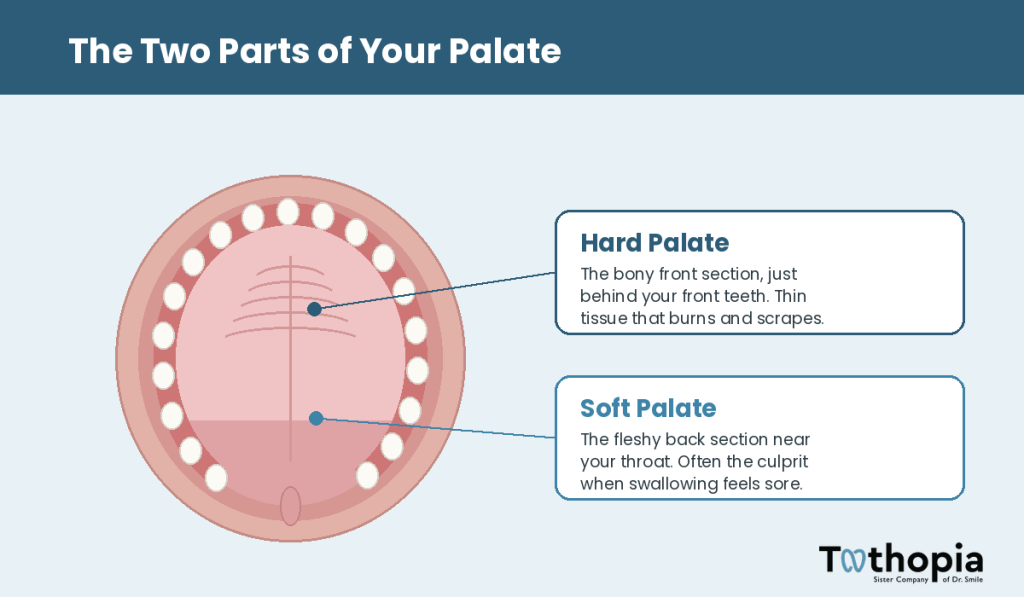
Your palate has two parts, and both are covered by tissue thin enough to irritate in seconds. The hard palate is the bony section just behind your front teeth. The soft palate is the fleshy area near the back of your throat.
That tissue, called oral mucosa, is delicate and packed with nerve endings. Think of it like the thin skin on the inside of your wrist, except it sits exactly where hot coffee, sharp chips, and acidic food pass first. That is why a painful roof of the mouth shows up so quickly and feels sharper than you would expect.
Location tells you a lot. Pain on the hard palate usually means a burn or a scrape. Soreness toward the back, on the soft palate, is more often tied to swallowing, sinus pressure, or a throat issue.
Before you worry, map the pain. Front and sharp pain often points to an injury, while pain toward the back with a dull ache may be linked to sinus pressure or an infection. That single detail can quickly narrow down the possible cause.
What Causes the Roof of Your Mouth to Hurt When You Eat?
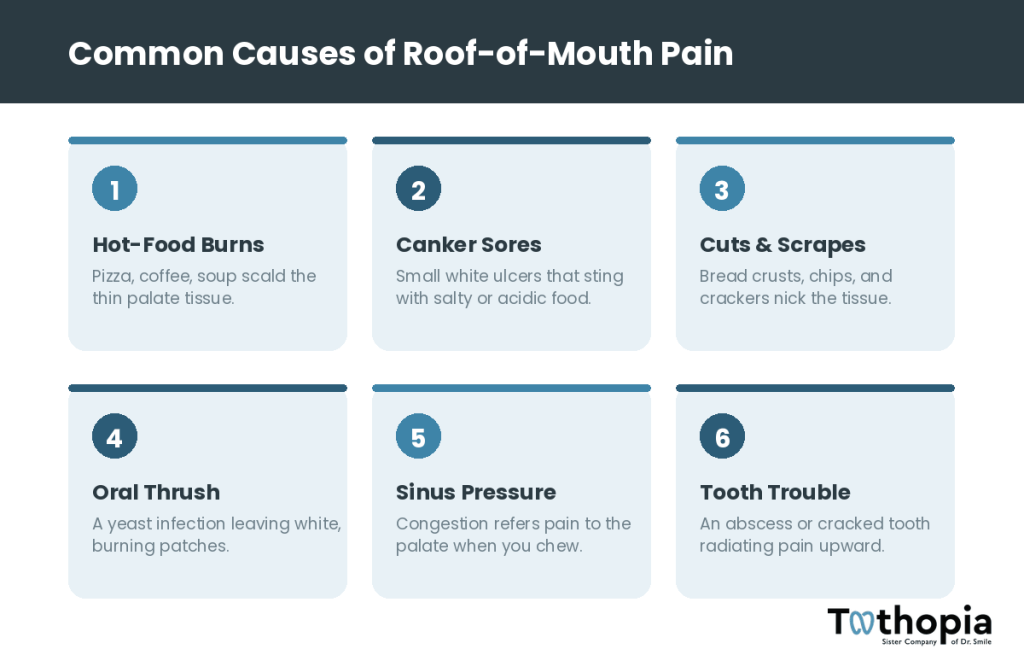
In most cases, you are looking at one of a few culprits: a burn, a canker sore, a cut from hard food, an infection, sinus pressure, or a tooth problem. Here is how to tell them apart.
Burns From Hot Food and Drinks
Thermal burns are the single most common reason the roof of your mouth burns from hot food. Pizza cheese, fresh coffee, and soup scald the thin tissue almost instantly, and most of these burns heal on their own within 3 to 7 days. The classic case is the first slice of pizza straight from the box, when the cheese holds far more heat than it looks.
Let that first bite cool for a few seconds. The roof of your mouth registers temperature more slowly than your lips, so by the time it hurts, the burn is already done.
A Canker Sore on the Roof of the Mouth
A canker sore is a small, round ulcer, white or yellow with a red border, and it stings sharply with salty, spicy, or acidic food. Triggers include stress, minor injuries, and low levels of vitamin B12, iron, or folate. Most heal in 7 to 14 days without any treatment.
Here is what most people miss: if a canker sore keeps returning to the same spot, the cause may be a sharp tooth edge or a rough filling quietly irritating the tissue, not stress at all. That is a fixable dental problem, not bad luck.
Cuts and Scrapes From Hard, Dry Foods
Crusty bread, tortilla chips, crackers, and pretzels can nick the soft tissue as you chew, and you often do not feel it until later. These minor cuts usually settle in 2 to 4 days, as long as you stop irritating the same spot with more crunchy food.
Oral Thrush and Other Infections
An oral infection on the roof of the mouth often shows up as thrush, a yeast overgrowth that leaves creamy white patches that may wipe off to reveal raw, red tissue. It burns when you eat and needs antifungal medication to clear. Thrush is more likely after antibiotics, with dentures, with inhaled asthma steroids, or when your immune system is run down.
Cold sores are different. Caused by the herpes simplex virus, they can form painful blisters on the hard palate and, unlike canker sores, they are contagious.
Sinus Pressure and Referred Pain
Your upper teeth and palate share nerve pathways with your sinus cavities. When a sinus infection or seasonal congestion builds pressure, your brain can read it as pain on the roof of your mouth, especially while chewing. If your palate aches during allergy season and your nose is stuffy, sinuses are the likely source.
A Tooth Problem Radiating Upward
Sometimes the palate is not the problem at all. An abscess near an upper tooth root, a cracked tooth, or advanced gum disease can send pain upward into the roof of your mouth, and it tends to feel deeper, more constant, and worse when you bite down. A bad taste or localized swelling alongside it is a strong sign the source is a tooth.
Why Does the Roof of My Mouth Hurt When I Eat Bread?
Bread, especially crusty or toasted bread, hurts because its hard, dry edges scrape the thin palate tissue while pulling moisture out of your mouth as you chew. Crusts and crackers act like fine sandpaper on a surface that is already sensitive.
Dry, starchy food also presses and drags against the palate more than soft food does. If you already have a small burn or a canker sore on the roof of your mouth, a bite of crusty bread lands right on it and makes the whole area flare.
You might be thinking bread is soft, so why would it hurt? The fluffy middle is soft, yes, but the crust and any toasted surface are firm and abrasive, and a dry mouth makes every dry food feel rougher than it is.
Why Does the Roof of My Mouth Burn When I Eat?
A burning roof of the mouth, as opposed to a sharp or tender pain, usually comes from acidic or spicy foods, oral thrush, a food or product sensitivity, or in some cases, burning mouth syndrome. The distinction matters because a burning feeling with no visible sore points somewhere different from an ulcer does.
Acidic foods such as citrus, tomato, and vinegar, along with spicy dishes, irritate the nerve endings in the tissue and create a stinging burn. Strong-flavored toothpaste or mouthwash can do the same thing, triggering a chemical burning sensation soon after you use it.
Burning mouth syndrome is a separate condition: a persistent burning with no visible cause, more common with age and hormonal changes. When the burning lasts longer than a week or has no clear trigger, that is the point to have it checked.
Why Does the Roof of My Mouth Hurt and Swell When I Eat?
Pain paired with a swollen roof of the mouth usually points to trauma, an allergic reaction, dehydration, or an infection that is building up. Swelling is the tissue reacting, so it tells you the irritation is more than surface deep.
A burn or a cut can cause localized swelling as the area inflames, and sometimes the trauma ruptures a small vessel and leaves a dark, blood-filled bubble on the palate instead of an open sore. A food allergy can bring tingling and puffiness in the soft tissue within minutes of eating. Dehydration and mineral imbalance can leave the whole palate feeling tender and swollen. A dental abscess, meanwhile, can create a firm, painful bump that needs prompt care.
One harmless cause worth knowing: a torus palatinus is a normal bony growth some people have in the center of the hard palate. It can feel alarming when you first notice it, but it is not dangerous and rarely needs treatment. Match your specific symptom to the likely cause below.
| What You Feel | Most Likely Cause | Typical Timeline |
|---|---|---|
| Sudden sting right after hot food | Thermal burn | 3 to 7 days |
| Round white ulcer that stings with salt | Canker sore | 7 to 14 days |
| White patches with a burning feeling | Oral thrush | Needs antifungal treatment |
| Ache when chewing plus congestion | Sinus pressure | Eases with the sinus issue |
| Deep ache near one upper tooth | Tooth or gum problem | Needs a dental exam |
| Scrape after crunchy or dry food | Minor cut | 2 to 4 days |
How to Treat a Sore Roof of Your Mouth at Home
Most sore palates settle within one to two weeks with simple care: rinse the area, cool it down, and avoid whatever is irritating it. These steps cover the causes and treatments that respond well to home care.
- Rinse with warm salt water, about half a teaspoon of salt in a cup of warm water, for 30 seconds, two to three times a day.
- Switch to cool, soft foods like yogurt, smoothies, and mashed potatoes while the tissue heals.
- Skip hot, spicy, acidic, salty, and crunchy foods until the soreness fully calms down.
- Drink plenty of water to keep the palate moist, since dehydration slows healing.
- Use an alcohol-free mouth rinse or an over-the-counter oral gel for short-term relief.
- Take an over-the-counter pain reliever such as ibuprofen if you need it.
What most people miss: Do not put ice directly on a fresh burn and do not pop a blister. Both slow healing and raise the risk of infection. And when in doubt, a glass of water often does more for palate inflammation than another rinse.
When Should You See a Dentist for Roof of Mouth Pain?
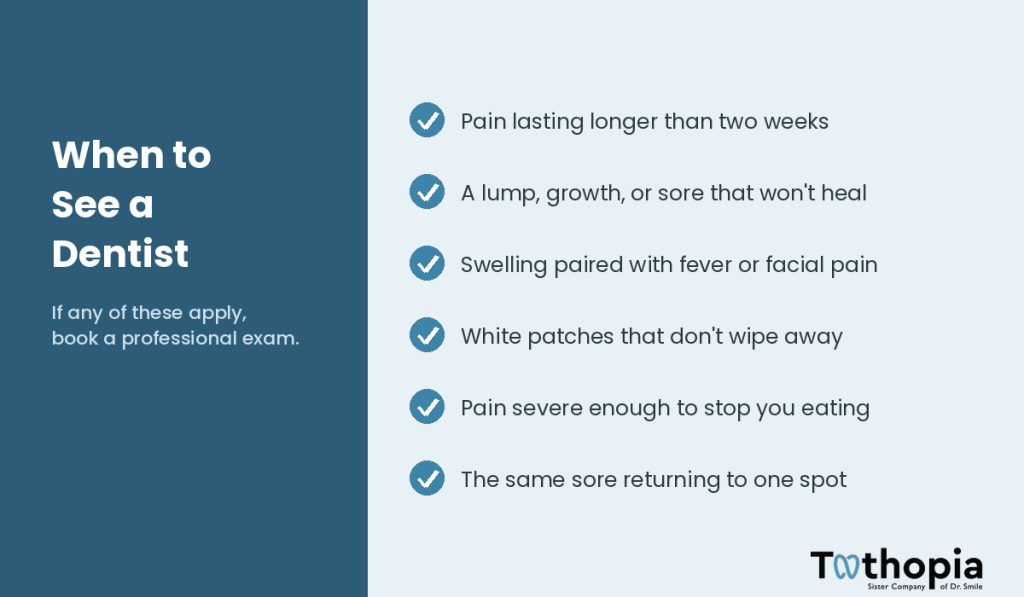
See a dentist if the pain lasts more than two weeks, keeps coming back, or shows up with a lump, white patches, a fever, or swelling that will not settle. Most palate pain is minor, but a handful of signs are worth a professional look.
A sore or white patch that will not heal, especially with a lump or a thick patch, should be checked to rule out anything serious. A deep ache tied to one tooth may be an abscess that needs treatment before it spreads.
- Pain that lingers beyond two weeks
- A lump, growth, or sore that will not heal
- Swelling that comes with a fever or facial pain
- White or red patches that do not wipe away or heal
- Pain bad enough that eating becomes difficult
- A sore that keeps returning to the same spot
Sudden, severe pain with facial swelling or a fever can signal an infection that needs same-day emergency dental care. If you are unsure whether your symptoms cross that line, it helps to know what counts as a true dental emergency. For everyday prevention, staying on top of regular checkups and cleanings lets a dentist catch small issues, like a sharp filling causing repeat sores, before they turn painful.
Need help getting started? Our California-based offices in Culver City and Inglewood are ready to assist. Reach out by filling out the consultation form or calling 310-643-6221.
Final Thought on Palate Pain
The roof of your mouth is one of the most sensitive spots in your body, so a little pain when you eat is usually nothing more than a burn, a sore, or a scrape that heals on its own. The pattern is your best guide: what you were eating, where it hurts, and how long it lasts will almost always point to both the cause and the fix.
Trust simple home care first, give it a week or two, and pay attention to the warning signs. When pain sticks around, keeps returning, or brings a lump, swelling, or white patches with it, that is your cue to let a dental professional take a closer look.
Frequently Asked Questions About Palate Pain
How long should roof of mouth pain last?
Most causes clear up on their own. Burns heal in about 3 to 7 days, canker sores in 7 to 14 days, and minor scrapes in a few days. Pain that lasts longer than two weeks should be evaluated by a professional.
Can a sinus infection make the roof of my mouth hurt?
Yes. Your upper teeth and palate share nerve pathways with your sinuses, so sinus pressure and congestion can create referred pain that feels like it is coming from the roof of your mouth, especially when you chew.
Is a sore roof of the mouth ever serious?
Usually not, but a sore or white patch that will not heal within two weeks, a lump, or pain paired with a fever or swelling can signal an infection or, rarely, something more serious, and should be examined.
What foods should I avoid when the roof of my mouth is sore?
Skip hot, spicy, acidic, salty, and crunchy foods, along with dry items like bread crusts and chips. Stick to cool, soft options such as yogurt, smoothies, and mashed potatoes until the area heals.



0 Comments