
Mini dental implants are narrow titanium posts, usually under 3 millimeters wide, that replace missing teeth or lock loose dentures in place, often in a single visit and without bone grafting. If you have been told you lack the bone for traditional implants, or you are tired of denture adhesive, this is the option most patients ask about next. They cost less than conventional implants, heal faster, and skip the months-long surgical timeline. They are not right for every tooth, and this guide explains exactly where they shine, where they fall short, and how to know if they fit your mouth. Here is what the simpler path to a stable smile actually involves.
Key Takeaways
- Mini dental implants are single-piece titanium posts under 3 mm wide, used to replace small teeth or stabilize dentures.
- Placement is minimally invasive, often done in one visit under local anesthesia with no incisions or sutures.
- They frequently avoid bone grafting, which makes them an option for patients turned down for traditional implants.
- The FDA has cleared mini implants, and they are considered safe when an experienced dentist places them after a proper exam.
- Most last 5 to 10 years or longer with good care, though traditional implants generally last longer under heavy bite force.
- The strongest use case is securing lower dentures and replacing front or small teeth, not back molars.
What Are Mini Dental Implants?
Mini dental implants (MDIs) are a smaller, less invasive version of traditional dental implants. They serve the same purpose, replacing a missing tooth or holding a denture steady, but they differ in design and how they go in. A mini implant measures less than 3 millimeters across and comes as one solid piece, with the post and the abutment fused rather than separated into two parts.
That slim profile is the whole point. Because the post is so narrow, it fits into thinner or softer bone where a full-size implant simply would not anchor, and it usually does so without a bone graft. A dentist can often place it through the gum directly into the bone under local anesthesia, in a single appointment. Despite the small size, a correctly placed mini implant provides reliable day-to-day stability and restores chewing and speaking function.
If a dentist once told you that you were “not a candidate” for implants because of bone loss, that verdict was almost always about traditional implants. Ask specifically whether mini implants change the answer. For many denture wearers, they do.
Mini Dental Implants vs. Traditional Implants
Mini and traditional implants both replace missing teeth, but they differ in size, the surgery involved, cost, and how long they last. Understanding those four differences is usually enough to point you toward the right one. The quick version: mini implants trade some long-term strength for speed, lower cost, and a far gentler procedure.
Size and Structure
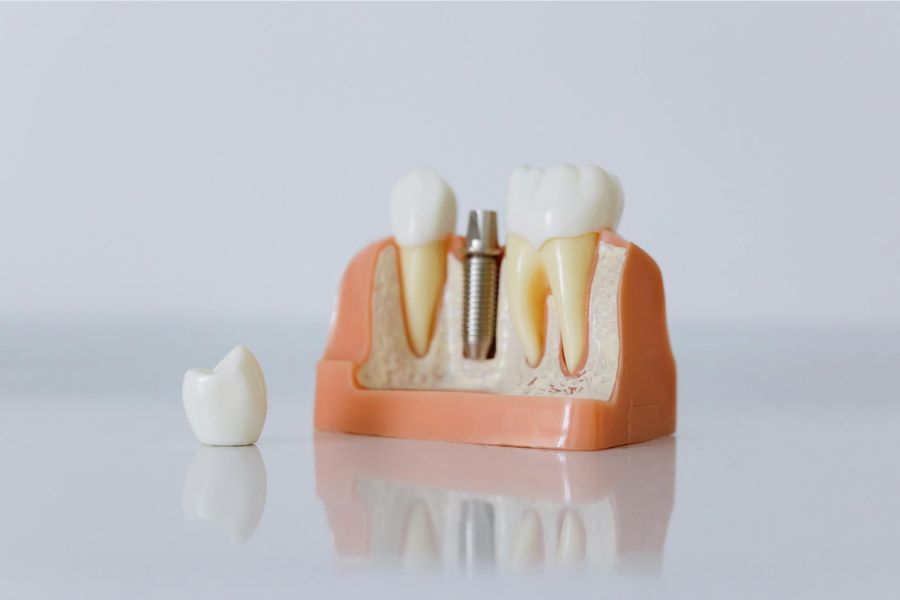
Mini implants are under 3 mm in diameter; traditional implants run from 3.5 mm to 6 mm. A traditional implant is two pieces: a post set in the bone and a separate abutment that connects the crown. A mini implant is one piece with the abutment built in. That single-piece design is what lets it fit narrow ridges and small tooth gaps where a wider implant would not.
Placement Procedure
This is where the experience differs most. Mini implants often need no incisions and no stitches; the dentist places them straight through the gum into the bone, frequently in one visit. Traditional implants usually involve flap surgery, sutures, and a healing window of several months for the bone to fuse before the crown goes on. For a nervous patient or someone who cannot take weeks of downtime, that gap matters.
Cost and Longevity
Mini implants cost less because they use less material, less chair time, and rarely require grafting. The trade-off is lifespan. Traditional implants commonly last 15 years or more, while mini implants typically last 5 to 10 years or longer, depending on bite force and oral hygiene. For denture stabilization and small teeth, that lifespan is plenty of value. For a molar that takes a heavy chewing load, the math often favors a traditional implant.
What most people miss: Cheaper upfront is not always cheaper overall. If a mini implant fails under heavy bite force and has to be removed, the revision can cost more than choosing a traditional implant the first time. The savings are real, but only when the tooth and bite are a good match.
If your bone loss is advanced enough that even mini implants are borderline, it is worth comparing them against dentures designed for bone loss before you decide.
Benefits of Mini Dental Implants
The benefits of mini dental implants come down to a faster, gentler, more affordable path to replacing teeth, with one standout strength: they work for people who were told traditional implants were off the table. Here is what patients gain most often.
- Minimally invasive procedure: Usually, no incisions and no stitches, which means less discomfort, less swelling, and fewer complications. Many people are back to normal the same day.
- Faster results: No multi-month healing timeline. In many cases, a crown or denture attaches the same day the mini implants are placed.
- An option despite bone loss: Their narrow design often anchors in thin bone without grafting, opening implants to patients previously turned away.
- Denture stability you can feel: Mini implants snap lower dentures firmly in place, cutting out slipping and messy adhesives at meals and while speaking.
- Lower cost: Less surgery and fewer visits make them a budget-friendly way to restore function without giving up the core benefit of a fixed anchor.
Take a denture wearer who has avoided steak and corn on the cob for years because the lower plate floats. Four mini implants along the lower jaw can turn that same denture into a snap-in appliance that stays put. The denture is the same shape; the difference is that it finally holds. For many patients, that single change does more for daily life than any other dental work they have had.
Are Mini Dental Implants Safe?
Yes. Mini dental implants are FDA-cleared and considered a safe, established option when an experienced dentist places them after a proper exam. They are made from the same biocompatible titanium alloy used in traditional implants, and they have a long track record for denture stabilization in particular.
Safety depends less on the implant and more on the evaluation behind it. The risks that do exist, implant failure if the bone does not fuse, irritation around the gum, or loosening under excess force, increase when a mini implant is placed in poor bone, in a heavy-bite area, or in someone who smokes or has uncontrolled gum disease. A thorough workup with X-rays or 3D imaging is what keeps those risks low.
Ask how many mini implants your dentist places each year, and request to see before-and-after cases similar to yours. Experience with this specific technique is the single biggest factor in a safe, lasting result.
Who Is a Good Candidate for Mini Dental Implants?
Mini dental implants are not for everyone, but they fit a wide group of patients who want a faster, less invasive alternative to traditional implants. The best candidates have generally healthy mouths but may lack the bone volume for full-size implants. The graphic below sorts the most common situations.
You may be a strong candidate if you:
- Have one or more missing teeth and want a stable, fixed replacement
- Wear dentures and want a more secure, comfortable fit
- Have jawbone loss that would make traditional implants difficult or require grafting
- Prefer a less invasive treatment with faster recovery
- Are in good general health, without uncontrolled diabetes or active gum disease
Before anything is placed, your dentist performs a full exam with X-rays or 3D imaging to confirm your bone can support the implants and your gums are healthy. That personalized assessment, not a one-size-fits-all rule, is what determines the right choice.
Still weighing your choices? Compare the full range in our guide to the best dental implant options so you can see where mini implants sit.
The Mini Dental Implant Procedure, Step by Step
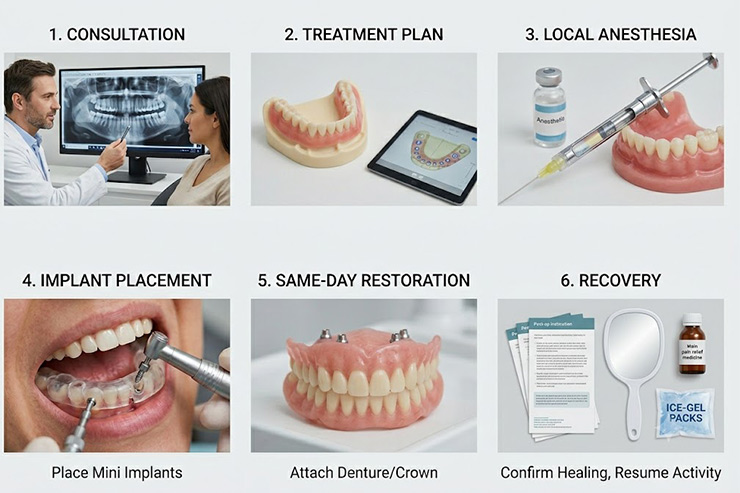
Mini implants are often placed in a single visit through a simple, minimally invasive process. Here is how a typical mini dental implant procedure unfolds:
- Initial consultation: A full oral exam with X-rays or 3D imaging checks bone density and confirms you are a candidate.
- Custom treatment plan: Your dentist maps how many implants you need and how they will support crowns, a bridge, or a denture.
- Local anesthesia: The area is numbed. Because the technique is minimally invasive, there are usually no incisions or sutures, and most patients stay comfortable throughout.
- Implant placement: Small pilot channels are made in the jaw, and the mini implants are threaded in. The narrow size allows quick, precise placement with little disruption to surrounding tissue.
- Same-day restoration: In many cases, the crown or denture attaches the same day, so you leave with working teeth.
- Recovery and follow-up: Healing is usually fast with only minor soreness. Most patients resume normal eating within 24 to 48 hours, and a follow-up confirms everything has settled well.
Full Mouth Mini Dental Implants
Full mouth mini dental implants use a series of narrow implants, often four or more per arch, to support a full denture across the upper or lower jaw, or both. They are best understood as a way to anchor a removable or snap-in full denture rather than to build a permanent, fixed bridge of separate teeth.
This is the right framing because it sets honest expectations. Mini implants excel at holding a full lower denture rock-steady, which transforms eating and speaking for people who have struggled with traditional plates for years. They are generally not strong enough to carry a permanent fixed full arch in high-force areas; for that, traditional implant systems like All-on-4 remain the durable choice. A patient who wants to lose the adhesive and stop the slipping is often delighted with full-mouth mini implants. A patient who wants teeth that never come out for cleaning usually needs a different plan.
What most people miss: "Full mouth" does not automatically mean "permanent and fixed." Many full-mouth mini implant cases are snap-in overdentures that you still remove to clean. That is a feature for some patients and a dealbreaker for others, so it is worth confirming up front.
If you are weighing this against a conventional plate, it helps to know how full dentures and partial dentures feel day to day before you decide.
Mini Dental Implant Recovery and Aftercare
Recovery after mini dental implants is usually fast and uncomplicated, thanks to the minimally invasive placement. Most patients have only mild soreness or swelling that fades within a day or two.
For the first 24 to 48 hours, stick to soft foods and avoid putting pressure on the implant sites. Over-the-counter pain relievers are typically enough for any discomfort. Gentle saltwater or antimicrobial rinses keep the area clean, and normal brushing continues, just avoid the surgical site on day one. Hold off on strenuous exercise for at least 48 hours so the implants can settle.
After that, most people return to their routine with no issues. Long-term success comes down to the same habits that protect natural teeth: consistent brushing and flossing, professional cleanings, and keeping your follow-up appointments. Treated this way, mini implants stay stable and functional for years.
Night grinding (bruxism) is one of the quickest ways to overload a mini implant. If you clench or grind, ask about a nightguard when your implants are placed, not after a problem shows up.
How Long Do Mini Dental Implants Last?
Mini dental implants typically last 5 to 10 years or longer, and well-maintained cases can run well beyond that. Lifespan depends mostly on three things: bite force at the implant site, the quality of the surrounding bone, and your daily oral hygiene.
Implants in low-stress positions, such as anchoring a lower denture or replacing a small front tooth, tend to last the longest because they absorb less force. Implants placed in heavy-chewing molar areas wear faster, which is exactly why mini implants are not the first pick there. Smoking, uncontrolled gum disease, and skipped cleanings all shorten the timeline. The single biggest lever you control is hygiene, so the routine that protects your natural teeth is the same one that protects your implants.
Need help getting started? Our California-based offices in Culver City and Inglewood are ready to assist. Reach out by filling out the consultation form or calling 310-643-6221.
Disadvantages of Mini Dental Implants
Mini dental implants are safe and effective, but they have real limitations worth weighing before you commit. Being clear about the downsides is the best way to avoid disappointment later.
- Less durable under heavy force, so they are a poor fit for back molars that take strong chewing loads
- Not suitable for severe bone loss without additional treatment first
- Best for smaller restorations; not ideal for large fixed full-arch bridges, especially in the upper jaw
- As a one-piece design, they cannot be repaired in parts; if one is damaged, the whole implant usually has to be removed and replaced
- Higher risk of failure to fuse in smokers and patients with low bone density
None of these rules mini implants out; they simply define where the technique works best. The same narrow design that makes placement easy is what limits the bite force the implant can handle. A dental exam is what confirms whether your specific case lands inside or outside those limits.
When a case sits at the edge of what mini implants can do, an evaluation with the oral surgery team can clarify whether a traditional approach is the safer bet.
Final Thoughts on Mini Dental Implants
Mini dental implants are a genuinely good answer for the right situation: a faster, lower-cost, less invasive way to replace small teeth and, above all, to stabilize loose dentures, including for patients with bone loss who thought implants were impossible. The key is matching the tool to the job. They reward you when the bite force is light, and the goal is stability; they struggle when asked to carry the load of a back molar or a large fixed bridge.
Let that one principle guide your decision, then let an in-person exam confirm it. The right choice is rarely about which option is best in the abstract; it is about which option fits your bone, your bite, and your daily life. A dentist who places mini implants regularly can tell you honestly which side of that line you fall on.
Frequently Asked Questions About Mini Dental Implants
Do mini dental implants hurt?
Most patients report only mild soreness. Placement is done under local anesthesia and usually needs no incisions or stitches, so discomfort is typically less than with traditional implant surgery and is well managed with over-the-counter pain relievers.
Can mini implants replace a full set of teeth?
They can anchor a full upper or lower denture, which is one of their best uses. They are generally not strong enough to support a permanent fixed full arch in high-force areas, where traditional implant systems are recommended instead.
How much do mini dental implants cost?
Mini implants generally cost less than traditional implants because they require less surgery and fewer visits, with no grafting in most cases. The exact figure depends on how many you need and the restoration, so the most reliable answer comes from a consultation.



0 Comments