

To stop sensitive teeth pain immediately, rinse your mouth with warm salt water, apply desensitizing toothpaste with potassium nitrate directly to the sensitive tooth and leave it on for 5 to 10 minutes, take an over-the-counter NSAID like ibuprofen (400mg), and avoid the trigger temperature or food until the pain settles. These four actions, used together, usually reduce sharp sensitivity within 15 to 30 minutes. This guide walks through 9 evidence-based methods that work fast, the underlying causes behind sudden sensitivity, and the warning signs that mean your tooth pain needs professional care, not just home remedies.
Key Takeaways
- Warm salt water rinses, desensitizing toothpaste with potassium nitrate, and ibuprofen are the three fastest at-home methods for stopping sensitive teeth pain in under 30 minutes.
- Sudden tooth sensitivity is most commonly caused by exposed dentin from enamel erosion, gum recession, a cracked tooth, recent dental work, or aggressive brushing.
- Pain that lasts longer than 30 seconds after the trigger is gone often signals more serious damage like decay reaching the pulp or a fractured tooth, which requires dental evaluation.
- Hard-bristled toothbrushes, whitening products used too often, and acidic drinks (lemon water, sparkling water, soda) are the three most under-recognized daily triggers of new sensitivity.
- Permanent solutions for chronic sensitivity include fluoride varnish, dental bonding, gum grafts for recession, and root canal therapy when the nerve is involved.
- Sensitivity that comes with swelling, fever, or pain when chewing is not a sensitivity problem; it is a dental emergency.
What Causes Sudden Tooth Sensitivity?
Sudden tooth sensitivity happens when the dentin layer (the porous tissue under your enamel) becomes exposed, allowing temperature, sweet, or acidic stimuli to reach the nerve through tiny tubules that run straight to the pulp. The pain itself is not the tooth being "weak"; it is your nerve responding to direct stimulation it should never have felt.
Dentin is normally protected on two sides: enamel guards the crown of the tooth, and cementum plus gum tissue guards the root. When either protective layer is damaged or worn down, the dentin tubules open up and become a direct highway to the nerve. This is why sensitivity often appears suddenly without warning; the damage was building, but the moment exposure reached the right threshold, your tooth started signalling.
Common triggers behind sudden sensitivity:
- Enamel erosion from acidic foods, drinks, or stomach reflux
- Gum recession exposing the unprotected root surface
- A cracked or fractured tooth (sometimes invisible without dental imaging)
- Recent dental work, such as fillings, crowns, or professional cleaning
- Aggressive brushing with a hard toothbrush or abrasive paste
- Nighttime teeth grinding (bruxism) wears down enamel
- Overuse of whitening products
- Decay that has reached or come close to the dentin
If your sensitivity appears in one specific tooth rather than a general area, the cause is usually a structural problem (such as a crack, a failing filling, or decay) and not erosion. Localized sensitivity rarely resolves on its own.
The next question most people ask is the urgent one: what actually works to stop the pain right now?
How to Stop Sensitive Teeth Pain Immediately: 9 Methods That Work in Minutes
The fastest way to stop sensitive teeth pain is to combine a topical desensitizing agent with a systemic anti-inflammatory and remove the trigger that is firing the nerve. Most people get noticeable relief within 15 to 30 minutes when they layer these methods together instead of relying on just one.
Here are the 9 evidence-based methods, listed roughly in order of speed of relief:
1. Rinse with Warm Salt Water
Mix half a teaspoon of salt into 8 ounces of warm (not hot) water and swish for 30 seconds before spitting. Salt water reduces inflammation in the gum tissue around the sensitive tooth and creates a temporarily alkaline environment that calms acid-related nerve irritation. Repeat every 2 to 3 hours during a flare-up.
This works in under 5 minutes for sensitivity caused by gum inflammation or recent acidic exposure.
2. Apply Desensitizing Toothpaste Directly
Take a small amount of toothpaste containing potassium nitrate (Sensodyne, Colgate Sensitive, Crest Sensi-Stop) and apply it directly to the sensitive tooth with a clean finger. Leave it on for 5 to 10 minutes before rinsing. Potassium nitrate works by reducing the excitability of the nerve fiber inside the tooth, not by blocking the tubules.
This method delivers a much higher dose to the affected tooth than brushing normally does. With repeated application over 2 weeks, sensitivity often reduces significantly even between treatments.
3. Use a Cold Compress on the Outside of the Cheek
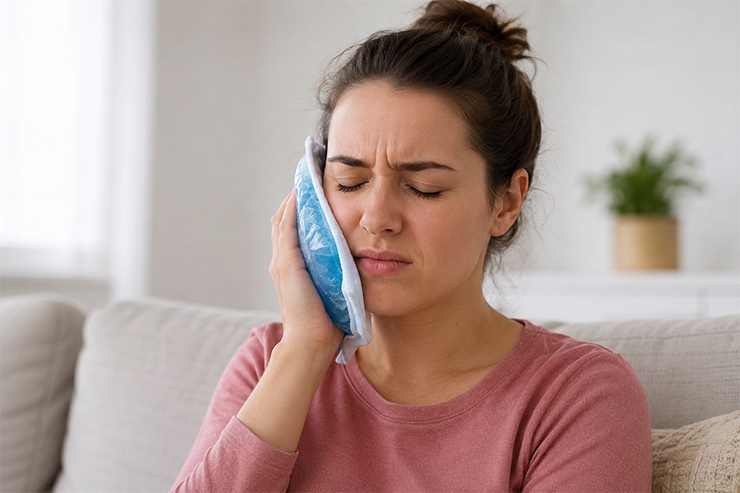
Apply an ice pack wrapped in a thin towel to the outside of the cheek over the sensitive area for 10 to 15 minutes. The cold reduces local inflammation and slows nerve conduction in the area. This is particularly useful when sensitivity is mixed with a dull ache, suggesting the surrounding tissue is involved.
Never apply ice directly to a sensitive tooth. The thermal shock will make the pain dramatically worse before it gets better.
4. Take an Over-the-Counter NSAID
Ibuprofen 400mg taken with food works on both pain and inflammation, which makes it the strongest single OTC option for sensitivity flare-ups. Paracetamol (acetaminophen) helps with pain but does nothing for inflammation. For most acute sensitivity, ibuprofen wins.
Take ibuprofen 30 minutes BEFORE you brush your teeth if brushing is currently your worst trigger. The medication will reach peak effect just as you start brushing, dramatically reducing the pain response.
5. Apply Clove Oil (Eugenol) to the Sensitive Spot
Dab a tiny amount of clove oil onto a cotton ball and press it gently against the sensitive tooth for 30 to 60 seconds. Clove oil contains eugenol, a natural anesthetic that has been used in dentistry for over 100 years (eugenol is still found in dental cement and temporary fillings).
The numbing effect lasts roughly 1 to 2 hours and works well as a bridge until you can get a dental appointment. Use sparingly because pure clove oil can irritate gum tissue if applied repeatedly.
6. Switch Immediately to a Soft-Bristled Toothbrush
If you have been brushing with a medium or hard-bristle toothbrush, this single change can reduce active sensitivity within 48 hours. Hard bristles physically wear down enamel and push gums backward, exposing more root surface every time you brush. Many people who report "sudden" sensitivity have been quietly worsening it for months with the wrong brush.
Use small, gentle circles. Pressure does not equal cleanliness. A study tracking brushing force showed that anything above 200 grams of pressure (about the weight of a small apple) starts to damage gum tissue.
7. Rinse with Diluted Hydrogen Peroxide
Mix 3% hydrogen peroxide with equal parts water and swish for 30 seconds before spitting. Do not swallow. This rinse reduces bacterial inflammation in the gums around the sensitive tooth, which is helpful when the sensitivity has a gum-related component.
Do not use more than once per day, and not for more than 7 days in a row. Overuse irritates oral tissue.
8. Use a Fluoride Mouthwash Before Bed
Rinse with a fluoride mouthwash (ACT, Listerine Total Care) for 1 minute before bed and do not eat or drink anything afterward. Fluoride remineralizes weakened enamel and partially seals open dentin tubules. The overnight contact time gives the fluoride enough exposure to actually integrate into the tooth surface.
This works gradually. You will not feel the difference the first night, but within 5 to 7 nights of consistent use, many people notice a meaningful drop in sensitivity intensity.
9. Avoid the Trigger Temporarily
If cold drinks set off the pain, switch to room-temperature water for 48 to 72 hours. If sweets are the trigger, cut them entirely during that window. The point is not to avoid these forever; it is to give the nerve a chance to calm down so the desensitizing treatments above can actually take hold. Continuous re-triggering keeps the nerve in a heightened state and resets the recovery clock.
| Method | Speed of relief | How long it lasts | Best for |
|---|---|---|---|
| Warm salt water rinse | 5 to 10 minutes | 1 to 2 hours | Gum-related sensitivity, post-meal flare-ups |
| Desensitizing toothpaste (applied) | 10 to 15 minutes | 4 to 6 hours | Cold and sweet triggers, exposed dentin |
| Cold compress (external) | 10 to 15 minutes | 1 to 2 hours | Sensitivity with dull aching |
| Ibuprofen 400mg | 30 to 45 minutes | 4 to 6 hours | Severe pain, inflammation-driven |
| Clove oil application | 1 to 3 minutes | 1 to 2 hours | Single sharp spot, bridging to appointment |
| Soft-bristled brush switch | 24 to 48 hours | Ongoing | Brushing-triggered sensitivity |
| Hydrogen peroxide rinse | 15 to 30 minutes | 4 to 8 hours | Gum inflammation, mild infection |
| Fluoride mouthwash nightly | 5 to 7 days | Cumulative | Erosion-related, recurrent sensitivity |
| Trigger avoidance | Immediate | While avoided | Any acute sensitivity |
Most cases of sensitive teeth pain relief come from layering 3 to 4 of these methods rather than relying on one. Yes, but if you are still in significant pain after 48 hours of doing this consistently, the cause is likely structural, not behavioral, and the next section explains exactly what to look for.
Why Tooth Sensitivity Happens: Root Causes Most People Miss
Most tooth sensitivity is not caused by what people assume. The popular explanation, "your enamel is weak", is true in only about a third of cases. The other two-thirds come from gum recession, micro-cracks, recent dental work, or behavioral triggers that people do not connect to their teeth.
The Cleveland Clinic and American Dental Association both classify dentin hypersensitivity into two broad categories: erosion-driven (enamel loss) and recession-driven (gum line drop exposing root surface). The difference matters because the treatments are different.
The most common causes of sensitivity, ranked by frequency in clinical practice:
- Gum recession: Roughly 1 in 2 adults over 40 has some degree of gum recession, often without realizing it. The exposed root surface has no enamel coating, only cementum, which wears off easily.
- Enamel erosion: Caused by acidic foods (citrus, tomato), drinks (sparkling water, wine, soda), or stomach acid (GERD, vomiting, pregnancy nausea). The enamel does not regrow once gone.
- Cracked tooth syndrome: A hairline fracture that does not show on a standard X-ray but causes sharp, fleeting pain on biting or temperature changes. Often misdiagnosed as "sensitivity" for months.
- Recent dental work: New fillings, crowns, or even professional teeth cleaning can cause sensitivity for 2 to 6 weeks while the tooth recovers. This usually resolves on its own.
- Bruxism: Grinding flattens enamel surfaces and creates micro-cracks. Morning sensitivity is a strong clue, as is jaw soreness on waking. (Many people who grind their teeth do not know they do it; a partner or routine dental exam usually identifies it first.)
- Whitening overuse: Peroxide-based whitening temporarily opens dentin tubules. Using whitening strips daily, or back-to-back professional treatments can cause weeks of heightened sensitivity. If you are using whitening regularly, options like supervised teeth whitening with a dentist are gentler on sensitivity than aggressive at-home regimens.
- Aggressive brushing technique: Hard horizontal scrubbing wears notches into the tooth at the gum line (called abfraction lesions). These notches are highly sensitive.
A real example: a patient in Culver City came in last year complaining of "sudden sensitivity in all her front teeth". She had no decay, no recession, and recent X-rays were clean. The cause turned out to be a new whitening regimen she had started 3 weeks earlier, two strips a day instead of the recommended one every other day. Stopping the strips and using fluoride varnish resolved the sensitivity within 9 days.
If your sensitivity appeared within 6 weeks of any new dental product, diet change, or oral habit, change ONE variable at a time to identify the cause. Most people change everything at once and never figure out what triggered it.
What most people miss: the cause of sensitivity often determines whether home treatment is enough or whether you need a dental visit. A cracked tooth will not respond to Sensodyne, no matter how long you use it.
When Sensitive Teeth Pain Means Something Worse
Sensitivity that lasts more than 30 seconds after the trigger is removed, pain that wakes you up at night, or pain you can locate to a single specific tooth, are all signs that your "sensitivity" is actually something more serious. The distinction matters because waiting it out is the wrong move when the cause is structural.
Normal dentin hypersensitivity is sharp, fast (typically 1 to 10 seconds), triggered by a specific stimulus, and stops once the stimulus is gone. When pain breaks any of those rules, the cause is more likely to be one of the following:
- Cracked tooth syndrome: Pain on biting (especially on release), inconsistent triggers, and pain that is hard to localize at first. Often needs a custom dental crown or other restoration to stabilize.
- Reversible pulpitis: Inflammation of the nerve from deep decay or trauma. Pain lasts 10 to 30 seconds after a cold trigger. It can usually be saved with a deep filling.
- Irreversible pulpitis: The nerve is dying. Pain lasts for minutes, may wake you at night, and over-the-counter painkillers stop being effective. Requires root canal therapy or extraction. This is not optional.
- Dental abscess: Throbbing, constant pain, often with visible swelling or a bad taste in the mouth. This can spread to the surrounding tissue if untreated. Same-day care from emergency dentistry is the appropriate response.
- Periodontal abscess: Gum-line infection. Pain is more focused on the gum than the tooth itself, with localized swelling or pus.
You might be thinking: "What if I am not sure?" The honest answer is that a 10-minute dental exam with an X-ray is the only way to be certain. The good news is that the cost and time of one exam are minor compared to the cost of treating an undiagnosed cracked tooth or root infection.
That leads to the next practical question: what should you actually eat and drink while you are working through sensitivity at home?
What Foods and Drinks to Avoid During a Sensitivity Flare-Up
Some foods and drinks will keep your sensitivity flaring no matter how much desensitizing toothpaste you use. The fastest way to interrupt the cycle is to remove the triggers for 48 to 72 hours, give the nerve a chance to settle, and then reintroduce items one at a time.
Avoid for 48 to 72 hours during a flare-up:
- Very cold drinks and ice (the single biggest acute trigger)
- Very hot beverages (coffee above 65°C / 150°F)
- Citrus fruits and juices (lemon, orange, grapefruit)
- Sparkling water and soda (carbonation is acidic, pH around 3 to 4)
- Wine, especially white wine (highly acidic, pH around 3.0 to 3.5)
- Tomato-based sauces and tomato juice
- Pickled foods and vinegar-heavy dressings
- Sugary foods (sweet stimuli trigger dentin sensitivity directly)
- Hard foods like nuts, hard candy, ice chips, or crusty bread (especially if you suspect a cracked tooth)
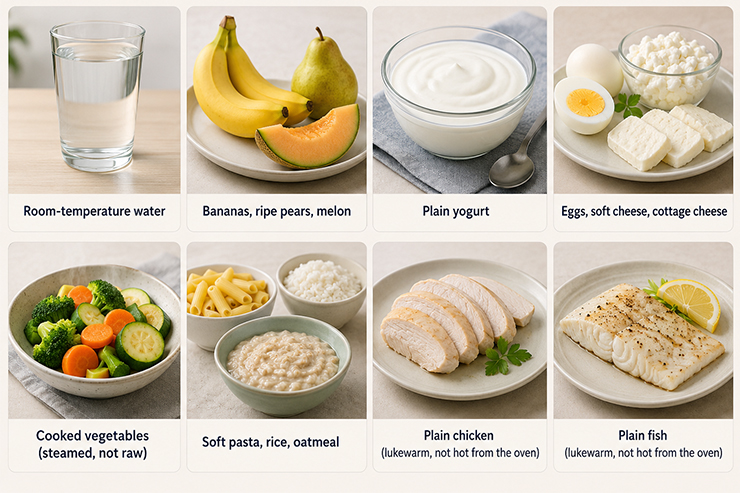
Safer choices during a flare-up:
- Room-temperature water
- Bananas, ripe pears, melon
- Plain yogurt
- Eggs, soft cheese, cottage cheese
- Cooked vegetables (steamed, not raw)
- Soft pasta, rice, oatmeal
- Plain chicken or fish (lukewarm, not hot from the oven)
If you must drink something acidic, use a straw and place it past your front teeth toward the back of your mouth. This dramatically reduces contact between the acid and your enamel. Rinse with plain water immediately after, but wait at least 30 minutes before brushing. Brushing acid-softened enamel can actively wear it down.
For people whose sensitivity is mostly diet-driven, the surprising news is this: most see significant improvement within 4 to 7 days just from removing acidic drinks, with no other intervention. That fact alone tells you how much of "tooth sensitivity" is really a beverage problem.
How to Cure Sensitive Teeth Permanently: Dental Treatments That Actually Work
For sensitivity that does not resolve with home care within 2 to 4 weeks, professional dental treatment offers permanent or long-lasting relief, with the right treatment depending entirely on the root cause. There is no single "cure" that fits every case, which is why a dental exam is the right starting point if home methods have stopped working.
The main professional treatments, matched to their best use cases:
- Fluoride varnish: A high-concentration fluoride coating painted onto the sensitive area in a 5-minute appointment. Lasts roughly 3 to 6 months and is one of the most effective in-office options for mild to moderate sensitivity from erosion or recession.
- Dental bonding: A tooth-colored composite resin applied to exposed root surfaces or worn notches at the gum line. Bonding seals the dentin tubules permanently and looks natural. Lasts 5 to 10 years on average.
- Gum graft surgery: For significant recession, a small piece of gum tissue (or donor tissue) is grafted onto the exposed root. This addresses the cause of the sensitivity rather than just covering it.
- Composite fillings: When sensitivity is caused by decay or a worn-out filling, removing the damage and placing fresh composite fillings often resolves the pain completely within a week.
- Dental crowns: For teeth with structural cracks, large old fillings that are failing, or significant wear, a crown covers and protects the tooth entirely. This is often the right answer for cracked tooth syndrome.
- Root canal therapy: When the nerve is irreversibly damaged or infected, root canal therapy removes the nerve, cleans the canal, and seals the tooth. The procedure itself ends the sensitivity completely because the nerve is gone.
- Night guards for bruxism: If grinding is wearing down your enamel, a custom mouth guard worn at night stops the damage and lets enamel recover. A pharmacy-bought boil-and-bite guard is better than nothing, but a custom-fitted version protects much more reliably.
Real-world example: A patient came to one of our offices with sensitivity in two lower molars that had not improved despite 6 months of Sensodyne use. The X-ray revealed two small areas of recurrent decay underneath aging amalgam fillings. The sensitivity was the warning sign, the fillings were the cause. Replacing them with composite fillings resolved the pain within 5 days.
Yes, but professional treatment costs more upfront. What people miss is that fluoride varnish at a dental office costs roughly the same as 3 months of premium desensitizing toothpaste and works much faster and more reliably. The "expensive" treatment is often the cheaper one once you account for how long the problem actually drags on.
If sensitivity is also tied to gum recession or gum inflammation, consistent professional teeth cleaning every 3 to 6 months prevents the cause from progressing in the first place, which is the most cost-effective form of treatment.
The Daily Habits Triggering Your Sensitivity
The habits that cause most chronic tooth sensitivity are not the obvious ones. Sugar gets the blame. Acid gets ignored. Toothbrush pressure is rarely on the list. Most people who develop sensitivity in their 30s and 40s do so from a handful of routine behaviors they never connected to their teeth.
Here is the contrarian truth: brushing harder makes teeth more sensitive, not cleaner. Acidic drinks marketed as "healthy" (sparkling water, lemon water, kombucha) erode enamel faster than diet soda in some cases. Whitening strips used daily damage the enamel structure. And brushing immediately after eating is one of the most common ways people accelerate their own erosion.
The most under-recognized daily triggers:
- Sparkling water and "flavored" water: pH typically between 2.7 and 4.0. The carbonation itself is acidic regardless of whether the water is "unsweetened".
- Lemon water in the morning: Highly acidic. Drinking it daily on an empty stomach is one of the fastest ways to erode front-tooth enamel. Use a straw and rinse afterward, or skip it.
- Brushing right after acidic food or drink: Enamel softens for about 30 minutes after acid exposure. Brushing during that window mechanically scrapes off the softened layer. Wait 30 minutes or rinse with plain water and chew sugar-free gum instead.
- Hard-bristled toothbrushes: Despite being marketed for "deep cleaning", hard bristles cause measurable enamel and gum damage in most users.
- Whitening strips overused: Sticking to the package directions is essential. Two cycles per year is usually safe; monthly is not.
- Mouth breathing at night: Dries oral tissue, increases acid concentration on teeth, and accelerates erosion. Often missed as a sensitivity contributor.
- Chewing ice: A single hard ice chew can crack a tooth invisibly. The damage shows up weeks later as inexplicable cold sensitivity.
Most patients who tell me they have sensitive teeth are doing 2 to 3 things every morning that they would stop instantly if they knew the connection.
Track what you eat and drink for 5 days alongside your sensitivity flare-ups. The pattern usually identifies the trigger within a week, often something you consume every morning without thinking about it.
The pattern that emerges in most cases is simple. Behavior changes plus a targeted home routine fix mild to moderate sensitivity. Anything beyond that needs the dentist.
When to See a Dentist for Sensitive Tooth Pain
You should see a dentist for tooth sensitivity if home care has not improved the problem within 2 to 4 weeks, if the pain is localized to one specific tooth, if it lasts more than 30 seconds after the trigger is removed, or if it is accompanied by swelling, fever, or pain on biting. Same-day care is needed for severe pain, visible swelling, or any sensitivity combined with systemic symptoms.
How to decide which timeline applies:
Book a same-day or emergency appointment if:
- Pain is severe and not responding to OTC medication
- There is visible swelling in the gum or face
- You have a fever or a general feeling of being unwell
- Pain wakes you up at night repeatedly
- A tooth is visibly cracked, chipped, or has a piece missing
- Pain is constant rather than triggered
Schedule a routine appointment within 1 to 2 weeks if:
- Sensitivity has not improved with home care after 2 to 4 weeks
- One specific tooth is sensitive, and others are not
- Sensitivity is interfering with eating or drinking daily
- You suspect a filling has come loose or a crown is failing
- You notice receding gums or visible notches at the gum line
Continue home care and monitor if:
- Sensitivity is general (affects multiple teeth equally)
- It started recently after a known trigger (new toothpaste, whitening, change in diet)
- It is mild and responds well to desensitizing toothpaste
- It is improving week over week
Need help getting started? Our California-based offices in Culver City and Inglewood are ready to assist. Reach out by filling out the consultation form or calling 310-643-6221.
Final Thought on Managing Tooth Sensitivity
Stopping sensitive teeth pain immediately is rarely about one magic fix. It is about layering the right home methods (salt water, desensitizing toothpaste, NSAIDs, trigger avoidance) for fast relief, while honestly assessing whether what you are dealing with is true sensitivity or a structural problem in disguise. The home methods work fast when the cause is mild and reversible. They will not, and cannot, fix a cracked tooth, deep decay, or a failing nerve.
The principle to hold on to is simple: if your pain is brief, general, and clearly triggered, treat it at home with confidence. If it is lasting, localized, or unprovoked, treat the timeline seriously and get it looked at. Most sensitivity has a clear cause and a clear fix, but only if you do not confuse waiting it out with treating it.
Healthy teeth do not hurt. When yours do, your job is to figure out why, not just silence the alarm.
Common Questions About Stopping Sensitive Tooth Pain Immediately
How long does sensitive tooth pain typically last?
Mild dentin sensitivity usually resolves within 1 to 4 weeks once the trigger is removed and home treatment is consistent. Sensitivity after a new filling or cleaning typically settles within 2 to 6 weeks. Pain that persists beyond 4 weeks despite home care usually has a structural cause and needs dental evaluation.
Can sensitive teeth heal on their own?
Mild sensitivity from minor enamel demineralization can improve on its own with fluoride exposure (toothpaste, mouthwash, water) and trigger removal. Enamel cannot regenerate, but the surface can remineralize, and the dentin tubules can partially close. Sensitivity from gum recession, cracks, or decay does not heal on its own and gets worse over time without intervention.
Why are my teeth suddenly sensitive to cold but not hot?
Cold-only sensitivity is the most common form of dentin hypersensitivity and usually points to exposed dentin from enamel erosion or gum recession, rather than nerve damage. Hot sensitivity, especially lingering hot sensitivity, is more concerning and often indicates nerve inflammation (pulpitis) that may require root canal therapy.
Is Sensodyne actually effective, or is it marketing?
Toothpastes containing potassium nitrate or stannous fluoride (the active ingredients in Sensodyne) have measurable efficacy in clinical studies, but they require consistent use for 2 to 4 weeks to show full effect. Used once or twice, they do almost nothing. Applied directly to a sensitive tooth and left on for 5 to 10 minutes, they work much faster than brushing-only use.
Can a vitamin deficiency cause sensitive teeth?
Severe vitamin D and calcium deficiencies can weaken tooth structure over time, but vitamin deficiency is rarely the primary cause of sudden sensitivity in adults. If you have systemic signs of deficiency (fatigue, muscle weakness, bone pain), a blood test through your physician is the right step. Treating dental sensitivity should not wait for that workup.



0 Comments