

A swollen gum around one tooth in the back usually means the tissue around that single molar has become irritated or infected, most often from trapped food, plaque buildup, an early gum infection, a partly erupted wisdom tooth, or an abscess. The reason your gum is swollen around one tooth in the back matters because some causes settle with careful home care while others need a dentist within days. This guide walks through every likely cause, how to tell simple irritation from a real infection, what you can safely do tonight, and the warning signs you should never ignore.
Key Takeaways
- Swelling around one back tooth is usually local, meaning the problem sits in that one spot rather than across your whole mouth.
- The most common causes are trapped food, plaque and gingivitis, gum disease, a partly erupted wisdom tooth, and a gum or tooth abscess.
- Mild swelling from food or irritation often eases within 2 to 3 days with warm salt water rinses and gentle cleaning.
- Throbbing pain, pus, a bad taste, fever, or facial swelling point to infection and need a dentist quickly.
- Home care can soothe the area, but it cannot cure decay, deep infection, or an abscess.
- Swelling that keeps returning to the same tooth signals an underlying problem that a dental exam can pinpoint.
What Localized Gum Swelling Around a Back Tooth Can Tell You
When swelling is focused around one back tooth, it points to a local problem in that exact spot rather than a full mouth gum issue. The gum reacts to bacteria, trapped debris, or pressure by sending extra blood and fluid to the area, which is what you see and feel as puffiness, redness, and tenderness.
Back molars are simply harder to keep clean. They sit at the end of the arch, the toothbrush often skims past them, and floss is easy to skip there. That is why a swollen gum around a back tooth shows up more often than swelling near the front teeth, and why the same molar can flare up again if the underlying cause is not addressed.
Think of gum inflammation like a smoke alarm. The alarm does not tell you how big the fire is, only that something in one room needs attention. A little swelling can mean a crumb stuck under the gum, or it can mean an infection building below the surface.
Localized swelling around one tooth tends to look like: redness or a shiny, puffy patch of gum; tenderness when you touch it or chew; a small bump or a feeling of pressure near the tooth.
Run your clean tongue or a fingertip gently along the gumline of the sore tooth. A soft, tender bulge that is warm to the touch is more likely inflammation or infection than a simple food trap, and it deserves a closer look sooner rather than later.
Common Causes of Swollen Gums Around a Single Tooth
Gum swelling around one tooth usually traces back to one of six causes. The quick reference below shows the typical signs of each and the general fix, followed by a closer look at each one.
| Likely Cause | Typical Signs | General Direction |
|---|---|---|
| Trapped food | Sudden soreness after eating, tender bulge, relief after cleaning | Gentle floss and rinse |
| Plaque and gingivitis | Red, puffy gum that bleeds when brushing | Better cleaning, professional cleaning |
| Gum disease | Persistent swelling, gum pockets, bad breath | Deep cleaning by a dentist |
| Gum or tooth abscess | Throbbing pain, pus, bad taste, pressure | Urgent dental care |
| Wisdom tooth | Swelling behind the last molar, jaw stiffness | Cleaning or removal |
| Cracked tooth or decay | Pain on biting, sensitivity, swelling near the root | Filling, crown, or root canal |
Trapped food under the gumline
The most common and most harmless cause is a piece of food wedged under the gum. Popcorn hulls, small seeds, tough meat fibers, and chip fragments slip below the gum edge around a back molar and the tissue reacts within hours.
A patient who felt a swollen gum around a back tooth the evening after movie night, for example, is often dealing with a popcorn hull, not an infection. Cleaning the area gently usually brings relief within a day or two. If food debris sits there for long, though, bacteria multiply and can turn a simple irritation into a real gum infection around one tooth.
Plaque, tartar, and gingivitis
When brushing or flossing misses the back teeth, plaque hardens into tartar along the gumline and irritates the gum. This early, reversible stage is called gingivitis, and it often shows up first as a swollen, red gum near a molar that bleeds a little when you brush.
Because back molars are the hardest surfaces to reach, they are a common first home for plaque. The good news is that gingivitis usually reverses with improved daily cleaning and a professional cleaning to remove hardened tartar you cannot brush away.
Gum disease and a deeper pocket
Left unchecked, gingivitis can progress to periodontitis, a deeper gum infection that damages the tissue and bone supporting the tooth. Here the swelling is more stubborn, the gum may pull away and form a pocket, and bad breath or a bad taste can appear.
This matters more than most people expect. According to the CDC, nearly half of adults over 30 in the United States have some form of gum disease, so a swollen gum behind a molar is a very common early clue. Once pockets form, home care alone will not reach the bacteria deep below the gumline.
A gum or tooth abscess (tooth abscess symptoms)
An abscess is a pocket of pus caused by a bacterial infection, and it is the most urgent cause on this list. It can form in the gum tissue itself, called a periodontal abscess, or at the root of a tooth from deep decay or a crack, called a periapical abscess.
Classic tooth abscess symptoms include: throbbing or constant pain, a shiny swollen bump near the tooth, pus or a salty bad taste, sensitivity to heat and pressure, and sometimes a fever or a swollen jaw.
An abscess will not clear up on its own and can spread. Squeezing a gum abscess to drain it yourself can push bacteria deeper into the surrounding tissue instead of relieving the problem. If you notice these signs, same-day emergency dental care is the safest next step, because draining the infection and treating its source is what actually resolves it.
Wisdom tooth gum swelling (pericoronitis)
Wisdom teeth, the last molars to arrive, often push through only partway. The flap of gum over a partly erupted wisdom tooth traps food and bacteria, leading to a painful, swollen gum behind the last tooth. Dentists call this pericoronitis.
Wisdom tooth gum swelling frequently comes with jaw stiffness and pain when biting. Depending on how the tooth is positioned, a dentist may clean the area and monitor it, or recommend wisdom teeth removal if the flare-ups keep returning.
A cracked tooth, decay, or a failing filling or crown
Sometimes the gum is reacting to a problem in the tooth rather than the gum itself. A cracked molar, a deep cavity, or a leaking old filling or crown lets bacteria reach the inner tooth, and the surrounding gum swells in response, often with pain on biting.
Here is what most people miss: a swollen gum with little or no pain can still be serious. Nerves inside a badly infected tooth can die and stop signaling, so the ache fades even as infection continues. If the tooth has decay or a crack reaching the nerve, root canal treatment is often what saves it.
You might be thinking pain is the only real warning sign. It is not. Swelling that keeps returning to the same back tooth is reason enough to get it checked, pain or not.
Why Is My Gum Swollen Around One Tooth in the Back After Flossing?
A gum that swells around one back tooth after flossing usually points to one of two things: the floss irritated already inflamed tissue, or it disturbed a spot that was hiding a problem. Both are worth understanding, because the fix is different.
Yes, flossing too hard or snapping the floss down onto the gum can bruise the tissue and leave it tender and puffy for a day. But if the swelling and bleeding keep happening every time you floss the same tooth, that is not a technique problem; it is a sign the gum there is already inflamed from plaque or early gum disease and needs attention.
Swollen Gum Behind a Back Molar With No Wisdom Tooth
A swollen gum behind your last molar can happen even if you have no wisdom teeth, because that back corner is a natural trap for food and plaque. With nothing behind it to help clean the area, debris collects against the rear surface of the last tooth and the gum flares.
In these cases, the swelling often comes from a food trap, a deep gum pocket at the back of the molar, or the early stages of gum disease in a spot your brush rarely reaches. Someone who had wisdom teeth removed years ago can still develop a swollen gum behind that molar if the site collects debris.
The takeaway is the same regardless of wisdom teeth: back tooth gum pain and swelling that does not improve with careful cleaning deserves a professional look, because the cause is often a pocket or infection you cannot see.
How Do You Know If It Is Minor Irritation or a Serious Infection?
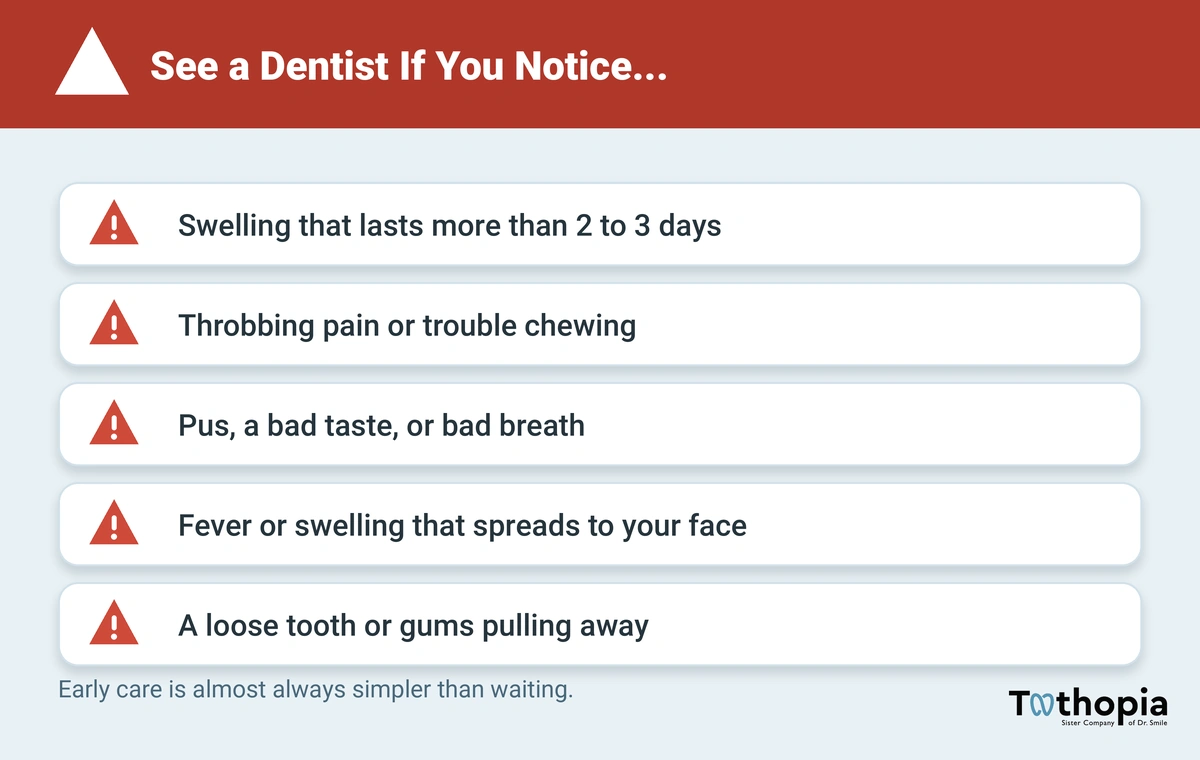
Knowing when to see a dentist for swollen gums comes down to two things: how long the swelling lasts and what comes with it. Swelling that improves within 2 to 3 days of good home care is usually minor, while swelling that lingers, worsens, or comes with pain, pus, or fever is a sign of infection that needs a dentist.
Minor irritation, such as a food trap or a small brushing scrape, tends to ease quickly once the area is clean. A gum infection around one tooth, a deep pocket, or an abscess follows the opposite pattern: it holds steady or grows, and the discomfort builds.
See a dentist promptly if you notice any of these: swelling that lasts more than 2 to 3 days, throbbing pain or trouble chewing, pus or a persistent bad taste, fever or swelling that spreads toward your face or neck, or a tooth that feels loose.
Home Care Tips for Swollen Gums Behind Your Back Teeth
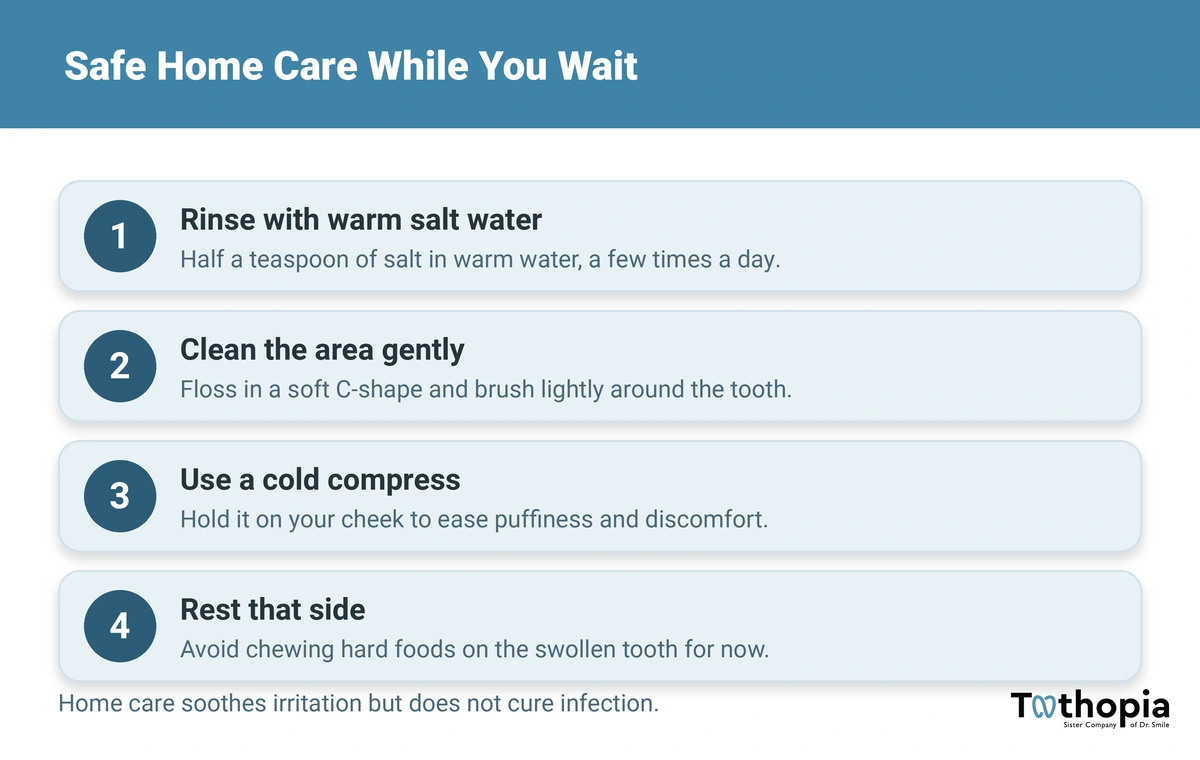
If the swelling is mild and you have no fever or severe pain, careful home care can calm the area while you decide whether you need a visit. These steps soothe irritation, but they do not cure infection or decay.
- Rinse with warm salt water. Dissolve about half a teaspoon of salt in a glass of warm water and rinse for 30 seconds, a few times a day, to reduce bacteria and calm the gum.
- Clean the area gently. Floss in a soft C shape around the tooth and brush lightly with a soft-bristled brush to remove trapped food and plaque.
- Use a cold compress. Hold a cold pack against your cheek near the swollen spot to ease puffiness and discomfort.
- Try an antimicrobial rinse. An alcohol-free antiseptic mouth rinse can lower the bacterial load around a hard-to-reach back tooth.
- Ease discomfort if needed. An over-the-counter pain reliever such as acetaminophen or ibuprofen can help while you wait, if it is safe for you.
- Rest that side. Avoid chewing hard foods on the swollen tooth and stay hydrated to keep the area clean.
What not to do: do not poke the gum with a toothpick or anything sharp, do not place an aspirin tablet directly on the gum (it can burn the tissue), and do not ignore swelling that lasts beyond a few days hoping it will fade.
A warm salt water rinse is soothing, but it is a helper, not a cure. If the same gum swells again after you stop rinsing, the underlying cause is still there and needs a professional fix.
How Do You Treat Gum Swelling Around One Tooth in the Back?
Professional treatment for gum swelling around one tooth depends entirely on the cause, which is why a quick exam and sometimes an X-ray come first. Once the source is clear, the fix is usually straightforward.
- Professional teeth cleaning or deep cleaning. For plaque, tartar, and gum disease, a professional teeth cleaning removes buildup, and scaling and root planing cleans below the gumline.
- Draining an abscess. A dentist drains the pus and clears the infection, often with antibiotics when it has started to spread.
- Root canal or a restoration. If decay or a crack reached the nerve, root canal treatment removes the infection and saves the tooth, followed by a filling or crown.
- Treating a wisdom tooth. For pericoronitis, the dentist cleans the area, and if flare-ups continue, wisdom teeth removal may be recommended.
- Extraction as a last resort. When a tooth cannot be saved, removal stops the infection and protects the neighboring teeth.
Timelines vary. A food trap or mild gingivitis can resolve within days of cleaning, while gum disease or an abscess may need a short series of visits. At Toothopia Dental, the goal is always to treat the swelling at its source so it does not keep returning to the same tooth.
Need help getting started? Our California-based offices in Culver City and Inglewood are ready to assist. Reach out by filling out the consultation form or calling 310-643-6221.
How to Prevent a Swollen Gum Around Your Back Teeth
Most causes of swollen gums around teeth are preventable with consistent daily care that actually reaches the back of your mouth. Small habits protect the molars that are easiest to neglect.
- Brush twice a day, angling the bristles at about 45 degrees toward the gumline and spending extra time on the back teeth.
- Clean between teeth daily with floss, an interdental brush, or a water flosser, especially around the molars.
- Rinse with an antimicrobial mouthwash to lower bacteria in spots your brush misses.
- See your dentist for a checkup and professional cleaning at least twice a year to catch problems early.
- Avoid tobacco, which weakens your body's ability to fight gum infection.
- Eat a balanced diet and replace your toothbrush every three to four months.
The Bottom Line on a Swollen Gum Around One Back Tooth
A swollen gum around one tooth in the back is your body flagging a problem in one precise spot. Often it is something simple like trapped food or a bit of plaque that clears with careful cleaning and warm salt water rinses. Other times it is an early sign of gum disease, a wisdom tooth issue, or an infection that will only grow if it is ignored.
The most reliable guide is time and symptoms. If gentle home care settles the swelling within a couple of days, you are likely in the clear. If it lingers, keeps returning, or brings pain, pus, or fever, treat that as your cue to be seen. Early care is almost always simpler, more comfortable, and better for the tooth than waiting until the pain takes over.
Common Questions About Swollen Gum Around One Back Tooth
Can a swollen gum around one back tooth go away on its own?
Sometimes. Mild swelling from trapped food or minor irritation can settle within a day or two once the area is cleaned with gentle flossing and warm salt water rinses. Swelling from gum disease, decay, or an abscess will not resolve on its own and usually worsens, so persistent swelling should be checked by a dentist.
How long does a swollen gum take to go down?
Minor irritation often improves within 2 to 3 days of good home care. If swelling has not eased after about three days, or it is getting worse, that timeline is a signal to see a dentist rather than keep waiting, because the cause likely needs professional treatment.
Is a swollen gum around one tooth a dental emergency?
Not always, but it can be. Swelling with throbbing pain, pus, a bad taste, fever, or swelling spreading toward your face suggests an abscess or spreading infection, which does need urgent care. If you notice those signs, contact a dentist for a same-day visit rather than waiting.
Can I still brush and floss a swollen gum around a back tooth?
Yes, and you should, gently. Use a soft-bristled brush and curve floss into a C shape around the tooth to remove the plaque and food that often cause the swelling in the first place. Being too rough can irritate the area more, so keep your touch light.



0 Comments