
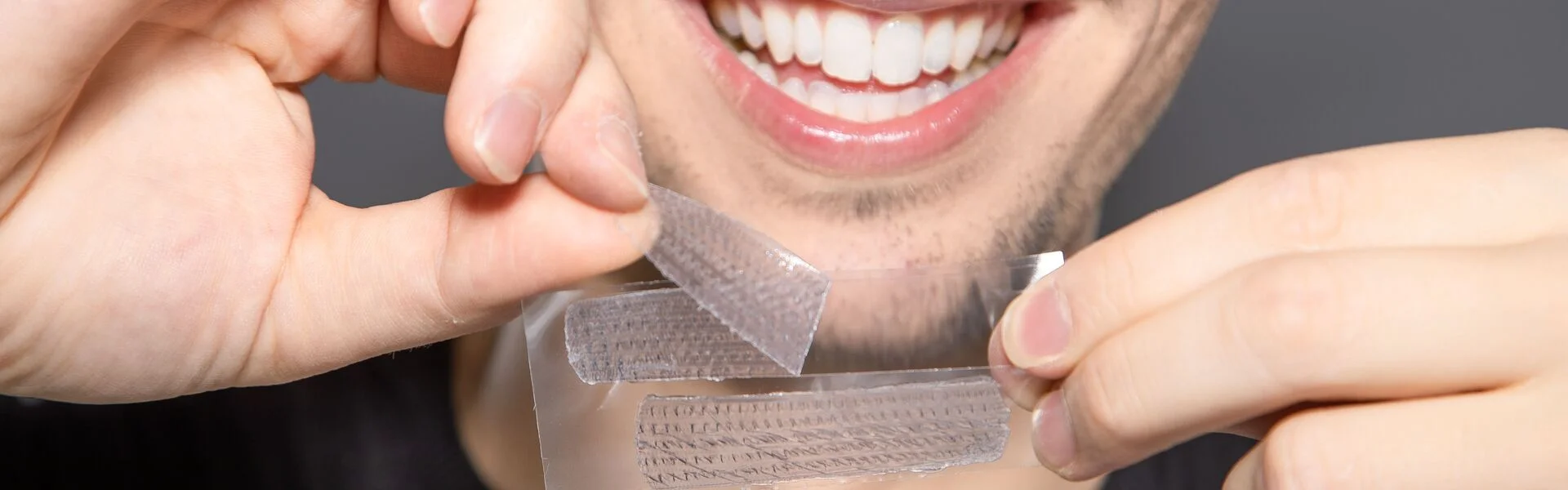
Whitening strips are not bad for your teeth when you use them exactly as directed, but they can cause real harm when you overuse them or apply them to teeth that were never good candidates. The peroxide gel that lifts stains can also reach past your enamel, and pushing past the recommended time or frequency is where sensitivity, gum irritation, and enamel wear start. Most healthy adults can brighten their smile safely with a little care. This guide walks through how the strips work, the side effects worth watching, who should skip them, and the safe way to use them. The part most people get wrong is simpler than you think.
Key Takeaways
- Whitening strips are generally safe for healthy adults when used as directed, and risky mainly through overuse or misuse.
- The active ingredient is hydrogen peroxide or carbamide peroxide, and it penetrates enamel to reach the dentin underneath.
- The most common side effects are tooth sensitivity and gum irritation, both usually temporary.
- Enamel erosion is the biggest long-term risk, and once enamel is gone, it does not grow back.
- Strips do not whiten crowns, veneers, or fillings, so restorations can end up a different shade than your natural teeth.
- Children under about 14 should not use strips, and teens should only use them with adult supervision.
- Results fade over months, so whitening is maintenance, not a one-time fix.
Safe or Harmful? The Real Verdict on Whitening Strips
For most healthy adults, whitening strips are safe when used as directed. The problems start with how people use them, not with the strips sitting in the box.
Over-the-counter whitening strips are thin, flexible plastic coated with a peroxide-based gel. That gel breaks down the stain molecules on your teeth, which makes them look several shades brighter over a couple of weeks. The American Dental Association grants a Seal of Acceptance to whitening products that have been tested and shown to be safe and effective when the instructions are followed. Most over-the-counter strips keep peroxide concentrations within a range the ADA considers reasonable for home use.
Here is the honest version. Are teeth whitening strips safe? Yes, for the average person with healthy teeth and gums. But that safety depends entirely on the four things you control: how long you leave them on, how often you use them, how strong the product is, and whether your teeth were healthy to begin with. Slip on any one of those and the risk climbs fast.
You might be thinking the ADA Seal means a product is risk-free. It does not. The Seal means the product is safe when used correctly, and that qualifier carries a lot of weight.
Before you start any at-home whitening, get a quick dental check. A short exam can catch a small cavity or a patch of gum recession that could turn a harmless strip into a painful mistake.
Which raises the real question most searches are circling: what actually happens to your enamel when peroxide touches it?
How Whitening Strips Actually Work on Your Enamel
Whitening strips lighten teeth by using peroxide to break stain molecules into smaller, less visible pieces. To do that, the gel has to move into the tooth, not just sit on top of it.
The active ingredient is either hydrogen peroxide or carbamide peroxide. Both release oxygen that reacts with the colored compounds trapped in your enamel and the layer beneath it. This is why strips work on the deeper yellowing that a whitening toothpaste cannot touch. It is also why they are not risk-free.
Think of enamel less like a sheet of glass and more like a dense sponge. It looks solid, but peroxide can travel through it. Researchers at Stockton University treated extracted human teeth with whitening strips and tracked what happened below the surface. They found that peroxide at concentrations comparable to standard strips reached the dentin, the softer, protein-rich layer under the enamel, and fragmented the collagen there. The more often the teeth were treated, the smaller those protein fragments became.
The “totally enamel safe” label on some boxes oversimplifies things. Occasional use is fine. Trouble shows up when the exposure piles on.
Consider two people using the same box of strips. One follows the 30-minute window for two weeks and stops. The other leaves them on for an hour because the timer felt too short, then keeps going for a second and third round. After all, the results were not dramatic enough. Same product, very different outcome for their enamel.
So if the gel is doing its job on the stains, what does it do to the rest of your mouth along the way?
What Are the Possible Side Effects of Whitening Strips?
The possible side effects of whitening strips are tooth sensitivity, gum irritation, enamel erosion, uneven results, and, in extreme cases, chemical burns on the gums. Most are temporary and tied to how the strips were used.

Tooth Sensitivity
This is the most frequent complaint. Peroxide can irritate the dentin and its nerve pathways, so cold water or a breath of winter air suddenly zings. For most people, it fades within a few days of stopping. Someone who already has sensitive teeth will feel it faster and harder.
Gum Irritation
If the strip touches your gums, the peroxide can leave them red, sore, or temporarily white. This usually means the strip was placed too high or was too big for your teeth. Repeated contact can push simple irritation toward inflammation, and leaving a strip on far too long has been linked to chemical burns on gum tissue.
Enamel Erosion
This is the one that matters most because it does not reverse. Frequent or prolonged use can wear down the protective enamel layer over time, which exposes more of the dentin and raises your risk of cavities and long-term sensitivity. A single two-week cycle rarely does this. Years of back-to-back whitening with no breaks is a different story.
Uneven Results
Strips only whiten the surface they touch. They do not wrap perfectly around every tooth, so the edges near the gumline and the gaps between teeth can stay darker. If you have crowns, veneers, or fillings on visible teeth, those will not change color at all, which can leave a noticeable mismatch.
| Situation | Typical Risk Level | What Usually Happens |
|---|---|---|
| As directed, healthy teeth | Low | Mild, temporary sensitivity at most |
| Left on too long | Moderate | Gum irritation, sharper sensitivity |
| Used daily for months | High | Enamel wear, lasting sensitivity |
| Used on cavities or gum disease | High | Pain, worsening of the existing problem |
| Used with crowns or veneers | Cosmetic | Colour mismatch between teeth and restorations |
Most of these side effects trace back to a single habit: treating “a little is good” as “more is better.” That instinct is exactly what dentists are trying to head off, which is why their answer to whether they recommend strips is more nuanced than a simple yes or no.
Do Dentists Recommend Teeth Whitening Strips?
Many dentists are fine with whitening strips for healthy adults, as long as they are used correctly and not treated as a daily habit. What dentists actually push back on is unsupervised overuse.
The professional view usually breaks down like this:
- Strips are a reasonable, low-cost option for mild surface staining from coffee, tea, wine, or tobacco.
- They are less effective on gray discoloration or staining from trauma or certain medications like tetracycline.
- For deeper or stubborn cases, in-office whitening gives faster, more even, and better-protected results because a professional controls the concentration and shields your gums.
Do dentists recommend teeth whitening strips over professional treatment? Not usually, and the reason is control. In a clinic, someone has already checked that your teeth are good candidates, applied a barrier to your gums, and matched the strength of the gel to your situation. A drugstore box cannot do any of that.
Here is a “yes, but” worth sitting with. Yes, strips are convenient and genuinely work for a lot of people. But if you find yourself buying box after box to chase a brightness that keeps slipping away, that is usually a sign the underlying issue needs a professional look, not another round of peroxide. That is where a conversation about professional teeth whitening tends to pay off.
If dentists are cautious even for healthy adults, there are clearly some people who should not reach for strips at all.
When Whitening Strips Are a Bad Idea
You should not use whitening strips if you have untreated cavities, gum disease, cracked teeth, severe sensitivity, or if you are pregnant or breastfeeding, without talking to a dentist first. In these cases, the strips can turn a manageable problem into a painful one.
The logic is straightforward. Whitening gel is designed to move into your teeth. If there is already a way in, like a cavity or a crack, the peroxide can reach the nerve and cause sharp pain. On inflamed or receding gums, it adds insult to injury.
Why shouldn't you use whitening strips when you have dental work on show? Because they cannot whiten it. Crowns, veneers, and fillings hold their manufactured color no matter how much peroxide you apply. Whiten the natural teeth around them and the restoration can suddenly look darker by comparison. Porcelain veneers in particular are best brightened only occasionally and under professional guidance, since aggressive whitening can dull their surface.
Picture someone with a front tooth crown who runs a full whitening cycle before a wedding. Their natural teeth lighten nicely, and the crown now stands out as the one dull tooth in every photo. Nobody warned them, because the box could not.
You might assume thin enamel is rare. It is more common than people think, and some of us simply have naturally thinner enamel that wears faster under repeated bleaching. If whitening always leaves you aching, that is a reason to get checked rather than to push through.
This is exactly why a quick visit for preventive care before whitening is worth the time. It sorts out who is a good candidate and who needs a different plan.
And candidacy gets even more important once you factor in age.
Are Whitening Strips Safe for Kids, Teens, and Adults?
Whitening strips are safe for most adults, generally acceptable for supervised teens, and not recommended for young children. The difference comes down to how developed the teeth and enamel are.
For adults, enamel is fully formed, so the main variables are frequency, technique, and existing oral health. For younger mouths, the enamel itself is still maturing, which changes the math.
- Adults: Safe when used as directed on healthy teeth. Standard cautions about overuse apply.
- Teens: According to pediatric dental guidance, teens with all their permanent teeth can generally use strips, but only with adult supervision. Many dentists suggest waiting until the mid-teens, around 14 to 16, when enamel is more fully calcified.
- Children under about 14: Not recommended. Their enamel is thinner, their pulp is larger, and they are more prone to sensitivity and lasting damage.
Are whitening strips bad for kids? For young children, effectively yes, and there is a second concern beyond enamel. Strips and gel can be swallowed, so any use by a minor needs an adult placing the strips, keeping them off the gums, and watching the clock. Teens also feel real pressure about their appearance and may quietly bend the rules to get faster results, which is where supervision matters most.
A realistic scenario: a 13-year-old borrows a parent's strips before school pictures and doubles the time, hoping for a bigger change. The likely result is not a brighter smile but sore gums and zinging teeth, on enamel that is still developing. This is where a family dentistry visit helps, because a dentist can suggest safe, age-appropriate options instead.
For a self-conscious teen, a professional consult is a better choice than a drugstore experiment. A dentist can recommend a controlled option and set realistic expectations, which helps prevent the urge to overdo whitening.
Assuming you are a good candidate, the next fair question is whether the results are worth the effort, or whether they simply vanish.
Are Whitening Strips Permanent?
No, whitening strip results are not permanent. Your teeth will gradually pick up new stains from food, drinks, and daily life, so the brightness fades over months rather than lasting for good.
Whitening removes the stains that are there now. It does nothing to stop future ones. Coffee, tea, red wine, dark sauces, and smoking all pull color back in, and how fast that happens depends on your habits. Most people see results hold for several months before a touch-up makes sense.
There is also a common mix-up worth clearing. Whitening strips work on natural enamel only. They do not whiten gums, and they will not lighten crowns, veneers, or fillings. If your gums look paler right after a session, that is usually temporary irritation from the peroxide, not whitening, and it should settle quickly.
You can extend your whitening results by rinsing with water after staining drinks and waiting a little before brushing. This helps avoid scrubbing softened enamel right after acidic foods or beverages.
So whitening is a maintenance habit, not a finish line. That makes doing it safely, every single time, the part that really counts.
How to Use Whitening Strips Safely
To use whitening strips safely, start with a healthy mouth, follow the timing on the box exactly, keep the strips off your gums, and give your teeth breaks between cycles. Consistency beats intensity every time.

A safe routine looks like this:
- Get cleared first. Make sure you have no untreated cavities or gum problems. A recent checkup or a professional dental cleaning is the ideal starting point, and cleaning alone sometimes removes enough surface stain that you barely need the strips.
- Read the specific instructions. Products vary. Most call for about 30 minutes a day, but follow your box rather than a habit from a different brand.
- Place them carefully. Line the strips up on the tooth surface and keep them off the gumline. Trim them if they extend too far. Alignment is what prevents both gum irritation and patchy results.
- Watch the clock. Do not leave them on longer than directed. Extra time adds irritation, not whiteness.
- Run the full cycle, then stop. A typical course is a couple of weeks. Resist the urge to keep going for a brighter result.
- Take breaks between cycles. Save whitening for occasional touch-ups every few months, not year-round daily use.
- Manage sensitivity. If teeth get sensitive, switch to a toothpaste for sensitive teeth and space out your applications.
Is it safe to use whitening strips every day? Only if the product's own instructions specifically say so, and even then only for the short course they describe, usually no more than two to three weeks. Using strips daily for months on end is the single fastest route to real sensitivity and enamel damage.
You might be thinking that if a two-week cycle is good, running it every month must be better. It is not. The teeth need recovery time, and stacking cycles without breaks is exactly the overuse pattern that wears enamel down.
If strips keep leaving you sore, or the results never satisfy you, that is your cue to look at gentler and more controlled options.
Gentler Ways to Brighten Your Smile
If strips are not a good fit, the safer alternatives are professional in-office whitening, dentist-provided custom trays, and whitening toothpaste for light maintenance. Each trades a little convenience for more control or less risk.
Here is how they compare in practice:
- Professional whitening: Done in a dental office with gum protection and a controlled, higher-strength gel. It gives the fastest, most even results with the least guesswork, which is why dentists reach for it in tougher cases.
- Custom-fitted trays: Made from molds of your teeth so the gel stays on the enamel and off your gums. They lower the irritation and uneven results that loose-fitting strips cause.
- Whitening toothpaste: Mild and good for keeping surface stains at bay between treatments. It will not dramatically change your shade, and overly abrasive versions can wear enamel, so use it sensibly.
A patient who kept buying stronger and stronger strips to fight stubborn staining finally switched to a supervised option and got a better, more even result in one controlled session than months of drugstore boxes had delivered. The difference was not a magic gel. It was having a professional match the treatment to the teeth.
For anyone weighing these choices, a short conversation about the wider menu of cosmetic dentistry options is the most direct way to whiten safely without the trial and error.
Need help getting started? Our California-based offices in Culver City and Inglewood are ready to assist. Reach out by filling out the consultation form or calling 310-643-6221.
Final Thought On Using Whitening Strips
Whitening strips are not inherently bad for your teeth. They are a tool, and like any tool, they reward correct use and punish carelessness. The single principle to carry with you is restraint: follow the timing, keep the strips off your gums, treat healthy teeth as the starting point, and give your enamel breaks. Do that, and most adults can brighten a smile without trading away long-term dental health.
When strips leave you sore, when results never quite satisfy, or when crowns and veneers are in the picture, that is the moment to bring a professional into the decision instead of buying another box. A brighter smile is worth having. It is not worth your enamel.
Frequently Asked Questions About Whitening Strips
Is it safe to use whitening strips every day?
Only if the product's instructions specifically say daily use is fine, and even then only for the short course listed, usually two to three weeks. Daily use for months at a time is the most common cause of lasting sensitivity and enamel wear. When in doubt, use them less often, not more.
Are whitening strips bad for kids?
For young children, yes. Their enamel is still developing and thinner, so it is more vulnerable to damage and sensitivity. Strips are generally not recommended under about 14, and teens should only use them with adult supervision to avoid overuse, gum contact, and swallowing the gel.
Do whitening strips permanently damage enamel?
Not from a single, correctly used cycle. The risk comes from chronic overuse, which can wear enamel down for good, since enamel does not regenerate. Used as directed on healthy teeth, most people experience only temporary sensitivity, if anything.
Can you use whitening strips if you have crowns or veneers?
You can, but the strips will not whiten the restorations. Crowns, veneers, and fillings keep their original color, so your natural teeth may end up lighter and create a mismatch. If you have visible dental work, talk to a dentist before whitening so the shades still match afterward.
Ready to Whiten Without the Guesswork?
If you want a brighter smile but would rather not gamble with sensitivity or uneven results, book a whitening consultation with the Toothopia Dental team. We will check that your teeth are good candidates, match the treatment to your smile, and help you brighten safely.


0 Comments